📌 UPDATE — May 15, 2026
Starlink has confirmed its in-flight connectivity service is now operational aboard the largest commercial aircraft in the world, marking a significant new milestone in its aviation expansion. While Starlink did not name the specific aircraft type or airline in its announcement, the world's largest commercial passenger jet is the Airbus A380, suggesting a major carrier has completed integration. This development signals that Starlink's aviation rollout is progressing beyond regional and mid-size aircraft into the heaviest-duty segment of commercial aviation.

@Starlink · May 15, 2026
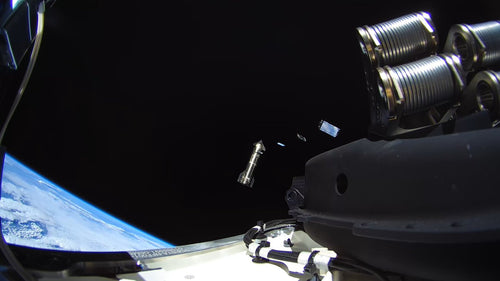
"Starlink is now onboard the largest commercial aircraft in the world 🛰️✈️"
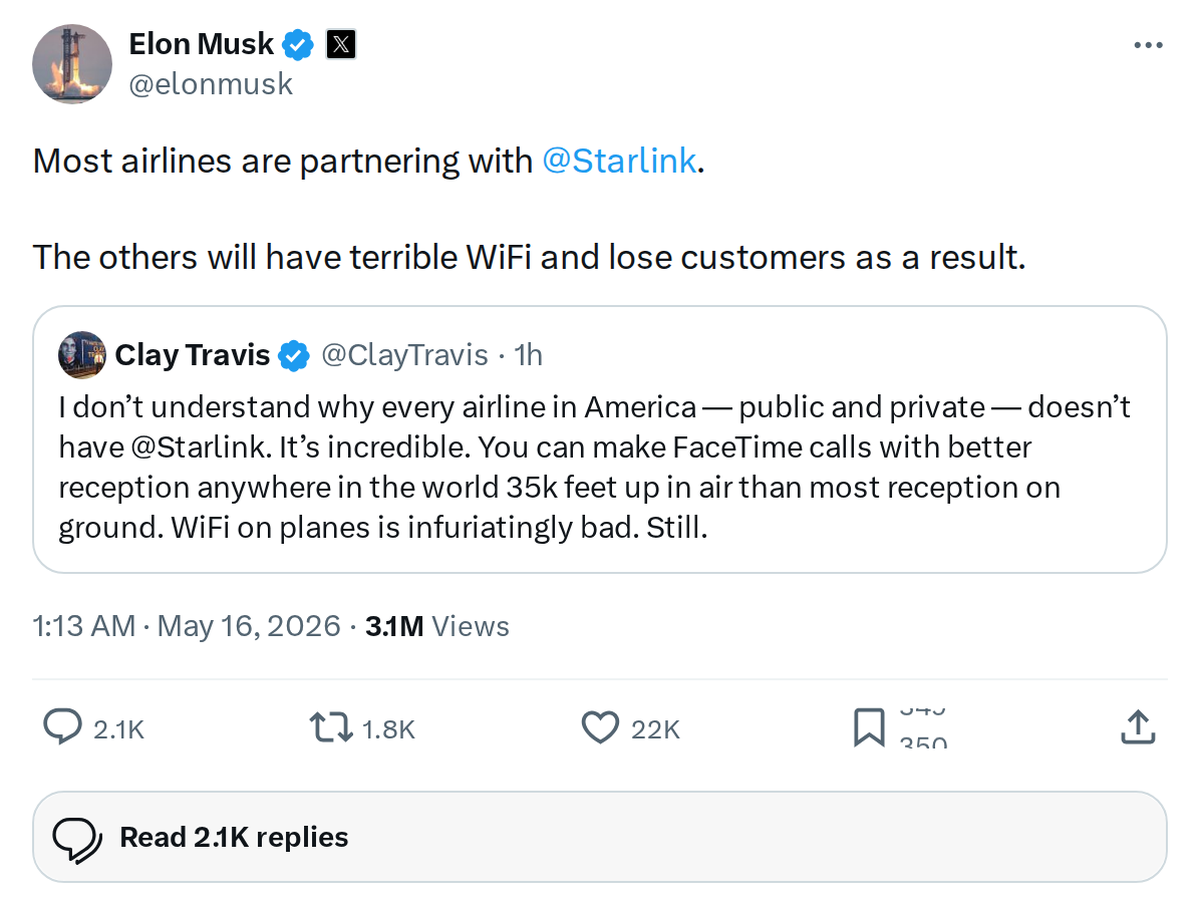
Starlink has quietly become the dominant force in airline in-flight connectivity. Elon Musk confirmed Thursday that the majority of commercial airlines are now partnering with Starlink — and made clear he expects the holdouts to pay a price for it.

The statement is blunt by design. Airlines that skip Starlink, Musk argues, will be stuck offering inferior connectivity — and passengers who've experienced Starlink's low-latency speeds on other carriers won't tolerate the difference for long. It's a competitive pressure play as much as a product announcement.
The numbers back the momentum. According to earlier reports, more than 40 commercial airlines had signed agreements or begun rolling out Starlink service as of early 2026, with over 30 having publicly announced plans before the end of January. That's a significant portion of the global commercial fleet in a remarkably short window. For context, in-flight WiFi has historically been one of the most complained-about aspects of air travel — slow speeds, unreliable connections, and steep per-session pricing have frustrated passengers for years. Starlink's low-earth orbit constellation addresses the core technical problem that legacy providers never fully solved.
For frequent flyers, the shift is already noticeable on carriers that have made the switch. The broader question now is how quickly the remaining airlines move — and whether competitive pressure accelerates timelines that might otherwise stretch into 2027 and beyond. Musk's framing suggests Starlink isn't waiting for the industry to come around on its own schedule.
Sources & reporting notes
The links below identify the material source records used for this report.
- @elonmusk on X (2026-05-15T17:13:24.000Z) — Direct source
- @Starlink on X (2026-05-15T20:13:04.000Z) — Direct source
Source links are preserved as published or accessed. See our editorial standards and corrections policy.
The BASENOR Editorial Desk covers Tesla, SpaceX, and related technology, curating reporting from primary sources — official accounts, regulatory filings, and software release data. Every article passes source-record and fact-checking review before publication. About the newsroom.
This report was curated by the BASENOR Editorial Desk from the sources listed above. Read our editorial standards or email editorial@basenor.com to report an error.