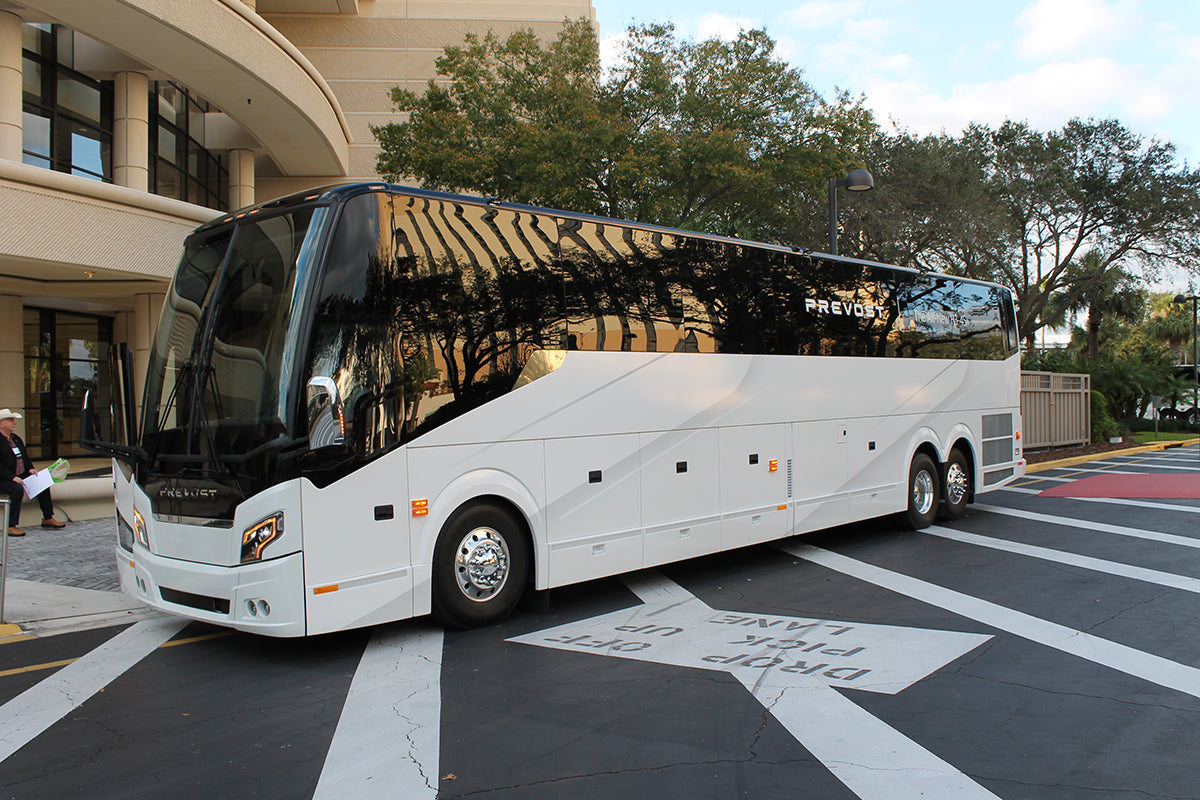
The News: The Landline Company has outfitted its entire fleet of premium Prevost H3-45 motorcoaches with free high-speed Wi-Fi powered by Starlink.
Why It Matters: Starlink is proving it can deliver reliable, streaming-quality internet in moving vehicles at scale — not just in Teslas or on SpaceX missions, but across commercial ground transport connecting major U.S. and Canadian airline hubs.
Source: @SawyerMerritt on X
Starlink Now Powers Free Wi-Fi Across Landline's Entire Motorcoach Fleet
Starlink's reach just expanded in a meaningful way. The Landline Company — a premium ground transport operator that connects passengers to major airline hubs — announced on March 4, 2026, that its entire fleet of Prevost H3-45 motorcoaches is now running free, high-speed Wi-Fi powered by Starlink. This isn't a pilot program or a partial rollout. Every coach. Every route. Every passenger.

📊 Key Figures
| Metric | Detail | Context |
|---|---|---|
| Fleet Coverage | 100% — entire fleet | Full deployment, not a pilot |
| Coach Model | Prevost H3-45 | 35-seat premium configuration, 2x1 leather seating |
| Cost to Passengers | Free | No login fees, no data caps mentioned |
| Previous Speed (avg) | ~10 Mbps down | Cellular-based, unreliable |
| New Capability | Streaming, video calls, gaming | Low-latency broadband via Starlink |
| Active Routes | 12+ routes | ORD, PHL, YYZ, DEN, MSP hubs |
| Airline Partners | American Airlines, Air Canada, Sun Country | Integrated ground-to-air connections |
What Landline Actually Does
If you haven't encountered Landline before, here's the quick version: the company operates premium motorcoach services that function as airline-integrated ground connections. Think of it as a first-class bus that replaces a short-hop regional flight — passengers board at an off-airport location, ride in comfort to the terminal, and their baggage is handled end-to-end. The coaches themselves are no-compromise: 35 seats in a 2x1 leather layout, generous legroom, power outlets at every seat, mood lighting, and aircraft-inspired interiors.
Until now, the Wi-Fi on board was cellular-based — functional in theory, frustrating in practice. Speeds averaging around 10 Mbps down meant streaming was a gamble and video calls were a non-starter. Starlink changes that equation entirely.
What Starlink Delivers on the Road
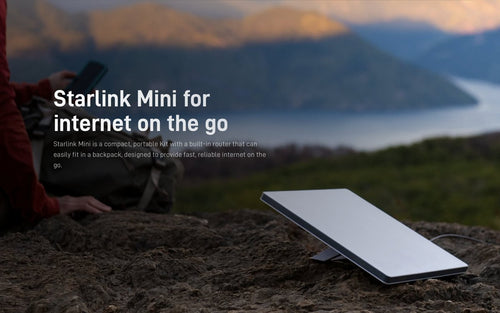
Starlink's low-earth orbit satellite constellation is engineered for exactly this kind of challenge: delivering broadband to moving vehicles where cellular coverage is patchy or congested. The system supports streaming, video conferencing, online gaming, and real-time flight status checks — the kinds of tasks that matter when you're a business traveler killing time between a motorcoach pickup and a flight departure.
According to CEO David Sunde: "By equipping our entire fleet with Starlink, we're giving passengers fast, free Wi-Fi that works gate to gate. This investment in best-in-class connectivity underscores our commitment to a seamless, airline-integrated connecting experience from ground to air."
Nick Johnson, VP of Commercial, added: "Starlink is helping us redefine what premium regional travel looks like. Our customers can now stream, work, or check a flight status with the same reliability they'd expect at home. It's not just better internet, it's a better journey."

🔭 The BASENOR Take
Timeline: Full fleet deployment confirmed as of March 4, 2026. No phased rollout — immediate.
Impact Level: 🟡 Medium — directly relevant to Starlink's commercial momentum and SpaceX's enterprise strategy.
Confidence: ⭐⭐⭐⭐⭐ — Official press release confirmed via PR Newswire and Starlink.com.
This announcement is worth tracking for a few reasons that go beyond a single bus company getting better Wi-Fi.
First, it's a signal of Starlink's commercial transport momentum. Maritime and aviation deployments have been well-publicized, but ground transport at scale — where the antenna has to handle constant movement, urban signal interference, and highway speeds — is a different engineering challenge. A full fleet deployment by an operator with over a dozen active routes is meaningful validation.
Second, the airline integration angle matters. Landline isn't a standalone bus service; it's embedded into the ticketing and baggage systems of American Airlines, Air Canada, and Sun Country. That means Starlink connectivity is now part of a journey that major carriers are selling to their customers. That's a different kind of endorsement than a standalone charter operator.
Third, for anyone watching Starlink's trajectory as a business: the pattern of replacing cellular-based systems (averaging ~10 Mbps) with satellite broadband capable of video calls and gaming is exactly the use case SpaceX has been targeting with its SpaceX coverage of the Starlink for Business and Starlink for RVs/Mobility tiers. Each new fleet deployment strengthens the commercial case and, by extension, the revenue base that funds Starlink's continued satellite constellation expansion.
For Tesla owners specifically: this is a reminder that the same Starlink hardware increasingly powering connectivity in premium vehicles, boats, and now motorcoaches is the network SpaceX continues to scale. As Tesla explores deeper vehicle connectivity options, Starlink's expanding commercial footprint — and the reliability data that comes with it — directly informs what's possible inside your car.
Sources & reporting notes
The links below identify the material source records used for this report.
- @SawyerMerritt on X (2026-03-04T14:05:27.000Z) — Direct source
- @SawyerMerritt on X (2026-03-04T14:05:28.000Z) — Direct source
Source links are preserved as published or accessed. See our editorial standards and corrections policy.
The BASENOR Editorial Desk covers Tesla, SpaceX, and related technology, curating reporting from primary sources — official accounts, regulatory filings, and software release data. Every article passes source-record and fact-checking review before publication. About the newsroom.
This report was curated by the BASENOR Editorial Desk from the sources listed above. Read our editorial standards or email editorial@basenor.com to report an error.