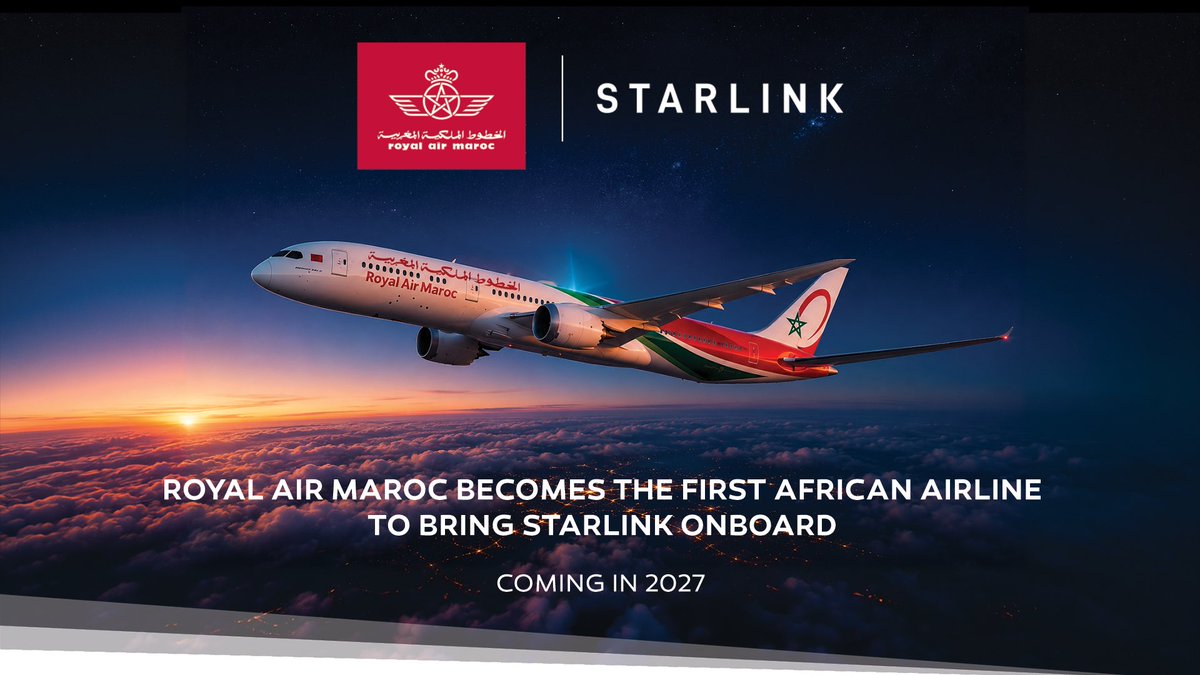
Starlink Aviation is heading to Africa. Royal Air Maroc has finalized a partnership with SpaceX's satellite internet service to bring high-speed, low-latency connectivity to passengers and crew across its entire commercial fleet — making it the first airline on the African continent to adopt LEO-based in-flight Wi-Fi at scale.

A Deal Two Years in the Making — Now Moving Fast
According to multiple reports, the formal agreement between Royal Air Maroc and Starlink was concluded on August 4, 2026, following several months of negotiations and on-board testing. The timing matters: Royal Air Maroc had originally planned to introduce in-flight Wi-Fi by 2028. The Starlink deal accelerates that by roughly two years, with full implementation across the airline's commercial fleet now targeted for 2027.
The phased rollout will focus primarily on Royal Air Maroc's Boeing aircraft, which make up the majority of its fleet. Passengers can expect the standard Starlink Aviation experience: streaming, social media, web browsing, and remote work without the dropouts that have historically plagued geostationary satellite-based in-flight systems.
Why the Africa Angle Is the Real Story
Starlink has already made significant inroads with airlines in North America, Europe, and parts of Asia. But Africa has largely been left behind in the in-flight connectivity race — a gap that reflects both the cost of legacy satellite infrastructure and the regulatory complexity of operating across dozens of sovereign airspaces.
Royal Air Maroc's adoption of Starlink's LEO-based system is a meaningful inflection point. As the flag carrier of Morocco and one of the continent's larger international operators, its routes span Africa, Europe, the Middle East, and the Americas. Starlink connectivity on those corridors means travelers flying out of Casablanca — and through it — gain access to the same quality of in-flight internet that passengers on major Western carriers have come to expect.
It also signals that Starlink's regulatory groundwork in North Africa is sufficiently advanced to support a commercial airline deployment. Reports from late August 2026 noted that formal Moroccan regulatory approval was still in process at that point, so the October announcement from Starlink's official account suggests that hurdle has since been cleared or is close to resolution.
What Starlink Aviation Actually Costs
For context on the commercial scale of this kind of deal, Starlink's Aviation service plans as of mid-2026 are structured around monthly bandwidth tiers. Airlines don't pay per passenger — they pay for fleet-level access, then decide how to monetize it (complimentary Wi-Fi, tiered passenger plans, or bundled into ticket pricing).
Starlink Aviation Service Plans (as of mid-2026)
| Plan | Monthly Cost | Max Speed |
|---|---|---|
| Aviation Regional 25GB | $4,000 | 250 Mbps |
| Aviation Regional Unlimited | $12,500 | 500 Mbps |
| Aviation Global Unlimited | $20,000 | 1 Gbps |
Hardware MSRP: $200,000 per aircraft (excluding installation). Prices increased for existing customers effective August 7, 2026. Source: starlink.com
For an airline the size of Royal Air Maroc, the economics of a global unlimited tier — spread across a full commercial fleet — represent a substantial infrastructure investment. That Starlink is actively pursuing this deal rather than waiting for the airline to come to them reflects how aggressively SpaceX is pushing aviation as a growth vertical for the service.
The Bigger Picture for Starlink's Aviation Expansion
The Royal Air Maroc partnership is part of a broader pattern. Starlink Aviation has been signing airline agreements at an accelerating pace, and each new carrier in an underserved region effectively validates the service for other airlines in that market. If Royal Air Maroc's rollout goes smoothly through 2027, it will be difficult for other African carriers to ignore the competitive pressure to match the offering.
Whether passengers will pay for access or receive it as a complimentary service hasn't been publicly disclosed. That detail — and how Royal Air Maroc prices it across its route network — will be the practical test of whether the partnership translates into a genuine passenger experience upgrade or remains a premium add-on for a subset of travelers. The full fleet target of 2027 gives both sides roughly a year to work that out.
Sources & reporting notes
The links below identify the material source records used for this report.
- @Starlink on X (2026-10-07T14:39:08.000Z) — Direct source
Source links are preserved as published or accessed. See our editorial standards and corrections policy.
The BASENOR Editorial Desk covers Tesla, SpaceX, and related technology, curating reporting from primary sources — official accounts, regulatory filings, and software release data. Every article passes source-record and fact-checking review before publication. About the newsroom.
This report was curated by the BASENOR Editorial Desk from the sources listed above. Read our editorial standards or email editorial@basenor.com to report an error.