📌 UPDATE — September 16, 2026
The September 22 launch window is now officially backed by a NAVAREA IV marine hazard area declaration specifically named "STARSHIP FLIGHT 14." The hazard zone is active September 22, 07:15–09:14 CDT, confirming a roughly two-hour window that aligns with the previously reported target date. NAVAREA notices are issued by the U.S. National Geospatial-Intelligence Agency to warn mariners of hazardous activities — their publication is one of the strongest pre-launch confirmations short of an official SpaceX go/no-go call.
The declaration was spotted and shared by tracking account @LabPadre on September 16. No changes to the stated mission profile — 26 Starlink V3 satellites, orbital trajectory, Pacific splashdown — have been announced alongside this filing.
@LabPadre · Sep 16, 2026
⚓ New marine hazard area for STARSHIP FLIGHT 14 — NAVAREA IV
Sep 22, 07:15 CDT – Sep 22, 09:14 CDT

SpaceX is sharing new details about how Starship Flight 14 will handle the critical period after second-stage engine cutoff — and the flight profile reveals a meaningful step forward. Rather than committing to orbit unconditionally, the ship will start on a familiar sub-orbital path and only push through to orbital insertion if real-time sensor data confirms the hardware is ready. The target launch date is as soon as Tuesday, September 22, with a 75-minute window opening at 7:15 a.m. CT from Starbase, South Texas.


A Conditional Path to Orbit
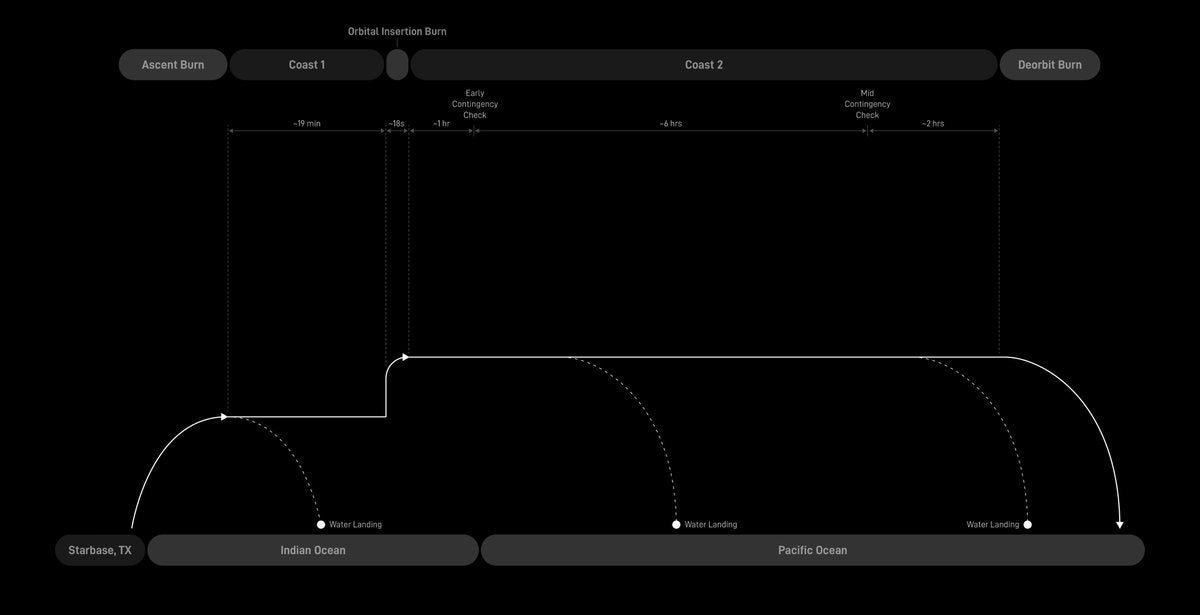
According to reporting from Joe Tegtmeyer, who has been closely tracking SpaceX communications, the ship will initially fly the same sub-orbital trajectory used on all previous Starship tests — one that would naturally return the vehicle to Earth via a free-return path into the Indian Ocean. That's the safe baseline. From there, SpaceX will evaluate incoming data and sensor feedback in real time before committing to orbital insertion.
The logic is deliberate. Orbital insertion on Flight 14 is contingent on confirming sufficient hardware redundancy for the deorbit burn — specifically, the ability to fire a single Raptor engine to bring the ship back down safely. If the data looks good, the ship proceeds to orbit. If it doesn't, the free-return trajectory provides a built-in abort option without requiring any additional maneuver. It's a conservative architecture that reflects lessons from thirteen previous test flights.
Assuming orbital insertion proceeds, the ship is expected to fly at approximately 275 km altitude, complete roughly six orbits over nearly 10 hours, and splashdown in the Pacific Ocean west of Chile — a significant geographic shift from the Indian Ocean recovery zones used in prior tests, according to Space.com.
What's New on This Flight
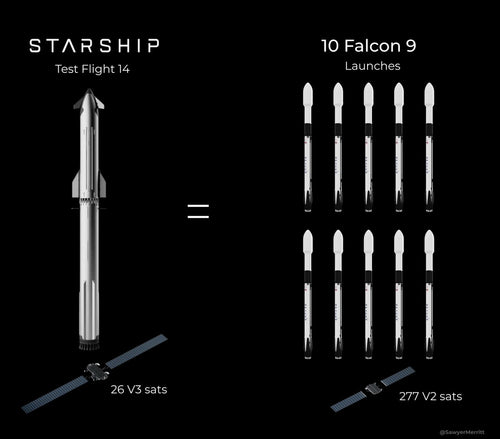
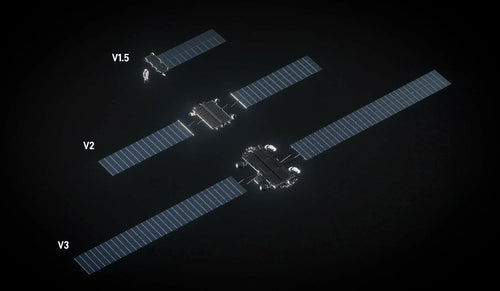
Flight 14 carries a meaningful payload for the first time: 26 Starlink V3 satellites, marking the operational debut of that hardware in the constellation. Each V3 satellite is rated for approximately one terabit per second of downlink capacity, and according to available estimates, deploying all 26 is expected to boost the entire Starlink network's capacity by roughly 3%. Three of those satellites will carry cameras pointed at Starship's heat shield during re-entry — a data-gathering move that could inform future tile designs.
On the hardware side, SpaceX has implemented several modifications targeting the heat shield vulnerabilities exposed in earlier flights: additional tile retention mechanisms, improvements to prevent plasma from flowing behind tiles, and the introduction of curved tile designs. Two recovered tiles from Ship 40 are planned for reuse on Ship 41, which would mark the first instance of Starship heat shield tile reuse.
The Super Heavy booster profile is more conservative than recent flights. No tower catch is planned — the booster will attempt a landing burn at an offshore point in the Gulf of Mexico. That decision likely reflects the ice-clogging issue that caused three center engines to shut down prematurely during Flight 13's terminal landing burn, cutting short what had otherwise been a strong booster performance.
Why the Trajectory Architecture Matters
The conditional orbital insertion approach is worth understanding in context. Every previous Starship flight has been sub-orbital by design — the vehicle was never intended to complete a full orbit. Flight 14 is the first attempt to cross that threshold, and SpaceX is treating it accordingly: the free-return baseline means the program doesn't have to choose between pushing forward and having a recovery option. The ship either earns its way to orbit through live data, or it comes home on a trajectory that's already been proven across thirteen flights.
Regulatory approval is still pending as of this writing. If the September 22 window holds, this will be the most complex Starship mission to date — first orbital attempt, first operational Starlink V3 deployment, first tile reuse, and a new splashdown zone all in a single flight. The conditional trajectory design suggests SpaceX is serious about not letting ambition outrun the data. For our full SpaceX coverage, see SpaceX coverage.
🚀 Following the Starship program? See every test flight, official outcome and the next launch window in our SpaceX Starship Tracker.
Sources & reporting notes
The links below identify the material source records used for this report.
- @JoeTegtmeyer on X (2026-09-16T13:00:59.000Z) — Direct source
Source links are preserved as published or accessed. See our editorial standards and corrections policy.
The BASENOR Editorial Desk covers Tesla, SpaceX, and related technology, curating reporting from primary sources — official accounts, regulatory filings, and software release data. Every article passes source-record and fact-checking review before publication. About the newsroom.
This report was curated by the BASENOR Editorial Desk from the sources listed above. Read our editorial standards or email editorial@basenor.com to report an error.