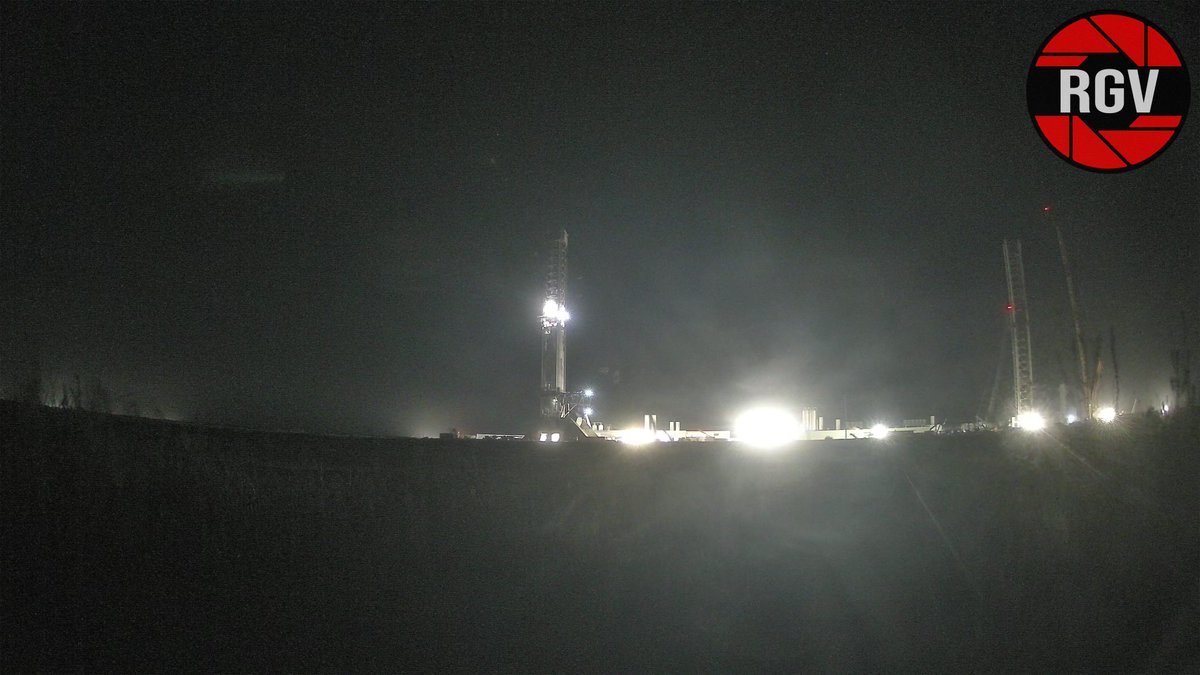
SpaceX is closing in on what could be a landmark moment for the Starship program. According to a September 22, 2026 target date confirmed by SpaceX and reported by multiple sources, Ship 41 and Super Heavy Booster 21 are being prepared for Starship Flight 14 — the program's first genuine attempt to reach Earth orbit. A Starbase observer's post from the launch site, shared in the early hours of September 18, signals the hardware is in position and the countdown has quietly begun.

Why Flight 14 Is Different
Every previous Starship test flight has been suborbital — the vehicle arced through space and came down. Flight 14 changes that. According to reporting from Space.com and Aviation Week, the mission profile calls for Ship 41 to complete approximately six orbits at roughly 275 km altitude over a nearly 10-hour flight, with splashdown targeted in the Pacific Ocean west of Chile. That's a fundamentally different mission than anything Starship has attempted before, and it comes with a fundamentally different set of risks.
It's also the third flight of the Starship V3 iteration — meaning SpaceX is building on hardware and software refinements accumulated across the two previous V3 missions rather than starting fresh.
The Payload Factor
Flight 14 carries another first: a live commercial payload. SpaceX plans to deploy between 20 and 26 Starlink V3 satellites from the Starship upper stage, according to multiple pre-flight reports. That makes this the first Starship mission designed to generate revenue, not just data. The shift from pure test flight to revenue-generating mission changes the calculus for SpaceX's internal program timeline — success here accelerates the path toward Starship becoming a commercial launch vehicle, not just a development program.
Pre-Flight Testing: Where Things Stand
Both vehicles have cleared their major pre-flight checkpoints. Super Heavy Booster 21 completed a full-duration 33-engine static fire at the end of August 2026. Ship 41 ran a 6-engine static fire on August 21. Cryogenic proof tests for both vehicles were completed earlier in the summer — B21 in July, S41 in June. The hardware has been through the gauntlet; what remains is regulatory clearance.
The September 22 launch window opens at 7:15 a.m. CT and runs for 75 minutes, pending FAA approval. SpaceX's regulatory relationship with the FAA has been a recurring variable in Starship's schedule, and that hasn't changed here.
One Notable Absence
Neither the Super Heavy booster nor the Starship upper stage will attempt a chopstick catch on this flight. The Starbase tower's mechanical arm system — which successfully caught the booster on earlier flights — won't be in play for Flight 14. The booster will instead perform a landing burn at an offshore point in the Gulf of Mexico. Whether that's a deliberate risk-management decision for the orbital attempt or a reflection of the new mission complexity isn't fully clear from available reporting, but it's worth noting for anyone tracking the program's reusability milestones.
The Bigger Picture
Starship's development cadence has accelerated considerably over the past year. The combination of orbital insertion, a live Starlink payload, and a third V3 flight in relatively quick succession reflects a program that has moved past the early explosive-failure phase and into genuine iterative testing. For SpaceX's broader ambitions — Artemis lunar landers, point-to-point Earth transport, Mars — orbital capability is the prerequisite for everything else.
If September 22 holds, the launch window opens just after sunrise in South Texas. The FAA's decision will be the last major variable. Follow our SpaceX coverage for updates as the countdown progresses.
🚀 Following the Starship program? See every test flight, official outcome and the next launch window in our SpaceX Starship Tracker.
Sources & reporting notes
The links below identify the material source records used for this report.
- @RGVaerialphotos on X (2026-09-18T03:02:20.000Z) — Direct source
Source links are preserved as published or accessed. See our editorial standards and corrections policy.
The BASENOR Editorial Desk covers Tesla, SpaceX, and related technology, curating reporting from primary sources — official accounts, regulatory filings, and software release data. Every article passes source-record and fact-checking review before publication. About the newsroom.
This report was curated by the BASENOR Editorial Desk from the sources listed above. Read our editorial standards or email editorial@basenor.com to report an error.