📌 UPDATE — October 23, 2026
NASA has released a new concept of operations (ConOps) slide specifically for the Artemis IV mission, offering the clearest look yet at how SpaceX's Starship Human Landing System will support the second crewed lunar landing of the Artemis program. The overview slide — shared by NASASpaceflight and picked up widely on social media — lays out the full mission flow for Starship HLS in the context of Artemis IV, building on the earlier Artemis III ConOps details covered in this article. While the core architecture remains consistent with what was previously shown, the Artemis IV slide reflects mission-specific planning that accounts for the Gateway lunar outpost, which Artemis IV will utilize as a staging point — a key operational difference from Artemis III's direct Orion-to-HLS crew transfer approach.

📡 Source: @SawyerMerritt · @NASASpaceflight · Oct 23, 2026
Fresh details on how Starship will actually operate as NASA's Human Landing System surfaced during an Artemis stream on October 23, with space journalists and commentators sharing infographics that offer the clearest public picture yet of the mission architecture. From window cutouts on the lunar lander to a concept that has Starship physically pushing the Orion capsule toward the moon, the visuals confirm that the program is moving well past the theoretical stage.
1. The Interior of Starship HLS Is Now Visible
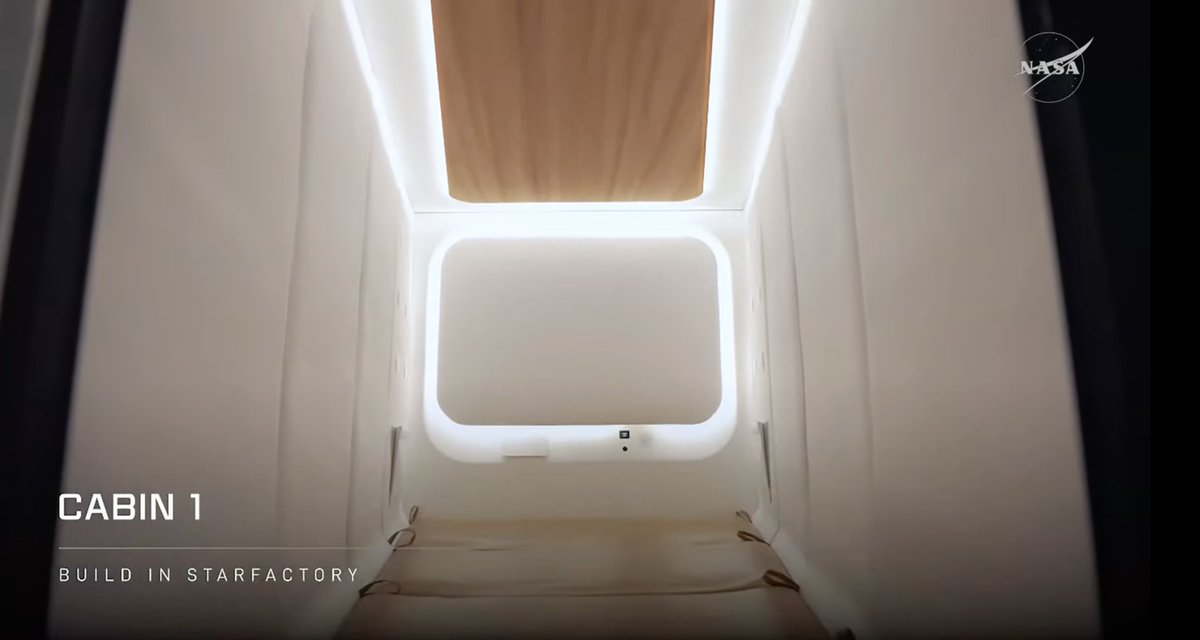
Everyday Astronaut's Tim Dodd flagged screencaps from the Artemis stream showing the interior layout of Starship HLS alongside a clear look at the window cutout configuration on the vehicle's hull. These aren't renders from a marketing deck — they appeared during an official NASA broadcast, which gives them considerably more weight than earlier concept art. The window placements in particular matter for crew situational awareness during the final descent to the lunar surface.


2. A Formal Concept of Operations Has Been Published
Ars Technica senior editor Eric Berger shared what appears to be an official Starship HLS concept of operations diagram — a structured mission flow document that lays out how the vehicle integrates into the broader Artemis architecture. ConOps documents at this level of detail signal that NASA and SpaceX have locked in enough of the mission design to commit it to formal illustration, a meaningful step beyond early feasibility work.

3. Starship Will Push Orion to the Moon — and Orion Is Being Modified for It
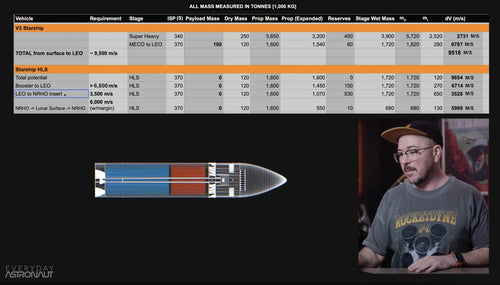
The most operationally significant detail came from a second Everyday Astronaut post: an infographic showing Starship actively pushing the Orion spacecraft toward the moon, described by Dodd as the first legitimate public graphic of this concept. More importantly, he noted that Orion is already being physically modified to accommodate being pushed by Starship. That hardware work happening now means this isn't a paper concept — it's an active engineering path. The willingness to modify a legacy capsule to fit a more capable vehicle is a notable shift in how NASA is approaching the mission.

4. The Architecture Is Evolving Around Starship's Capabilities, Not Against Them
What ties all of this together is a broader design philosophy shift. Dodd's framing — that engineers are modifying Orion to follow common sense rather than treating Starship's capabilities as obstacles — reflects a real change in how the program is being managed. Early Artemis planning was built around Orion and the Space Launch System as fixed constraints. Incorporating Starship as a propulsive element that can physically move Orion, and then redesigning Orion to support that role, suggests the architecture is now being optimized around what each vehicle actually does best. Whether that produces a more reliable lunar mission cadence remains to be seen, but the engineering logic is sound.
The details that surfaced today represent the most concrete public look at Starship HLS mission operations to date. With Orion modifications already underway and a formal ConOps in circulation, the gap between concept and hardware is closing faster than the program's public timeline has sometimes suggested.
🚀 Following the Starship program? See every test flight, official outcome and the next launch window in our SpaceX Starship Tracker.
Sources & reporting notes
The links below identify the material source records used for this report.
- @Erdayastronaut on X (2026-10-23T19:00:47.000Z) — Direct source
- @SciGuySpace on X (2026-10-23T19:12:26.000Z) — Direct source
- @Erdayastronaut on X (2026-10-23T19:13:47.000Z) — Direct source
Source links are preserved as published or accessed. See our editorial standards and corrections policy.
The BASENOR Editorial Desk covers Tesla, SpaceX, and related technology, curating reporting from primary sources — official accounts, regulatory filings, and software release data. Every article passes source-record and fact-checking review before publication. About the newsroom.
This report was curated by the BASENOR Editorial Desk from the sources listed above. Read our editorial standards or email editorial@basenor.com to report an error.