The News: SpaceX's Starbase facility has grown from bare South Texas scrubland into arguably the world's premier rocket factory, with Starship V3 now rolling out for testing and Flight 12 targeting early April 2026.
Why It Matters: V3 is a generational leap — taller, heavier-lift, and powered by Raptor V3 engines — and Starbase is doubling in size to support a cadence of 25+ launches per year.
Source: @SciGuySpace (Eric Berger) — March 9, 2026

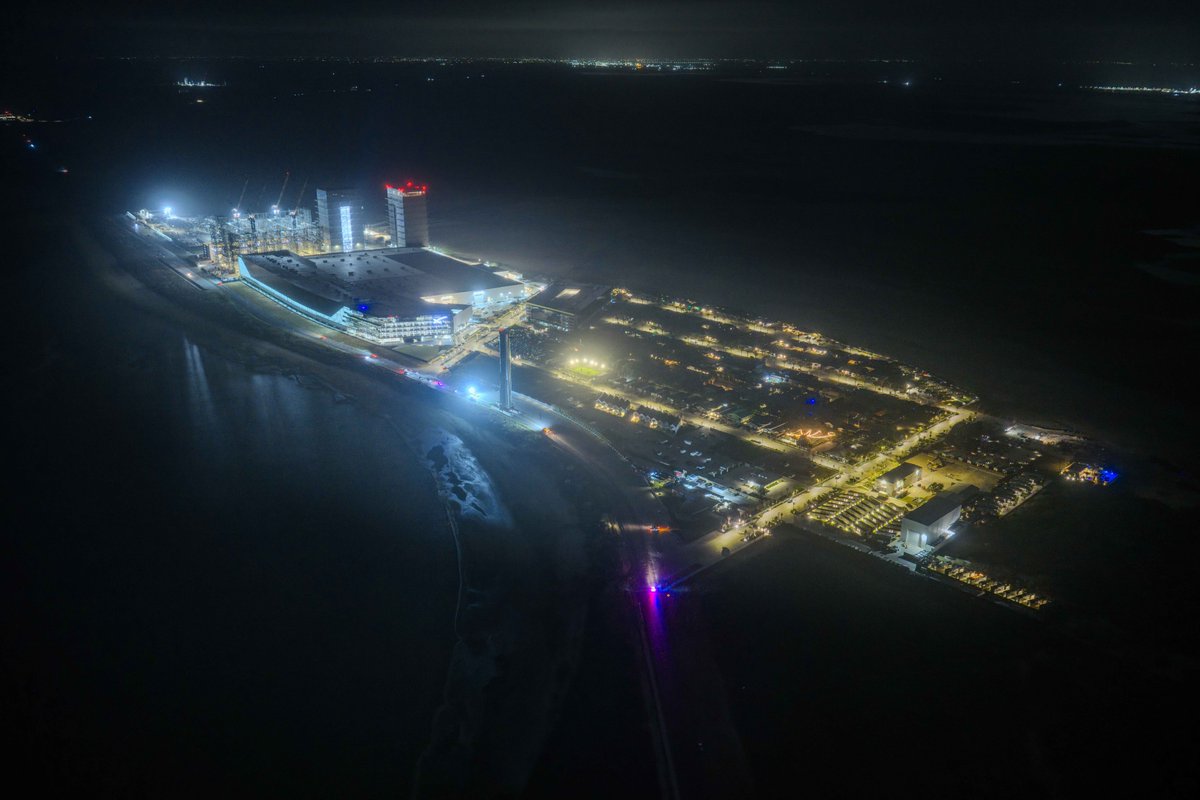
A decade ago, the site was a stretch of South Texas coastline with a few scrub oaks and a fishing village. Today, Starbase is what Eric Berger — one of the most credible voices in aerospace journalism — calls arguably the world's premiere rocket factory. And this week, Starship V3 rolled out onto the pad, marking the next chapter in SpaceX's relentless production march.
This isn't just a milestone for SpaceX. It's a signal that the pace of development — from concept to hardware to launch — is accelerating in ways that have no modern precedent in the space industry. For anyone tracking the broader Elon Musk ecosystem, including the millions of Tesla owners who follow SpaceX closely, understanding what V3 represents is worth your time. Check out our SpaceX coverage for the full picture.
📊 Key Figures
| Metric | Value | Context |
|---|---|---|
| Raptor V3 Thrust | 280 tf | ~50% more than Raptor 1 |
| V3 Target Payload to LEO | 100 tons | More than any rocket ever built |
| Starbase Expansion | ~41 acres | Up from ~20 acres (doubled) |
| Target Annual Launch Cadence | 25 launches/yr near-term | 100/yr targeted by decade end |
| Raptor Engines Produced | 600+ | Raptor 2: 226,000s run time |
| Integrated Flight Tests Completed | 11 | Flight 12 targeting ~early April |
| Giga Bay Workstation Capacity | 24 stations | Up from 6 in current Mega Bays |
What Makes Starship V3 Different
Starship V3 isn't an incremental refresh. It's a structural and propulsion overhaul designed to unlock the full potential of the Starship architecture. Here's what's actually changed:
Bigger and stronger airframe. V3 is approximately five feet taller than V2, with a redesigned structure built to handle heavier propellant loads. Ship 39 — the first V3 vehicle — has already completed cryoproof testing, validating both the redesigned propellant system and structural integrity.
Raptor V3 engines. Each engine now produces 280 tons of force — roughly 50% more thrust than the original Raptor 1 — while being lighter and cheaper to manufacture. Booster 19 is expected to be the first Super Heavy to fire Raptor V3 engines on the pad.
Larger grid fins. The Super Heavy booster for V3 features grid fins 50% larger than V2 (though one fewer fin total), engineered for stronger aerodynamic control and improved booster recovery reliability.
In-space refueling capability. V3 vehicles come equipped with docking ports and can be configured as propellant tankers — a critical capability for deep-space missions. SpaceX has targeted 2026 for the first in-space propellant transfer demonstration.
Starbase: From Nothing to World-Class in a Decade
The transformation Eric Berger is reacting to is genuinely staggering when you look at the timeline. In 2014, SpaceX was quietly acquiring land in Boca Chica, Texas. By 2019, the first Starship prototypes were being assembled in tents. Today, Starbase is a full industrial complex — and it's still growing.
The U.S. Army Corps of Engineers has approved an expansion that will roughly double the launch complex footprint from approximately 20 acres to 41 acres of developed land within a 55-acre project area. New infrastructure includes additional test and staging pads, propellant storage, blast walls, and internal roadways — all designed to support the target of 25 launches and landings per year from this single site.
And Starbase isn't the only site. SpaceX is building Giga Bays at both Starbase and its Roberts Road facility in Florida. Each Giga Bay will house up to 24 workstations — a 4x increase over the current Mega Bay capacity of six. The company is also working toward five total Starship launch pads: two at Starbase, one at Kennedy Space Center's LC-39A, and two at SLC-37.
🔭 The BASENOR Take
Timeline: Flight 12 (V3 debut) targeting early April 2026 — approximately 4 weeks from Elon Musk's March 7 update.
Impact Level: 🔴 High — V3 represents the first major generational upgrade to Starship hardware, with direct implications for NASA Artemis lunar missions, Starlink satellite deployment, and eventual Mars missions.
Confidence: High — Ship 39 cryoproof testing is complete; rollout is confirmed. Flight 12 timing carries typical SpaceX schedule uncertainty but the hardware is real and progressing.
The number that stands out most is 600+ Raptor engines produced. That's not a prototype program anymore — that's an industrial manufacturing operation. For context, the entire Saturn V program produced 13 flight vehicles over its lifetime. SpaceX is building the infrastructure to make Starship as routine as commercial aviation, and V3 rolling out this week is the clearest sign yet that the production line is maturing.
What does this mean for the broader Elon Musk ecosystem? A reliable, high-cadence Starship directly accelerates Starlink's next-generation constellation deployment — which in turn funds SpaceX, which remains deeply intertwined with Tesla's leadership and investor narrative. The faster Starbase scales, the more credible the full vision becomes.
📰 Deep Dive
What Eric Berger is capturing with his reaction to the V3 rollout image is something that's easy to miss when you follow SpaceX news day-to-day: the sheer velocity of progress. Most rocket programs take a decade to go from design to first flight. SpaceX has gone from first Starship prototype to a third-generation vehicle — with 11 integrated flight tests behind it — in roughly the same timeframe. That's not iteration. That's a fundamentally different development philosophy.
The V3 rollout also signals that SpaceX has moved past the experimental phase of Starship development. Cryoproof testing on Ship 39 validates the new propellant system under real operational loads. The fact that Booster 19 will be the first to fire Raptor V3 engines on the pad suggests the engine program is mature enough to move into integrated vehicle testing without extensive standalone qualification campaigns. That's a sign of manufacturing confidence, not just engineering ambition.
The 100-ton-to-LEO payload target for V3 deserves emphasis. No rocket in history has achieved that figure. The Space Shuttle's maximum payload was around 27.5 tons. Saturn V could lift about 130 tons to LEO, but only flew 13 times total. V3 Starship, if it hits its targets, would be both the most capable and — eventually — the most frequently flown heavy-lift vehicle ever built. The combination of capacity and cadence is what makes Starbase's transformation from scrubland to world-class rocket factory so significant.
Flight 12 will be the first real test of whether V3's design improvements translate into flight performance. With in-space propellant transfer on the 2026 roadmap, the stakes for this next series of flights are higher than any previous Starship test campaign. The rollout this week means the clock is running.
🚀 Following the Starship program? See every test flight, official outcome and the next launch window in our SpaceX Starship Tracker.
Sources & reporting notes
The links below identify the material source records used for this report.
- @SciGuySpace on X (2026-03-09T16:26:17.000Z) — Direct source
Source links are preserved as published or accessed. See our editorial standards and corrections policy.
The BASENOR Editorial Desk covers Tesla, SpaceX, and related technology, curating reporting from primary sources — official accounts, regulatory filings, and software release data. Every article passes source-record and fact-checking review before publication. About the newsroom.
This report was curated by the BASENOR Editorial Desk from the sources listed above. Read our editorial standards or email editorial@basenor.com to report an error.