📌 UPDATE — July 29, 2026
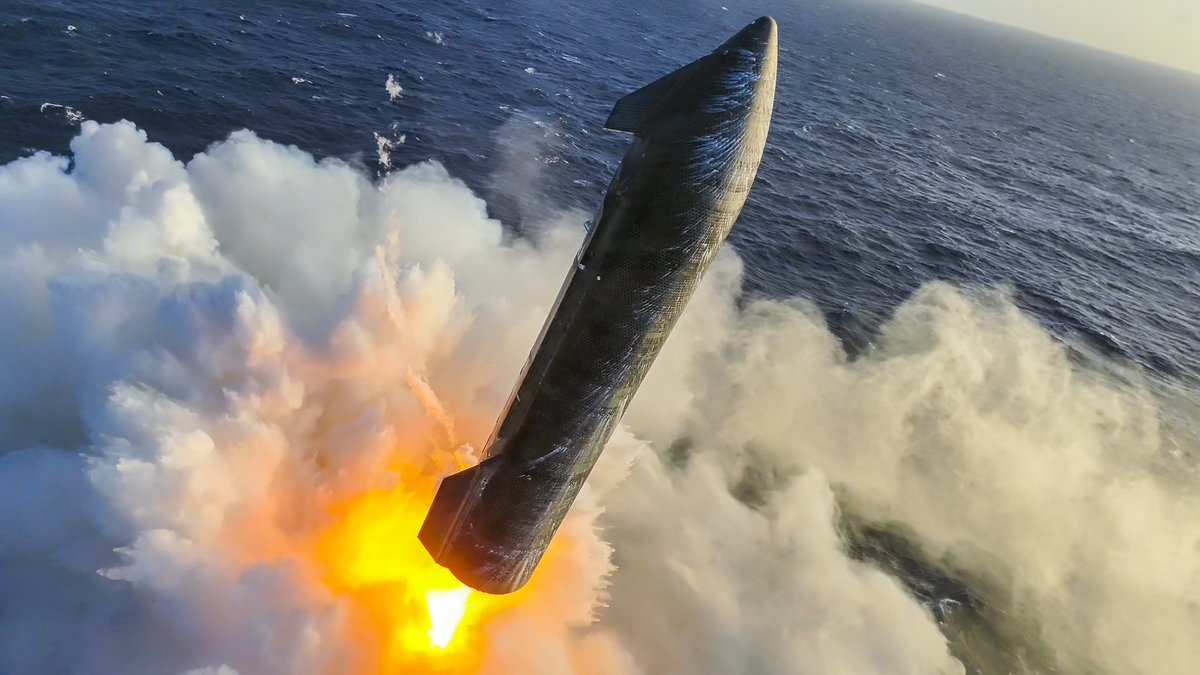
Starlink-equipped buoys successfully streamed real-time video from the Indian Ocean during Starship's thirteenth test flight, SpaceX's Starlink account confirmed today. The deployment marks a notable demonstration of Starlink's ability to relay critical telemetry and live footage from some of the most remote maritime environments on Earth — exactly the kind of coverage needed as Starship's splashdown zones push further from shore. This infrastructure could prove essential for future orbital recovery operations and rapid post-flight data analysis.
@Starlink · July 29, 2026"Starlink-equipped buoys provided real-time video streaming in the Indian Ocean during Starship's thirteenth test flight 🛰️🚀"

Starship has crossed a threshold. With Flight 13 completing the program's first operational satellite deployment on July 24, the era of short sub-orbital hops is over. What follows — longer orbital missions, multi-day operations, and increasingly complex objectives — will change how observers, engineers, and space enthusiasts follow the program entirely. Here are the five details that define this new chapter.

1. Flight 13 was the first Starship mission to deploy real satellites
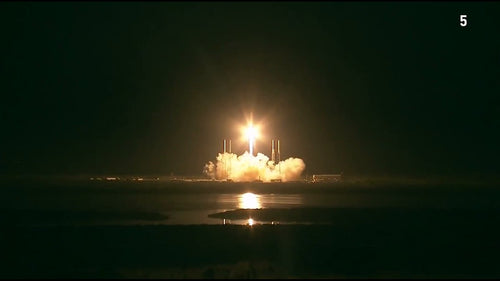
Launched July 24, 2026 at 5:51 p.m. CT from Starbase, Texas, Flight 13 marked a clean break from the program's test-flight-only phase. According to SpaceX, Ship 40 successfully deployed 20 Starlink V3 satellites on a pre-planned trajectory — the first time Starship has carried and released operational payloads. The satellites were designed to de-orbit roughly 20 minutes after deployment, making this a capability demonstration rather than a permanent constellation addition. Still, the milestone is significant: Starship is no longer just proving it can fly. It's proving it can work.
2. The Starship V3 hardware performed its most demanding burn yet
Flight 13 was the second flight of the upgraded Starship V3 variant, powered by Raptor 3 engines. According to SpaceX, Ship 40 completed a full-duration ascent burn on all six upper-stage Raptor engines, achieving its planned velocity and trajectory. More importantly, the vehicle successfully demonstrated an in-space reignition of a single Raptor engine — a capability that is non-negotiable for future orbital missions requiring trajectory adjustments, deorbit burns, or deep-space maneuvers. This was not a routine milestone; it's the technical foundation every complex future mission depends on.
3. Super Heavy V3 hit a new record — then came up short on landing
Booster 20 executed the high-thrust portion of its boostback burn using all 33 Raptor 3 engines, according to SpaceX — a first for the V3 Super Heavy configuration. That's the good news. The landing attempt in the Gulf of Mexico ended in a hard splashdown, with only a subset of engines igniting for the final descent. It's a split result that reflects where the program actually is: upper-stage performance is maturing faster than booster recovery. Catching a Super Heavy reliably in the mechazilla arms remains a work in progress, and that matters enormously for the reusability economics the entire program is built around.
4. Ship 40 survived reentry and delivered heat shield data from the Indian Ocean
Rather than attempting a tower catch, Ship 40 performed a controlled soft splashdown in the Indian Ocean, landing intact. According to SpaceX, this provided critical data on the vehicle's heat shield performance under real orbital reentry conditions — something no sub-orbital flight could replicate. The heat shield is one of the program's most closely watched engineering challenges. A soft splashdown that preserves the vehicle for post-flight inspection is far more valuable than a destructive reentry, and the data collected here will directly inform the design iterations needed before Starship can be routinely recovered and reflown.
5. Following the program now requires a multi-day commitment
This is the operational reality that analyst Joe Tegtmeyer flagged directly: as Starship moves into orbital flights and longer missions, a single launch event is no longer a two-hour watch. Orbital missions involve deployment sequences, in-space burns, reentry windows, and recovery operations spread across days. For anyone tracking the program closely — journalists, enthusiasts, engineers — the cadence of coverage has to change accordingly. Flights 1 through 12 were essentially self-contained events. What comes next is more like following a mission than watching a launch. For our SpaceX coverage, that means longer timelines between definitive wrap-ups and more incremental reporting as missions unfold.
Flight 13 didn't just add another number to the manifest. It changed the nature of what Starship is being asked to do — and how the program measures success. The next flights will push further: longer orbital durations, more complex payload operations, and eventually the reusability cycles that make the whole architecture viable. The sub-orbital chapter is closed. The harder work starts now.
🚀 Following the Starship program? See every test flight, official outcome and the next launch window in our SpaceX Starship Tracker.
Sources & reporting notes
The links below identify the material source records used for this report.
- @JoeTegtmeyer on X (2026-07-29T11:20:44.000Z) — Direct source
Source links are preserved as published or accessed. See our editorial standards and corrections policy.
The BASENOR Editorial Desk covers Tesla, SpaceX, and related technology, curating reporting from primary sources — official accounts, regulatory filings, and software release data. Every article passes source-record and fact-checking review before publication. About the newsroom.
This report was curated by the BASENOR Editorial Desk from the sources listed above. Read our editorial standards or email editorial@basenor.com to report an error.