Elon Musk has put a number on how Terafab's AI chip output will be divided — and the split is more lopsided than most observers expected. Roughly three-quarters of the facility's compute is earmarked for AI spacecraft, leaving about one-quarter for Tesla Optimus and other Tesla applications. With Terafab representing an initial $16.8 billion investment and a planned footprint of over 100 million square feet in Grimes County, Texas, the allocation reveals a clear strategic hierarchy between SpaceX's space-based ambitions and Tesla's humanoid robot program.

What exactly is Terafab?
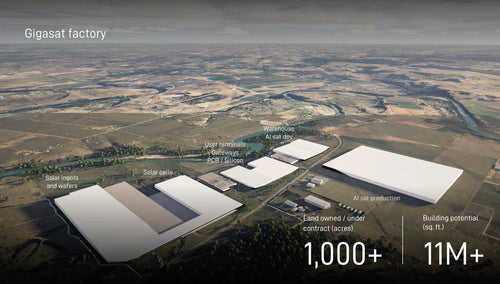
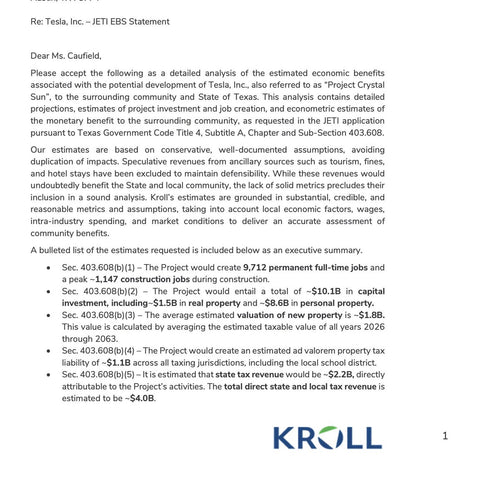
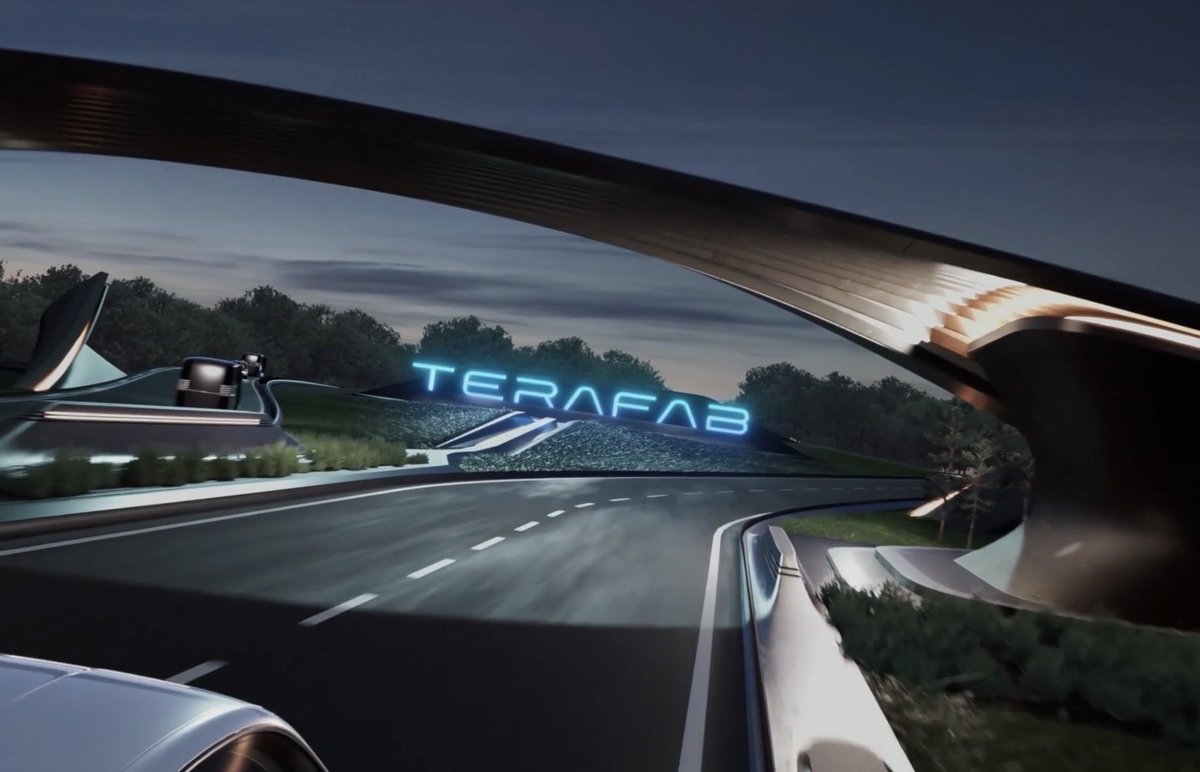
Terafab is a vertically integrated AI semiconductor complex being built in Grimes County, Texas, just north of Houston. Announced formally in early August 2026, it is a joint venture between Tesla and SpaceX designed to handle the full chip lifecycle — manufacturing, packaging, and testing of advanced logic and memory devices — under one roof. Intel is a partner in the project, with the first stage expected to use Intel's 14A process technology. The initial investment phase is approximately $16.8 billion, and the facility is projected to create at least 3,000 high-paying jobs in its first phase alone.
Why does SpaceX get three times as much compute as Optimus?
According to Musk's stated allocation, AI spacecraft will receive roughly 75% of Terafab's chip output versus 25% for Tesla Optimus. The reasoning comes down to mission complexity. Space-based AI systems — think autonomous navigation, real-time sensor fusion in deep-space environments, and on-orbit data processing — demand enormous, sustained compute with no option to offload to a ground server mid-mission. Optimus, by contrast, can leverage Tesla's existing Dojo infrastructure and cloud-side training pipelines for much of its learning workload. The robots need compute, but not at the same density or latency requirements as a spacecraft operating beyond reliable communication range.
What does the 25% Optimus allocation actually mean in practice?
It sounds like the smaller share, but context matters. Tesla and SpaceX's combined internal chip demand is projected to exceed 1 terawatt of compute per year, according to reporting around the Terafab announcement. Twenty-five percent of that is still an enormous number — and it would be dedicated silicon purpose-built for Optimus and other Tesla applications like Cybercab, rather than general-purpose cloud compute. Custom chips optimized for a specific workload routinely outperform larger allocations of generic silicon. The Optimus program is not being starved; it is being served by a smaller slice of a very large pie.
What are AI spacecraft, and why do they need this much compute?
The term refers to SpaceX's planned space-based data centers — orbital platforms equipped with high-performance processors capable of running advanced AI workloads from space. These are not passive satellites. They are intended to function as compute nodes in a distributed AI network, which means they need chips that can handle intensive inference and potentially training tasks while managing power constraints, radiation hardening requirements, and thermal extremes. The 75% allocation signals that SpaceX views this orbital compute layer as the core growth driver for Terafab's output, at least in the near term.
Does this change the timeline or ambition for Optimus?
Not based on what has been disclosed. The compute allocation describes how Terafab's output will be divided once the facility is producing at scale — it does not indicate that Optimus development is being slowed or deprioritized in absolute terms. Tesla continues to build and deploy Optimus units at its own facilities, and the robots still receive a dedicated slice of purpose-built silicon from Terafab. What the split does clarify is that SpaceX's space-based AI infrastructure is the primary reason Terafab exists at the scale it does. Optimus is a significant secondary beneficiary, not the headline driver of the investment.
The full ownership structure and precise construction timeline for Terafab's initial tranche have not yet been fully disclosed, so the picture will sharpen as the project moves from announcement into ground-level development. What is clear today: Musk has drawn a deliberate line between the compute needs of robots on the ground and robots — or at least AI systems — in orbit, and he has priced that difference at a 3-to-1 ratio.
🤖 Tracking Tesla's humanoid robot? See every Optimus production milestone and appearance in our Tesla Optimus Tracker.
Related Gear
Gear up your Tesla with tested, custom-fit BASENOR accessories — shop Tesla accessories →
Sources & reporting notes
The links below identify the material source records used for this report.
- @TeslaNewswire on X (2026-08-07T17:12:42.000Z) — Direct source
Source links are preserved as published or accessed. See our editorial standards and corrections policy.
The BASENOR Editorial Desk covers Tesla, SpaceX, and related technology, curating reporting from primary sources — official accounts, regulatory filings, and software release data. Every article passes source-record and fact-checking review before publication. About the newsroom.
This report was curated by the BASENOR Editorial Desk from the sources listed above. Read our editorial standards or email editorial@basenor.com to report an error.