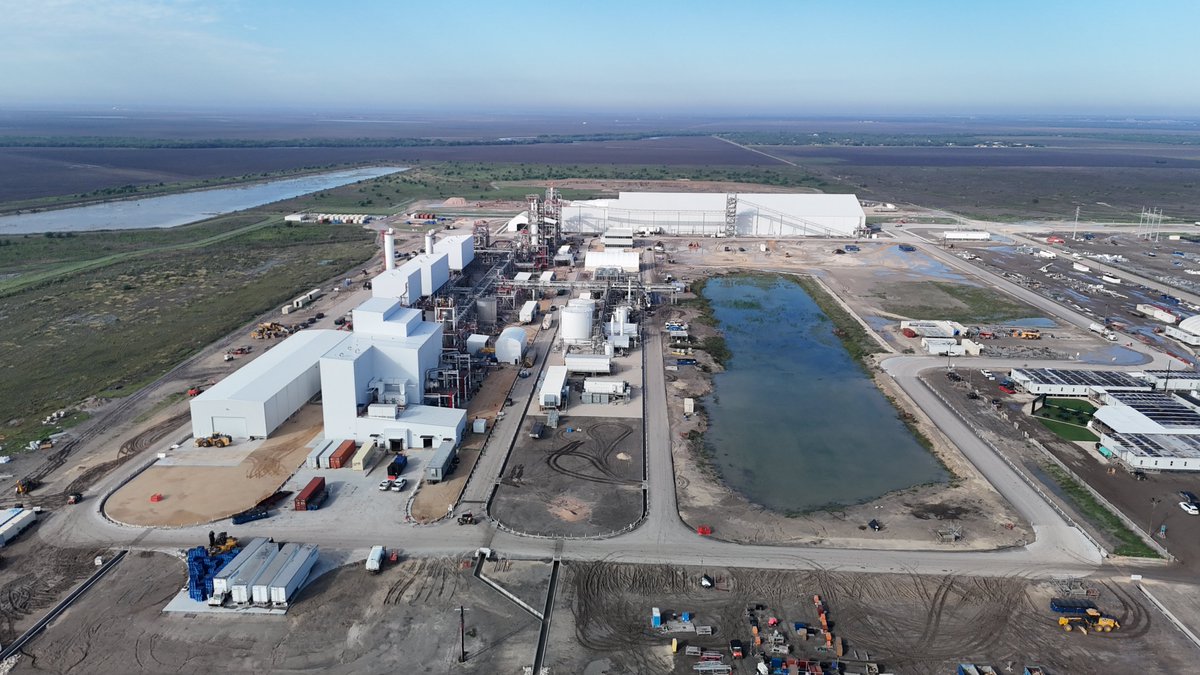
New equipment is piling up at Tesla's lithium refinery near Robstown, Texas — and the latest aerial footage suggests the facility isn't done growing. Independent drone operator Joe Tegtmeyer captured the site on November 12, 2026, en route to Starbase for Starship Flight 15, continuing his regular tradition of overflying the plant. The images and video show hardware that wasn't present in prior passes, pointing to active construction or expansion work at a facility that only reached full operational capacity four months ago.

Where the Plant Stands Today
To understand why new equipment matters here, it helps to know how far this facility has come in a short time. Tesla broke ground in May 2023 on a 1,200-plus-acre site outside Corpus Christi. Initial production began in December 2024, and the plant officially commenced operations in January 2026. By July 2026 — during an event Tesla called Lithium Day 2026 — the company announced the refinery had reached full integrated operational capacity.
That capacity is rated at approximately 20,000 metric tons of battery-grade lithium hydroxide monohydrate annually, according to verified reporting. Tesla says that's enough to support roughly 30 GWh of battery production, or somewhere between 500,000 and 1 million electric vehicles per year. The $1 billion-plus investment also introduced a proprietary acid-free alkaline leaching process that Tesla claims cuts greenhouse gas emissions by over 30% and reduces reagent costs by 60% versus conventional refining methods.
Already Feeding the Production Line
The plant isn't just operational in name. According to previous reporting, the first Cybertruck built with 4680 cells containing lithium from this Gulf Coast refinery rolled off the Giga Texas line on September 4, 2026. The first Cybercab produced using in-house manufactured cathode material from Giga Texas also draws on this lithium supply, as does the Tesla Semi. Battery materials move directly from the Robstown refinery to Giga Texas for 4680 cell production — a domestic supply chain loop that Tesla has been building toward since the plant was announced.
Tesla Lithium Plant: Key Numbers
| Groundbreaking | May 2023 |
| Full Capacity Reached | July 2026 |
| Annual LiOH Output | ~20,000 metric tons |
| Battery Support Capacity | ~30 GWh / year |
| Site Area | 1,200+ acres |
| Total Investment | $1 billion+ |
| Full-Time Employees | 250+ |
What the New Equipment Suggests
Tesla has never publicly announced a Phase 2 expansion for the Robstown plant, so the accumulating equipment Tegtmeyer documented doesn't have an official explanation yet. But the site's 1,200-plus-acre footprint was always conspicuously large for a single-phase 20,000-ton-per-year operation — a scale that strongly implied future expansion was planned from the start. New equipment arriving at an already-operational facility typically signals either capacity additions, process upgrades, or infrastructure for a new production line.
Given that Tesla's vehicle output is scaling with Cybercab ramp and continued Cybertruck production, demand on the 4680 supply chain — and by extension the lithium refinery — will only increase. The Robstown site's combination of available land, existing infrastructure, and direct logistics ties to Giga Texas makes it the logical place to expand domestic lithium processing if Tesla needs more throughput.
Tegtmeyer has been one of the most consistent aerial observers of this site since construction began, making his footage a useful baseline for tracking changes over time. Whether this latest equipment represents a modest capacity upgrade or the beginning of a larger expansion phase, the activity confirms the plant remains in active development — not simply running at steady state.
Related Gear
Gear up your Tesla with tested, custom-fit BASENOR accessories — shop Tesla accessories →
Sources & reporting notes
The links below identify the material source records used for this report.
- @JoeTegtmeyer on X (2026-11-12T15:48:41.000Z) — Direct source
Source links are preserved as published or accessed. See our editorial standards and corrections policy.
The BASENOR Editorial Desk covers Tesla, SpaceX, and related technology, curating reporting from primary sources — official accounts, regulatory filings, and software release data. Every article passes source-record and fact-checking review before publication. About the newsroom.
This report was curated by the BASENOR Editorial Desk from the sources listed above. Read our editorial standards or email editorial@basenor.com to report an error.