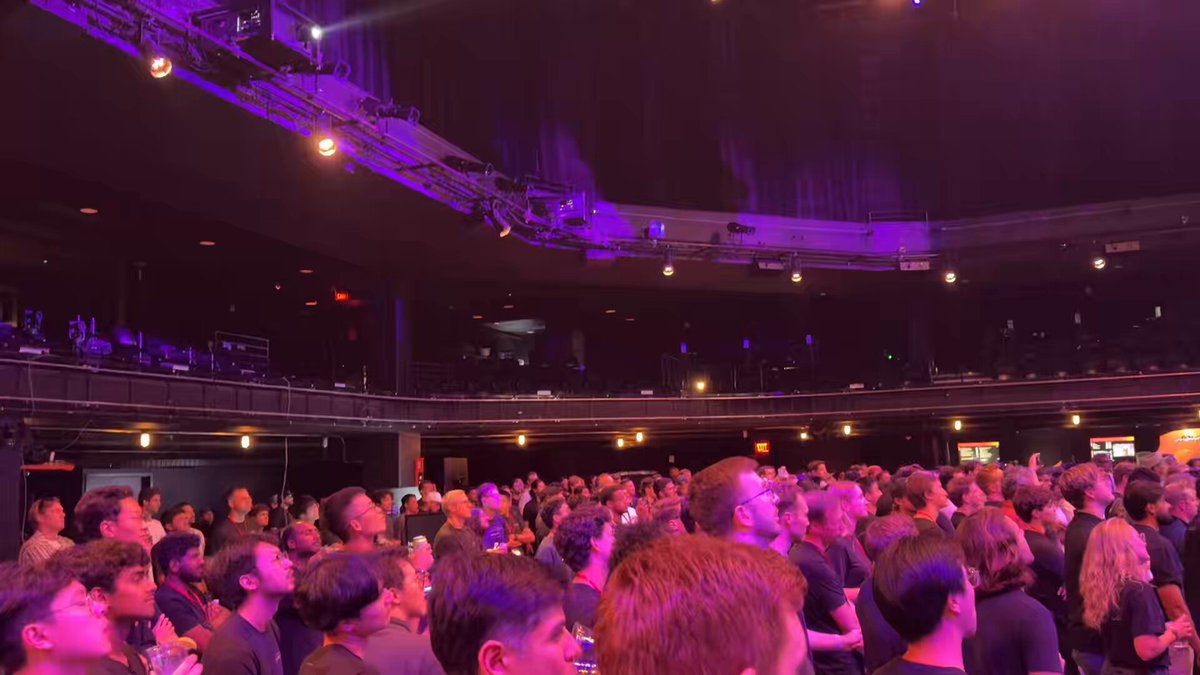
Tesla's Vice President of AI, Ashok Elluswamy, has stepped into a rare public technical discussion outlining the company's approach to autonomous driving — and used the occasion to confirm a milestone that quietly cements Tesla's lead in real-world autonomy data: more than 1 million unsupervised driving miles completed on its vehicle fleet.
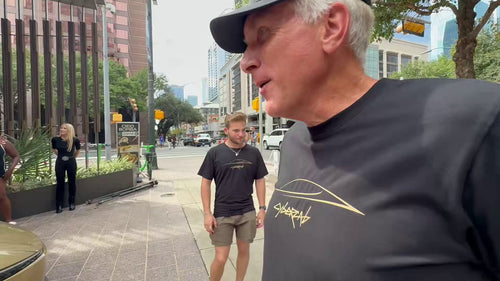
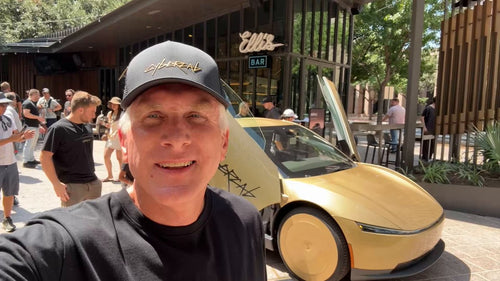
The discussion was surfaced on Thursday by aerospace commentator Joe Tegtmeyer, who highlighted Elluswamy's remarks on the design philosophy, implementation choices, and scaling logic behind Tesla's neural-net-first autonomy stack. It's the most detailed public framing of Tesla's autonomy strategy from a senior AI leader this year, and it lands as the company continues expanding its Robotaxi network beyond Austin.

Why 1 Million Unsupervised Miles Matters
The distinction between "supervised" and "unsupervised" miles is the number that actually matters in autonomy benchmarking. Supervised FSD miles — where a human sits behind the wheel with hands ready — are useful for training and validation, but they don't test whether a system can carry legal and operational responsibility for the drive. Unsupervised miles do.
Tesla's unsupervised miles are being accumulated primarily through the Robotaxi service that launched in Austin in June 2025 and has since expanded to additional metros, along with internal validation fleets that operate without a driver in the seat. Crossing 1 million miles in that mode is a meaningful scale threshold — it puts Tesla into the same order of magnitude as other autonomy operators while retaining a fundamentally different cost structure, since Tesla's vehicles use a camera-only sensor stack rather than lidar-heavy hardware.
The Design Philosophy Elluswamy Outlined
Elluswamy, who has led Tesla's Autopilot and AI efforts for years and reports directly into the company's senior technical leadership, framed the Tesla approach around three pillars that were the subject of his discussion:
1. End-to-End Neural Networks
Tesla's stack replaces hand-coded driving rules with neural networks trained on video from the fleet. This is the architecture that shipped in FSD v12 and has continued to evolve through the v13 and v14 releases. Elluswamy has previously described this as letting the car "learn to drive from data" rather than being told what to do at every intersection.
2. Vision-Only Perception
Tesla continues to bet that cameras plus sufficient compute can match or exceed what multi-sensor rigs deliver — a bet that reduces per-vehicle cost dramatically and makes fleet-scale deployment economically feasible. That's the argument for why the 1 million unsupervised miles number is only the beginning.
3. Fleet Scale as the Moat
The scaling argument Elluswamy referenced is straightforward: Tesla has more cars on the road generating more edge-case video than any competitor. Every hard intervention, every unusual scenario, every weather anomaly becomes training data. Autonomy operators without a consumer fleet have to manufacture that data through simulation or paid drivers.
What This Signals for the Robotaxi Roadmap
The 1 million unsupervised miles figure is the kind of data point Tesla will lean on heavily in upcoming investor communications and regulatory filings. It provides quantitative backing for the argument that the Robotaxi network is not a limited pilot but a scaling commercial operation.
It also arrives at a moment when Tesla is pushing to expand Robotaxi service into additional US metros and, according to prior company guidance, is working toward the eventual removal of safety monitors from the vehicles entirely. Regulators — both at the federal level via NHTSA and at the state level in California and Texas — will be watching disengagement rates and incident data closely as that expansion progresses.
Key Figures
| Metric | Value |
|---|---|
| Unsupervised driving miles | 1,000,000+ |
| Robotaxi launch | Austin, June 2025 |
| Sensor architecture | Vision-only (cameras) |
| Software architecture | End-to-end neural networks |
What Owners Should Take From This
For Tesla owners running supervised FSD on personal vehicles today, the takeaway is that the model improvements being validated on the unsupervised Robotaxi fleet feed back into the consumer FSD build. The two stacks share a common foundation, and improvements harvested from millions of driverless miles translate into fewer interventions on customer cars over successive OTA releases. You can follow those releases in our FSD coverage.
The gap between what Robotaxi vehicles do autonomously and what a customer FSD car is authorized to do remains a regulatory and liability question rather than purely a technical one — but the underlying capability is converging.
What to Watch Next
Three signals will be worth tracking in the coming months: whether Tesla begins publishing regular unsupervised-mileage updates the way it once published safety-report cadence; the pace of Robotaxi metro expansion beyond current markets; and any changes to safety-monitor policy in existing Robotaxi service areas. Each of those would signal whether the 1 million-mile mark is a one-off headline or the start of a compounding curve.
🚕 Following the Robotaxi rollout? See every operating city, launch date and announced market in our Tesla Robotaxi Tracker.
Related Gear
Gear up your Tesla with tested, custom-fit BASENOR accessories — shop Tesla accessories →
Sources & reporting notes
The links below identify the material source records used for this report.
- @JoeTegtmeyer on X (2026-09-04T14:27:53.000Z) — Direct source
Source links are preserved as published or accessed. See our editorial standards and corrections policy.
The BASENOR Editorial Desk covers Tesla, SpaceX, and related technology, curating reporting from primary sources — official accounts, regulatory filings, and software release data. Every article passes source-record and fact-checking review before publication. About the newsroom.
This report was curated by the BASENOR Editorial Desk from the sources listed above. Read our editorial standards or email editorial@basenor.com to report an error.