📌 UPDATE — June 27, 2026
Tesla has officially confirmed key Cybercab design specs: the two-seat vehicle will not typically include a steering wheel or pedals, though test vehicles may carry them for manual override. Separately, observers note that Tesla now has pure vision Level 4 autonomous vehicles already operating on public roads — widely believed to be Cybercabs — marking a critical milestone ahead of the vehicle's formal commercial launch. Whole Mars Catalog described it as "an important step before the vehicle goes into service," underscoring that pre-launch validation is actively underway.


One year ago today, the first Tesla robotaxi rides kicked off in Austin, Texas — with a human safety monitor riding along just in case. As of this anniversary, that safety monitor is gone. Tesla's Austin fleet is now operating fully unsupervised, marking a genuine inflection point in the company's autonomous driving program.

From Safety Monitor to No One in the Front Seat
The timeline of this program moved faster than most expected. Tesla launched supervised robotaxi service in Austin on June 22, 2025, with a human monitor occupying the front passenger seat. That arrangement lasted about seven months. On January 22, 2026, Tesla began limited unsupervised rides — still restricted in geographic scope. Then on June 3, 2026, Tesla's official Robotaxi X account confirmed a full metro-wide unsupervised rollout, expanding coverage to suburbs including Pflugerville and Manor, I-35 corridors, Gigafactory Texas, and Austin-Bergstrom Airport.
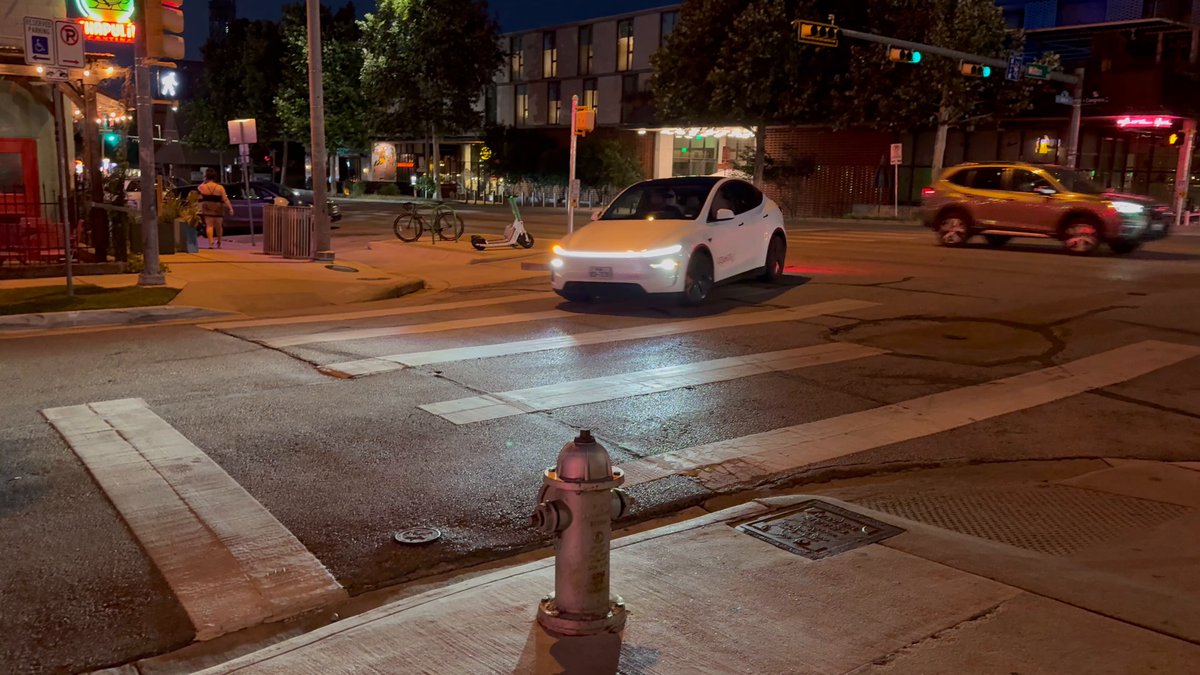
The vehicles running these routes are modified Tesla Model Y units operating on FSD Unsupervised software. A community-run Robotaxi Tracker counted approximately 20 unsupervised vehicles active in Austin as of early June, though that number fluctuates with deployment and maintenance cycles.
The Broader Expansion Picture
Austin is no longer the only city in the picture. In April 2026, Tesla extended robotaxi operations — including unsupervised vehicles — to Dallas and Houston. That makes Texas the first state with a multi-city unsupervised robotaxi footprint from any manufacturer operating at this scale with consumer-grade hardware.
The next hardware chapter is already in motion. Tesla has begun Cybercab production at Giga Texas, with volume manufacturing expected to ramp in mid-2026. The purpose-built two-seater is designed from the ground up for driverless operation — no steering wheel, no pedals — and will eventually replace the modified Model Y units currently serving the fleet. On the software side, FSD v15 is anticipated to bring a significant architectural upgrade, including a 10-billion-parameter neural network, which Tesla expects to meaningfully improve performance across edge cases.
Regulatory Scrutiny Remains
The program's progress hasn't gone unnoticed by regulators. NHTSA sent a formal information request to Tesla in May 2026, citing safety concerns and ongoing investigations into FSD performance in reduced-visibility conditions. According to NHTSA filings, 14 collisions involving the Austin fleet have been reported since the June 2025 launch — the majority occurring during the supervised phase. Tesla has not publicly commented on the specific NHTSA inquiry, but the agency's involvement signals that federal oversight of commercial robotaxi operations is intensifying across the industry, not just for Tesla.
What the Anniversary Actually Means
Twelve months is a short window in automotive terms. Most traditional vehicle programs take three to five years from concept to production. Tesla went from first supervised public ride to full metro unsupervised operation in one year, using production hardware already in millions of driveways. That's the part worth paying attention to — not just the milestone itself, but the pace at which the goalposts keep moving.
The open question now is how quickly the Cybercab ramp translates into meaningful fleet scale, and whether FSD v15's architectural changes deliver the reliability improvements that would support expansion into higher-density markets beyond Texas. The first year answered whether unsupervised operation was possible. Year two will answer whether it's scalable.
📋 Tracking Tesla software? See every firmware, FSD and app version in one place in our Tesla Software Update Tracker.
🚕 Following the Robotaxi rollout? See every operating city, launch date and announced market in our Tesla Robotaxi Tracker.
Related Gear
Gear up your Tesla with tested, custom-fit BASENOR accessories — shop Tesla accessories →
Sources & reporting notes
The links below identify the material source records used for this report.
- @SawyerMerritt on X (2026-06-22T07:01:00.000Z) — Direct source
- @SawyerMerritt on X (2026-06-27T20:26:58.000Z) — Direct source
- @wholemars on X (2026-06-27T20:47:40.000Z) — Direct source
- @wholemars on X (2026-06-27T20:33:19.000Z) — Direct source
Source links are preserved as published or accessed. See our editorial standards and corrections policy.
The BASENOR Editorial Desk covers Tesla, SpaceX, and related technology, curating reporting from primary sources — official accounts, regulatory filings, and software release data. Every article passes source-record and fact-checking review before publication. About the newsroom.
This report was curated by the BASENOR Editorial Desk from the sources listed above. Read our editorial standards or email editorial@basenor.com to report an error.