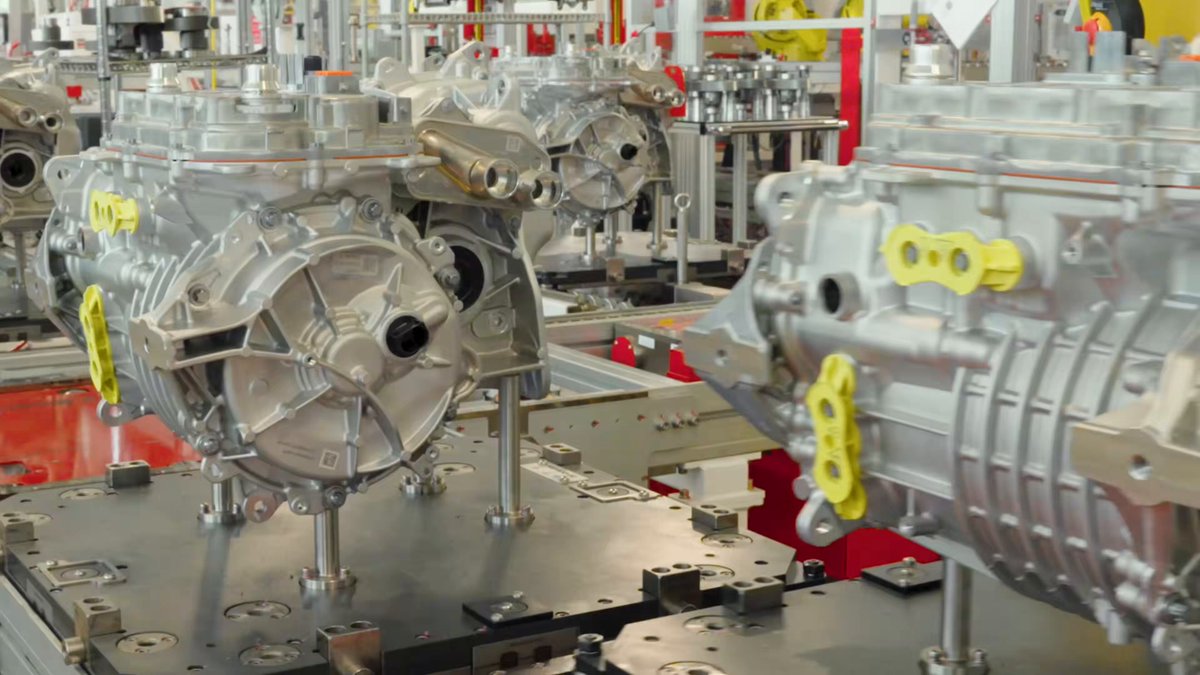
Tesla is starting to lift the curtain on Cybercab's production system, and the early numbers are striking. In a recruiting video posted late Monday, the company said the two-seat robotaxi is the most efficient EV ever certified and built, is 40% more efficient than a Model Y, and that Tesla is now producing a Cybercab drive unit every 10 seconds. Taken together, the claims suggest the Cybercab program is much further along on the manufacturing side than most outside observers have assumed.

The efficiency claim, in context
The headline number in the video — surfaced by Sawyer Merritt shortly after Tesla Recruiting posted it — is that Cybercab consumes roughly 40% less energy per mile than a Model Y. According to previously reported certification data, Cybercab has been rated at approximately 165 Wh/mi, versus around 240 Wh/mi for the Model Y Rear-Wheel Drive. That works out to about a 31% reduction in energy per mile from the Model Y RWD baseline, and closer to the 40%+ figure Tesla is citing when measured against higher-consumption Model Y variants.
For a purpose-built robotaxi, efficiency is not a marketing flourish — it is the business model. Every watt-hour saved per mile reduces per-ride energy cost, extends useful daily range between charging sessions, and shrinks the required battery pack. According to prior reporting on the certification, Cybercab uses a pack in the ~47-48 kWh range, which is roughly two-thirds the size of a Model Y Long Range pack while still targeting competitive range figures. That is the payoff of building a two-seat, low-drag, single-purpose vehicle from a clean sheet.
Key figures
| Metric | Cybercab | Reference |
|---|---|---|
| Certified efficiency | ~165 Wh/mi | Model Y RWD: ~240 Wh/mi |
| Tesla's stated advantage | 40% more efficient than Model Y | Per Tesla drive unit video |
| Battery pack | ~47-48 kWh | Per prior certification reports |
| Drive unit line rate | 1 every 10 seconds | ~360/hour theoretical max |
A drive unit every 10 seconds
The production-cadence claim is arguably the bigger signal. A drive unit every 10 seconds implies a theoretical run rate of roughly 360 units per hour, or on the order of 8,000+ units per day if a line were run continuously — well beyond anything Tesla has previously described for a new vehicle program at this stage. Even accounting for pilot-line ramping, downtime, and the fact that Tesla has not disclosed how many hours per day the line is operating, the figure implies a manufacturing system that is closer to consumer-electronics throughput than traditional automotive practice.
That is consistent with what Tesla has publicly telegraphed about the Cybercab line at Gigafactory Texas: an "unboxed" process where subassemblies — front, rear, sides, floor — are built in parallel and only married late in the sequence. A drive unit cadence of six per minute is exactly the kind of number an unboxed line would need to hit to keep a high-tempo final assembly stage fed.
Whole Mars Catalog captured the sentiment among Tesla-watchers who've studied the video: the missing steering wheel gets the headlines, but the production system is the real story. Robotaxi economics only work if the vehicles themselves are cheap to build in large volumes. A high-cadence, tightly integrated line is how Tesla plans to get there.
What this means for the Cybercab timeline
Tesla has previously guided to volume Cybercab production beginning in 2026, with Elon Musk targeting output figures that most analysts have treated skeptically. The fact that Tesla is now publicly citing a specific drive unit line rate — and doing so through a recruiting channel, meaning the hiring push is active — suggests the manufacturing side is transitioning from pilot to ramp. Recruiting videos also tend to reflect what Tesla wants engineers to associate the program with; leading with efficiency and throughput, rather than the autonomy stack or the interior, is a deliberate choice.
For Tesla owners, the near-term takeaway is indirect but real. The efficiency and production learnings coming out of Cybercab — new drive unit designs, thermal management, motor windings, and manufacturing tolerances — historically migrate into consumer vehicle programs within a generation or two. The Model Y and Model 3 refreshes that follow Cybercab are likely to inherit at least some of what the robotaxi line proves out first.
What to watch next
- Official EPA/certification publication of the 165 Wh/mi figure and range rating, which would formally confirm Tesla's "most efficient EV ever certified" claim.
- First customer or fleet deliveries of Cybercab units into Tesla's robotaxi network, expected as the pilot line scales.
- Line-rate disclosures beyond the drive unit — specifically final-assembly cadence, which will determine actual weekly vehicle output.
- Downstream tech transfer to Model 3 and Model Y drive units in future refreshes.
Mini-FAQ
Is Cybercab really the most efficient EV ever built?
Based on the certification figures reported so far (~165 Wh/mi), yes — no other production EV has been certified at that level of consumption. Tesla's claim in the drive unit video restates that positioning. The full official certification document is the definitive reference and has been referenced in prior reporting.
How does 40% more efficient than Model Y square with the 165 vs 240 Wh/mi numbers?
Against the Model Y RWD's ~240 Wh/mi, Cybercab's 165 Wh/mi is about 31% lower energy per mile. Tesla's "40% more efficient" framing appears to compare miles-per-kWh rather than Wh/mi, or to use a higher-consumption Model Y variant as the baseline. Either way, the direction and magnitude of the advantage are consistent.
Does "a drive unit every 10 seconds" mean a Cybercab every 10 seconds?
No. A drive unit is one motor-and-gearbox assembly. Final vehicle cadence depends on how many drive units each Cybercab uses and how quickly the rest of the vehicle can be assembled. The 10-second figure describes the drive unit line specifically, not whole-vehicle output.
When can I ride in one?
Tesla has not published a firm rollout schedule for Cybercab availability inside its robotaxi network beyond the previously stated 2026 volume-production target. The recruiting push and public production-rate disclosures point toward that ramp being active now.
The through-line across all three tweets is the same: Cybercab isn't just a design exercise or an autonomy demo. It's shaping up to be Tesla's most manufacturing-forward vehicle program to date — and the numbers coming out of the drive unit line are the first real evidence of it.
🚕 Following the Robotaxi rollout? See every operating city, launch date and announced market in our Tesla Robotaxi Tracker.
Related Gear
Gear up your Tesla with tested, custom-fit BASENOR accessories — shop Tesla accessories →
Sources & reporting notes
The links below identify the material source records used for this report.
- @TeslaRecruiting on X (2026-09-22T23:06:45.000Z) — Direct source
- @SawyerMerritt on X (2026-09-22T23:09:21.000Z) — Direct source
- @wholemars on X (2026-09-22T23:29:04.000Z) — Direct source
Source links are preserved as published or accessed. See our editorial standards and corrections policy.
The BASENOR Editorial Desk covers Tesla, SpaceX, and related technology, curating reporting from primary sources — official accounts, regulatory filings, and software release data. Every article passes source-record and fact-checking review before publication. About the newsroom.
This report was curated by the BASENOR Editorial Desk from the sources listed above. Read our editorial standards or email editorial@basenor.com to report an error.