📌 UPDATE — July 7, 2026
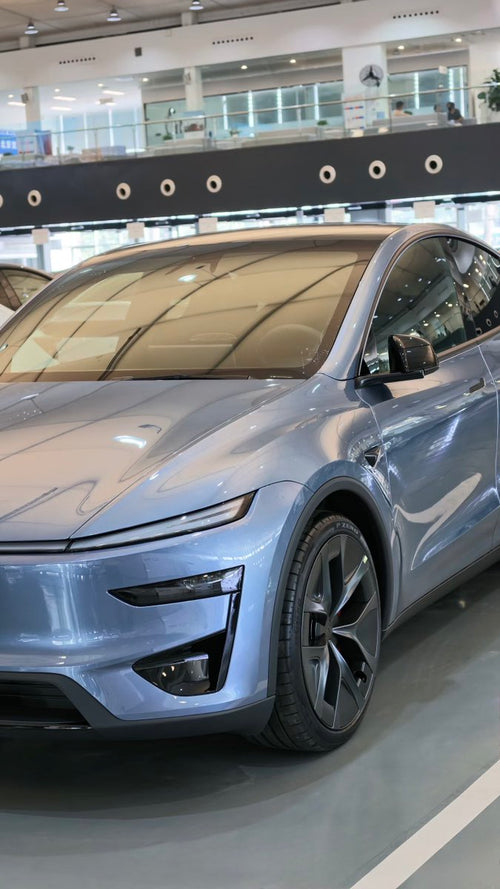
New footage and photos emerging from Giga Texas show multiple production Cybercabs running laps on the factory's test track simultaneously — a strong signal that validation testing is ramping up fast. Alongside the track activity, first clear looks at the production interior have surfaced, revealing a strikingly minimal cabin: no steering wheel, no pedals, and a remarkably clean finish that goes beyond what was shown in earlier prototypes. Tesla watchers are calling it one of the most polished interiors the company has ever produced. The combination of fleet-level track testing and a confirmed production-spec interior suggests Tesla is pushing hard toward a broader Cybercab rollout in the near term.
@SawyerMerritt · July 7, 2026"The production Cybercab interior is hella clean 🤌 Dying to ride in one!"
View on X →
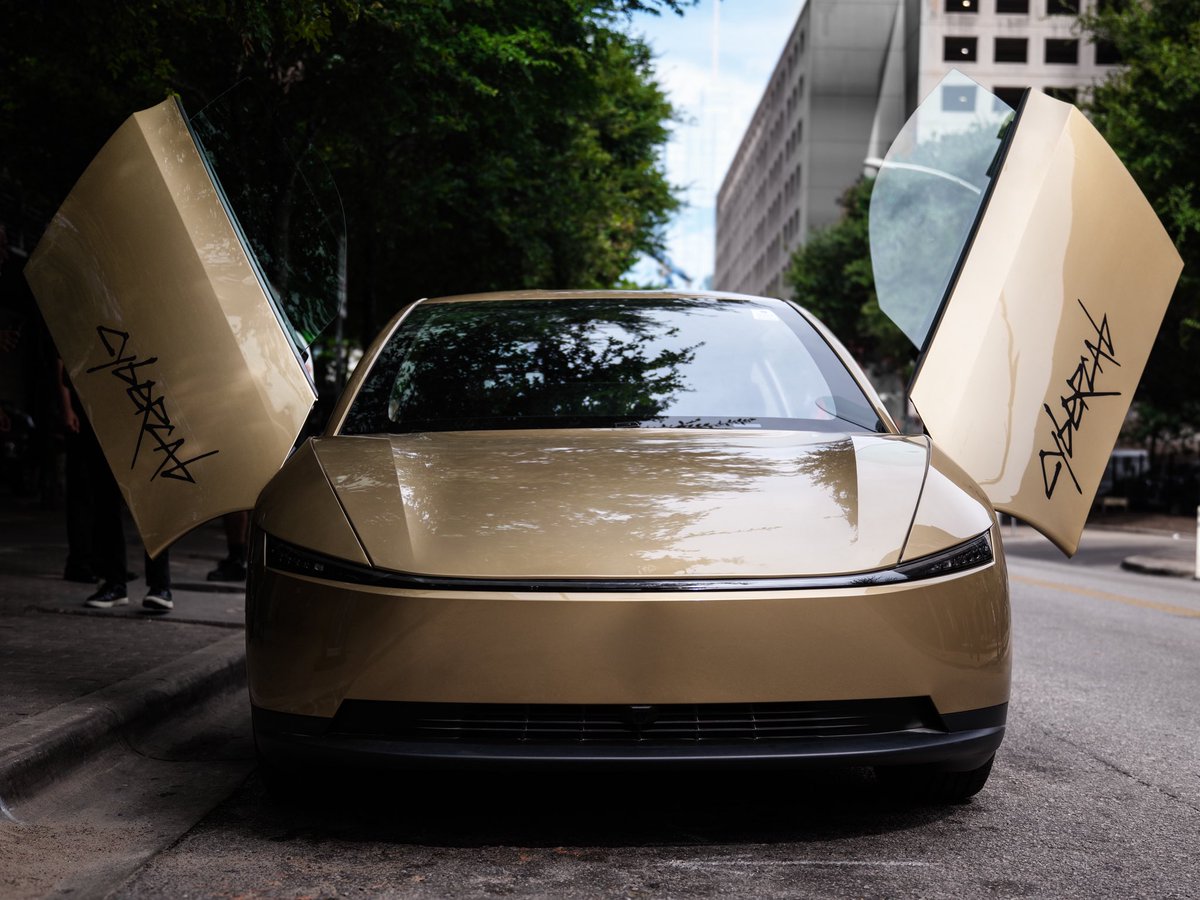
📌 UPDATE — July 7, 2026
Testing has escalated significantly: a fleet of nine Cybercabs — now sporting official "Cybercab" branding logos — was spotted staging for a group run in Austin today. Notably, multiple units were observed operating driverlessly on public roads, marking a step up from earlier single-vehicle engineering runs. The coordinated multi-vehicle deployment suggests Tesla is stress-testing fleet-scale autonomous operations ahead of a commercial launch.
@JoeTegtmeyer · Jul 7, 2026
"A group of 9 Cybercabs with the 'Cybercab' logos getting ready to head out for testing in Austin. Have you seen these today in the city?"
View on X →
@TeslaNewswire · Jul 7, 2026
"Driverless Tesla Cybercab spotted testing in Austin, Texas. Ahead of its launch?"
View on X →
📌 UPDATE — July 6, 2026
Tesla's Cybercab has now completed a 40-minute fully driverless journey through Austin, Texas — a significant step beyond the engineering tests reported earlier. Video footage of the run was captured and shared publicly, offering a real-world look at the robotaxi navigating city streets with no human intervention whatsoever. The footage, posted by @wholemars, includes both a standard-speed YouTube cut and raw 1x speed footage, giving a ground-level view of how the system handles live Austin traffic conditions.

📌 UPDATE — July 1, 2026
Tesla's Austin Robotaxi service is now operating across a notably large driverless service area, with early riders reporting smooth point-to-point trips entirely without a human driver. Passengers can stream Netflix during rides, with vehicle controls and destination progress remaining visible as an overlay on the in-car screen — a thoughtful UI touch keeping riders informed while they're entertained. Prominent Tesla observer @wholemars shared live impressions from inside a moving Cybercab today, calling out both the service area size and the in-car experience.


📌 UPDATE — July 1, 2026
Testing has escalated significantly at Giga Texas, with Cybercabs now observed "racing" around the factory's large oval test track — the first time aerial observer Joe Tegtmeyer has captured this on video. Beyond speed runs, multiple units are actively simulating passenger pickup and drop-off operations around the main factory building, suggesting Tesla is stress-testing the full robotaxi service loop in a controlled environment before wider deployment. The combination of high-speed oval testing and stop-and-go passenger simulation points to a program rapidly maturing toward operational readiness.


📹 Source: @JoeTegtmeyer via aerial footage at Giga Texas, July 1, 2026
📌 UPDATE — June 30, 2026
Tesla's Director of Autopilot Ashok Elluswamy has directly confirmed the Cybercab is "definitely driving by itself," lending official executive weight to the Austin testing activity. Separately, dozens of Cybercabs have now been spotted staged at a dedicated Austin Robotaxi hub, signaling the operation has scaled well beyond isolated engineering runs. Early riders report zero driver-monitoring nags, the ability to stream video on the front display, and on-demand vehicle summoning — with one rider calling unsupervised FSD "fucking amazing." Production units with no steering wheel or pedals have been independently photographed on Austin public roads by multiple trackers including Sawyer Merritt.
🔍 Executive Confirmation — @aelluswamy

Early rider reaction — @wholemars

Production Cybercab on Austin public roads — @SawyerMerritt

📌 UPDATE — June 30, 2026
Tesla's Austin Robotaxi service is now delivering real-world rider experiences, with early users reporting sub-5 minute wait times for fully driverless trips. Prominent Tesla watcher Whole Mars Catalog (@wholemars) shared positive impressions after completing his first two driverless Robotaxi rides in Austin, specifically calling out the efficient pickup times and praising the in-car sound system. The feedback suggests Tesla's operational logistics — dispatching, routing, and vehicle availability — are holding up well in early public deployment.

@wholemars via X — June 30, 2026
Tesla has officially started engineering tests of its first production Cybercab vehicles on public roads in Austin, Texas. The vehicles are operating without a steering wheel or pedals — exactly as designed — marking the clearest signal yet that Tesla's robotaxi ambitions are moving from prototype to reality.

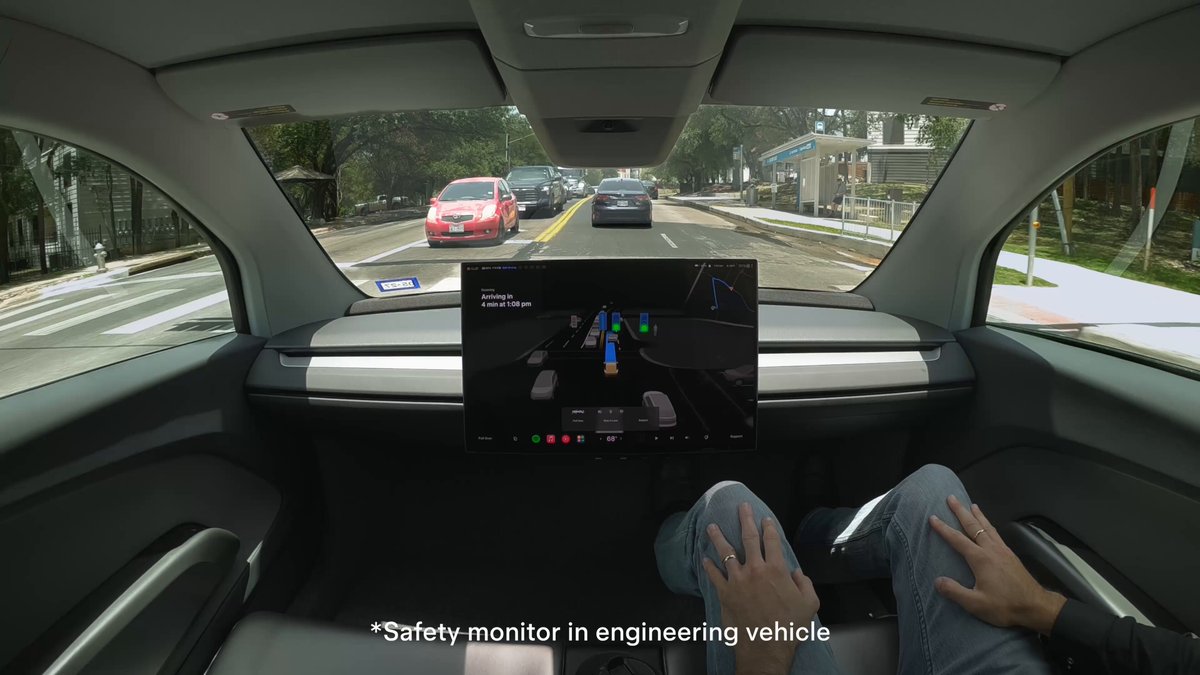
Elon Musk confirmed the news within minutes, posting video of the Cybercab navigating Austin streets autonomously. A safety monitor is present in the vehicle during this testing phase, but there are no driver controls of any kind — the Texas Department of Transportation has officially confirmed the vehicle's controlless design.
From Unveil to Public Roads in Under Two Years
The timeline here is worth pausing on. Tesla unveiled the Cybercab concept on October 10, 2024. Today — June 30, 2026 — production units are driving themselves through Austin traffic. That's roughly 20 months from reveal to public road engineering tests, a pace that silenced a lot of skeptics who insisted the software would never work or that a controlless vehicle would never receive regulatory approval.
This isn't Tesla's first autonomous activity in Austin. The company began unsupervised robotaxi rides using Model Y vehicles on January 22, 2026, and confirmed a full metro-wide unsupervised rollout — covering suburbs and the I-35 corridor — by June 3, 2026. Public rides became available as recently as June 22, 2026. Today's announcement layers the actual Cybercab hardware on top of that already-operational autonomous infrastructure.
First Look at the Cybercab UI
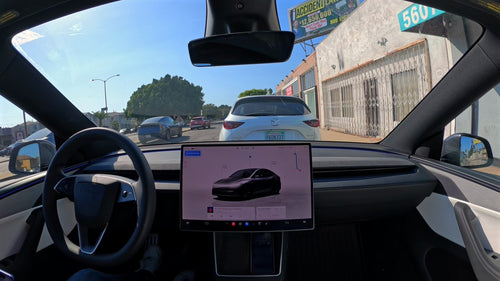
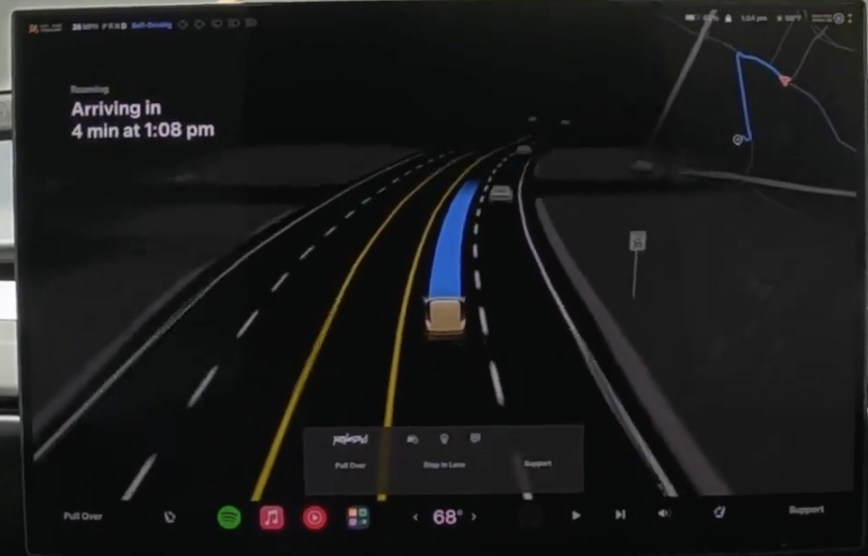
Alongside the road testing footage, we're getting our first real look at the Cybercab's in-cabin screen during an unsupervised FSD robotaxi ride. The interface appears purpose-built for a passenger experience — there's no driver-facing cluster because there's no driver.

A separate shot of the Cybercab's screen shared by @SawyerMerritt shows what passengers will interact with during a ride — a clean, minimal interface consistent with Tesla's broader software aesthetic.
What This Phase Actually Means
The label "engineering tests" is important context. These aren't customer rides — Tesla is validating production hardware on real roads before scaling. According to background research, Tesla confirmed Cybercab testing in downtown Austin using 34 vehicles. The safety monitor present in each unit is standard protocol at this stage; it doesn't mean the car needs human intervention, just that a human is there to observe and respond if needed.
The Cybercab itself is a two-passenger vehicle designed from the ground up for full autonomy. Unlike the Model Y units currently running robotaxi rides in Austin, there is no retrofit here — no wheel removed, no pedals blocked off. The production Cybercab was engineered from day one without those controls, which is precisely why regulatory sign-off from Texas DoT carries weight.
For Tesla owners and watchers, the question now shifts from "will it happen" to "how fast does it scale." The Austin robotaxi network is already live and expanding. Production Cybercabs are now on those same streets. The gap between engineering test and commercial deployment is closing faster than most expected.
🚕 Following the Robotaxi rollout? See every operating city, launch date and announced market in our Tesla Robotaxi Tracker.
Related Gear
Gear up your Tesla with tested, custom-fit BASENOR accessories — shop Tesla accessories →
Sources & reporting notes
The links below identify the material source records used for this report.
- @elonmusk on X (2026-06-30T04:28:18.000Z) — Direct source
- @elonmusk on X (2026-06-30T04:15:41.000Z) — Direct source
- @Tesla on X (2026-06-30T04:17:35.000Z) — Direct source
- @SawyerMerritt on X (2026-06-30T04:23:40.000Z) — Direct source
- @SawyerMerritt on X (2026-06-30T04:19:27.000Z) — Direct source
- @wholemars on X (2026-06-30T04:27:58.000Z) — Direct source
- @wholemars on X (2026-06-30T04:21:37.000Z) — Direct source
- @TeslaNewswire on X (2026-06-30T04:51:22.000Z) — Direct source
- @TeslaNewswire on X (2026-06-30T04:37:00.000Z) — Direct source
- @wholemars on X (2026-06-30T15:46:37.000Z) — Direct source
- @SawyerMerritt on X (2026-06-30T22:39:45.000Z) — Direct source
- @wholemars on X (2026-06-30T22:31:15.000Z) — Direct source
- @wholemars on X (2026-06-30T22:29:18.000Z) — Direct source
- @TeslaNewswire on X (2026-06-30T22:49:09.000Z) — Direct source
- @TeslaNewswire on X (2026-06-30T22:11:58.000Z) — Direct source
- @aelluswamy on X (2026-06-30T22:03:04.000Z) — Direct source
- @JoeTegtmeyer on X (2026-07-01T15:52:03.000Z) — Direct source
- @JoeTegtmeyer on X (2026-07-01T15:46:21.000Z) — Direct source
- @wholemars on X (2026-07-01T17:38:14.000Z) — Direct source
- @wholemars on X (2026-07-01T17:12:29.000Z) — Direct source
- @wholemars on X (2026-07-01T17:10:12.000Z) — Direct source
- @wholemars on X (2026-07-06T20:16:25.000Z) — Direct source
- @wholemars on X (2026-07-06T20:17:10.000Z) — Direct source
- @JoeTegtmeyer on X (2026-07-07T17:03:47.000Z) — Direct source
- @TeslaNewswire on X (2026-07-07T17:21:46.000Z) — Direct source
- @SawyerMerritt on X (2026-07-07T21:37:10.000Z) — Direct source
- @SawyerMerritt on X (2026-07-07T21:08:32.000Z) — Direct source
- @TeslaNewswire on X (2026-07-07T21:16:36.000Z) — Direct source
Source links are preserved as published or accessed. See our editorial standards and corrections policy.
The BASENOR Editorial Desk covers Tesla, SpaceX, and related technology, curating reporting from primary sources — official accounts, regulatory filings, and software release data. Every article passes source-record and fact-checking review before publication. About the newsroom.
This report was curated by the BASENOR Editorial Desk from the sources listed above. Read our editorial standards or email editorial@basenor.com to report an error.