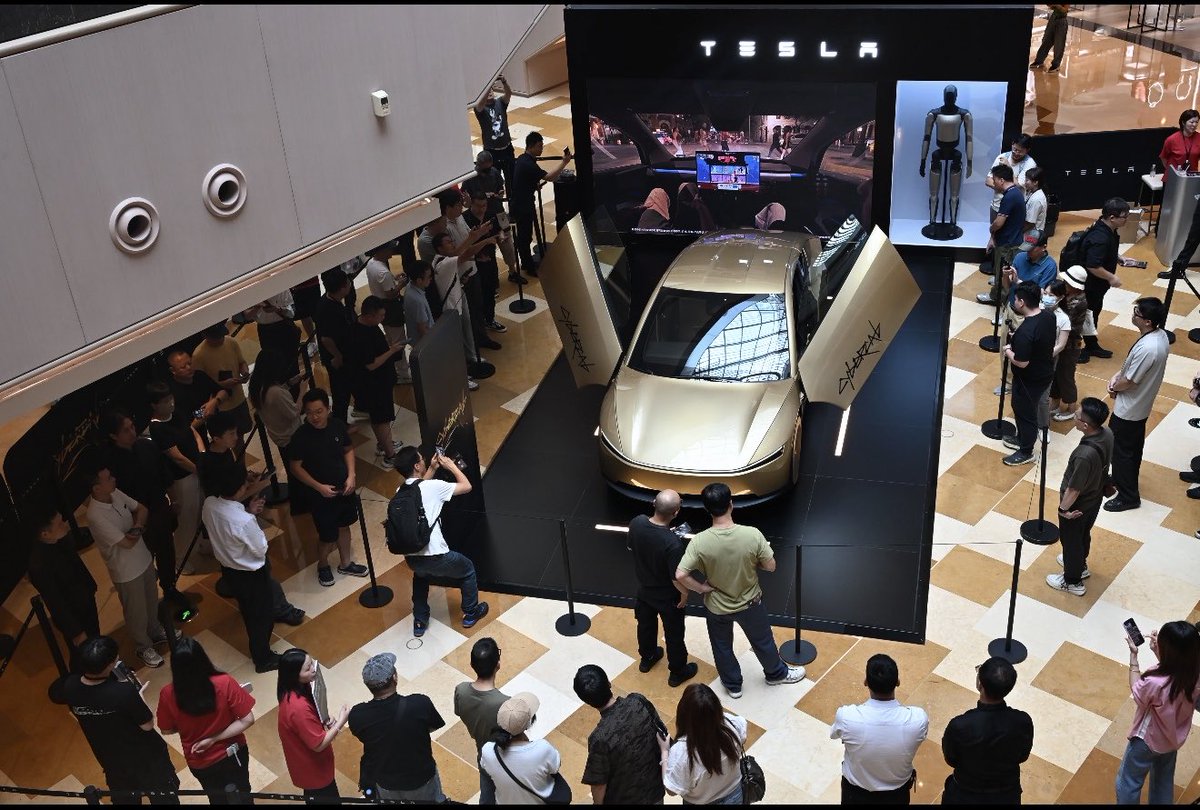
Tesla China released a set of official Cybercab photos on September 18, 2026, as the autonomous robotaxi simultaneously trended across social platforms in China and worldwide. The timing isn't accidental — it coincides with the Cybercab's first physical exhibition tour in Beijing and Shanghai, which kicked off just a day earlier. Here's what the new imagery and confirmed specs actually tell us.

1. Tesla China Is Driving the Global Rollout Narrative
The official photo drop from Tesla China — not Tesla's main account — signals that China is being treated as a primary market for the Cybercab's image campaign. According to reporting by Jay in Shanghai, the vehicle is currently a trending topic both in China and globally. Tesla China confirmed the Beijing and Shanghai exhibition tours are purely for showcasing product design and technological concepts, with no sales or commercial robotaxi operations involved at this stage. That's a deliberate, measured introduction to one of the world's most competitive EV markets.

2. The Cybercab Is Tesla's Most Efficient Production Vehicle
The confirmed specs make this clear: the Cybercab achieves over 6.1 miles per kWh, or roughly 165 Wh/mile. That figure beats every other Tesla in the current lineup. It runs a 47.6 kWh lithium-ion battery pack at 326V, paired with a 163 kW (219 HP) AC 3-phase permanent magnet motor driving the front wheels. For a vehicle designed to run autonomously for thousands of hours, efficiency isn't just a selling point — it's an operational necessity.
3. The Range Figure Is Competitive, Not Class-Leading
The estimated EPA range sits at approximately 293 miles on that 47.6 kWh pack. That's a strong number for a vehicle this size and weight — 3,113 lbs (1,412 kg) — but it's not a range record. What it does reflect is a deliberate engineering trade-off: optimize for efficiency and cost per mile rather than maximum range. For a robotaxi that returns to charge between shifts, 293 miles is more than adequate for most urban deployment cycles.

4. Front-Wheel Drive Is a Deliberate Architecture Choice
The Cybercab uses front-wheel drive — a configuration Tesla has largely avoided in its passenger lineup in favor of rear- or all-wheel drive. For an autonomous vehicle optimized for flat urban environments, FWD simplifies the drivetrain, reduces weight, and lowers manufacturing cost. It also frees up the rear of the vehicle for packaging flexibility. This isn't a compromise; it's an architecture built around the robotaxi use case rather than performance driving dynamics.
5. The Exhibition Tour Separates Hype From Hardware
The September 17 China launch video and the simultaneous physical tour in Beijing and Shanghai represent Tesla's most coordinated Cybercab media push to date. But Tesla China was explicit: these events are about design and technology display, not commercial operations. That distinction matters for anyone tracking when autonomous robotaxi service actually arrives in China. The global trending moment is real — the commercial timeline in China remains an open question.

The official photo release and Asian exhibition tour mark a clear escalation in Tesla's Cybercab rollout strategy. With U.S. operations already underway and China now receiving its first physical showcase, the next milestone to watch is when Tesla China moves from exhibition to a concrete commercial deployment timeline.
🚕 Following the Robotaxi rollout? See every operating city, launch date and announced market in our Tesla Robotaxi Tracker.
Related Gear
Gear up your Tesla with tested, custom-fit BASENOR accessories — shop Tesla accessories →
Sources & reporting notes
The links below identify the material source records used for this report.
- @JayinShanghai on X (2026-09-18T13:18:03.000Z) — Direct source
Source links are preserved as published or accessed. See our editorial standards and corrections policy.
The BASENOR Editorial Desk covers Tesla, SpaceX, and related technology, curating reporting from primary sources — official accounts, regulatory filings, and software release data. Every article passes source-record and fact-checking review before publication. About the newsroom.
This report was curated by the BASENOR Editorial Desk from the sources listed above. Read our editorial standards or email editorial@basenor.com to report an error.