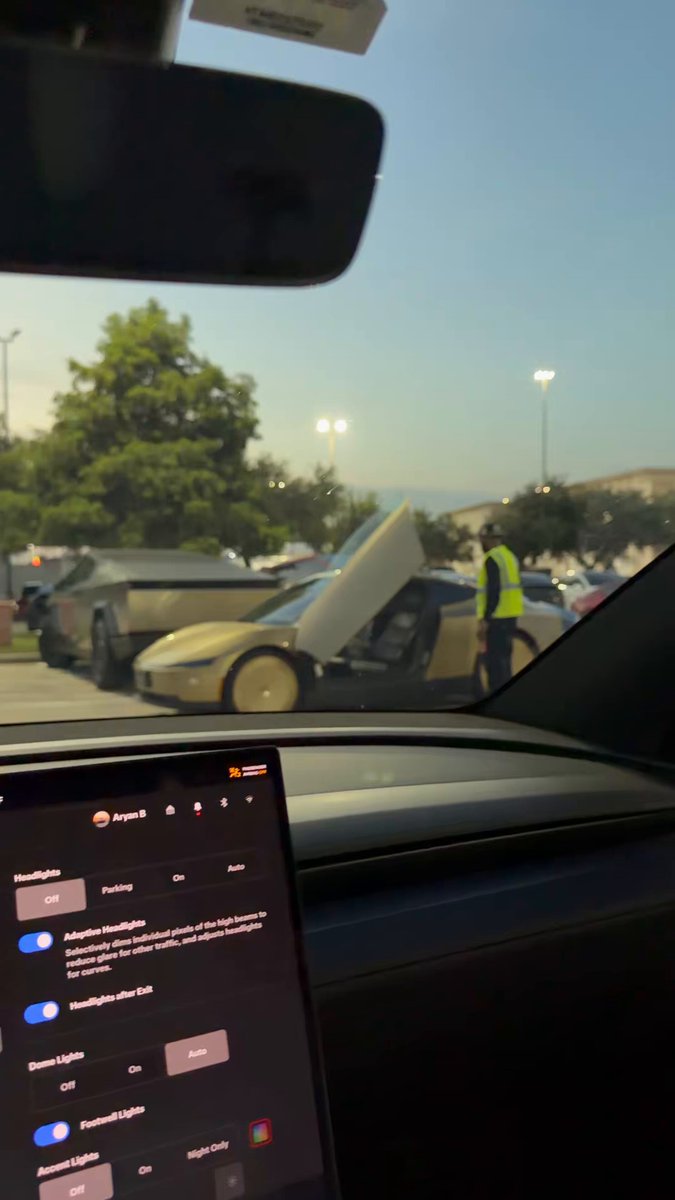
New footage of the Tesla Cybercab's interior confirms what Tesla has been hinting at since the vehicle's reveal: the seats recline far enough that passengers can genuinely sleep during a ride. It's a small detail with large implications for how autonomous travel actually gets used in daily life.

More Than a Comfort Upgrade
Most ride-hail interiors are optimized for throughput, not comfort — upright seats, minimal legroom, the implicit message that your trip is a transaction, not an experience. The Cybercab is designed around a different premise entirely: that when no one is driving, the cabin belongs to the passenger.
According to background research, the Cybercab's interior pairs the reclining seats with generous legroom, vegan leather upholstery, ambient lighting, and a large central display — either 20.5 or 24 inches depending on the configuration — with no steering wheel or pedals in sight. The result is a cabin that has more in common with a first-class train compartment than a traditional taxi.
Elon Musk has previously stated his expectation that Tesla vehicles would be capable of transporting passengers while they sleep by 2026. The Cybercab's seat design appears to be the physical expression of that vision — not just a software promise, but a hardware commitment to it.
Why the Recline Angle Actually Matters
A seat that reclines "surprisingly far" — as the footage suggests — is a meaningful engineering choice, not a cosmetic one. For a vehicle without a driver, there's no front-seat occupant to obstruct a rear recline. That constraint, which limits how far back any passenger seat can go in a conventional car, simply doesn't exist in the Cybercab's two-seat layout.
That freed-up geometry changes the calculus for longer autonomous trips. A 45-minute commute in a reclined seat with ambient lighting is a qualitatively different experience from the same trip sitting upright in a standard ride-hail vehicle. For Tesla, that difference is the product — the autonomous ride isn't just transportation, it's recovered time.
Where the Cybercab Stands Right Now
Pilot production of the Cybercab began at Gigafactory Texas in February 2026, with continuous production underway since April, according to manufacturing reports. The vehicle is purpose-built for autonomy: no manual controls, no driver seat, designed from the outset to operate under Full Self-Driving supervision rather than retrofitted for it.
The reclining seat footage adds another data point to an interior spec that is increasingly well-documented — and increasingly differentiated from anything else currently operating as a robotaxi. Whether that interior translates into a commercially viable service at scale remains the open question, but on the hardware side, Tesla appears to be building the Cybercab as if the autonomous future is already here.
🚕 Following the Robotaxi rollout? See every operating city, launch date and announced market in our Tesla Robotaxi Tracker.
Related Gear
Gear up your Tesla with tested, custom-fit BASENOR accessories — shop Tesla accessories →
Sources & reporting notes
The links below identify the material source records used for this report.
- @TeslaNewswire on X (2026-08-09T19:12:13.000Z) — Direct source
Source links are preserved as published or accessed. See our editorial standards and corrections policy.
The BASENOR Editorial Desk covers Tesla, SpaceX, and related technology, curating reporting from primary sources — official accounts, regulatory filings, and software release data. Every article passes source-record and fact-checking review before publication. About the newsroom.
This report was curated by the BASENOR Editorial Desk from the sources listed above. Read our editorial standards or email editorial@basenor.com to report an error.