📌 UPDATE — June 27, 2026
Fresh footage has emerged of a Tesla Cybercab testing at the Giga Texas test track — completely driverless and without a steering wheel. This marks a notable escalation from earlier sightings of the vehicle simulating pickups and drop-offs, confirming the Cybercab is now operating in a fully unoccupied, hardware-complete autonomous configuration on Tesla's own facility. The absence of a steering wheel is particularly significant, as it signals the production-intent hardware is being validated rather than an early engineering prototype. Social media posts from @SawyerMerritt and @TeslaNewswire broke the news earlier today.


📌 UPDATE — June 25, 2026
Tesla Cybercabs have now been spotted testing on a dedicated new test track at Giga Texas, adding a controlled on-site validation environment to the real-world pickup and drop-off scenarios previously documented in Texas and California. New images shared by @TeslaNewswire show multiple Cybercabs actively running laps on the purpose-built track, suggesting Tesla is ramping up structured validation testing alongside its public road trials. The existence of a dedicated Giga Texas test track — not previously reported — points to an accelerating development and sign-off process ahead of the planned robotaxi service launch.

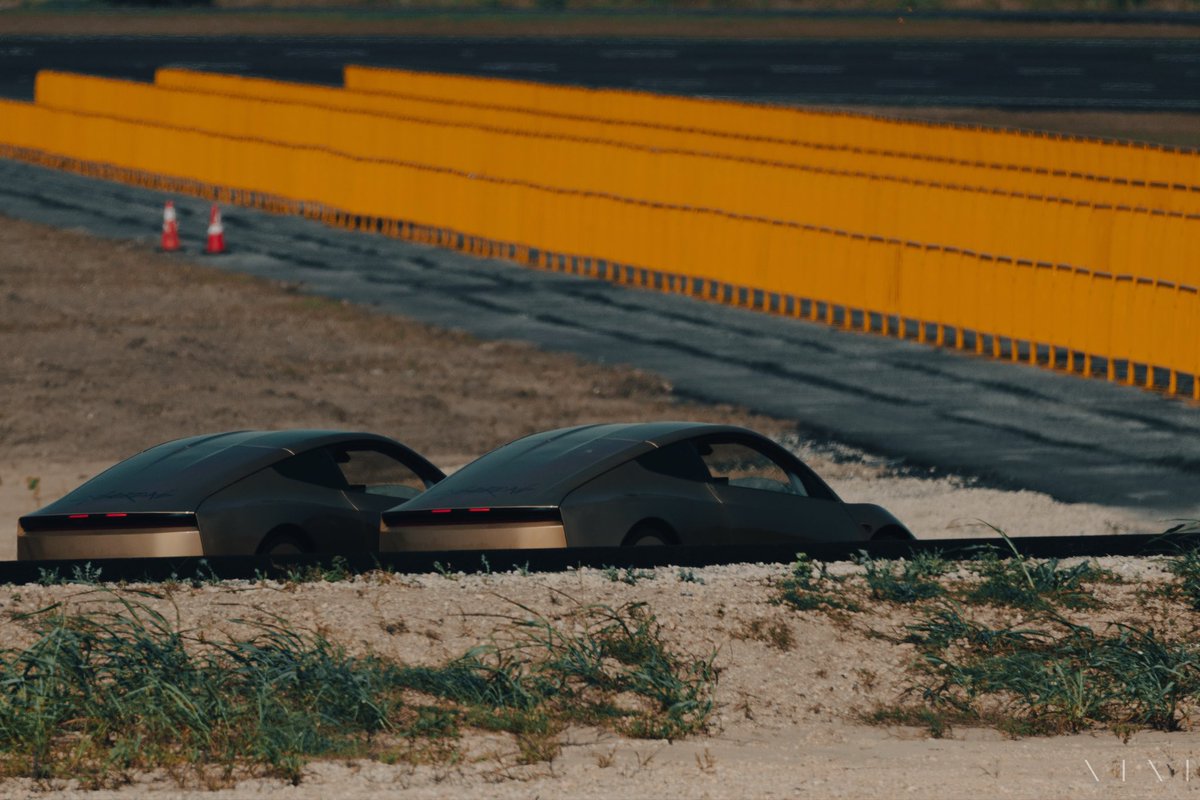
📸 @TeslaNewswire · June 25, 2026 — View on X
📌 UPDATE — June 24, 2026
With just one week left in Q2 2026, Tesla appears to be ramping Cybercab activity significantly at Giga Texas. Aerial observer Joe Tegtmeyer reports that Cybercabs are "literally everywhere" at the facility, being tested in multiple ways — including laps on the factory test track and fresh units rolling directly off the production line. The timing, right at the quarter's end, suggests Tesla may be pushing hard to hit internal milestones ahead of its robotaxi service launch. This Giga Texas surge complements the pickup/drop-off simulations previously spotted in Texas and California, painting a broader picture of an accelerating deployment push.

📌 UPDATE — June 22, 2026
Tesla's Cybercab testing has hit a new milestone at Giga Texas: aerial observer Joe Tegtmeyer captured a record pack of 10 Cybercabs driving together on the factory test track — the largest group spotted on the track at any one time to date. The sighting points to a meaningful acceleration in fleet-level testing, moving beyond individual or small-group runs toward coordinated multi-vehicle operations. This kind of pack testing is typically associated with validating convoy behavior, inter-vehicle communication, and autonomous dispatch logistics ahead of a commercial rollout.
🐦 @JoeTegtmeyer — June 22, 2026
"What is better than seeing a bunch of Cybercabs at Giga Texas? How about 10 driving on the Test Track in a large pack? To my knowledge this is the largest group of Cybercabs on the track at any given time so far!"

📌 UPDATE — June 22, 2026
The Robotaxi testing push is expanding beyond the Cybercab alone. Both a Tesla Cybercab and a Cybertruck have now been spotted fitted with specialized Robotaxi validation hardware mounted on their roofs, suggesting Tesla is broadening its autonomous ride-hailing validation program to include multiple vehicle platforms. The roof-mounted equipment points to active sensor calibration and data-collection runs ahead of a commercial launch. It remains unclear whether the Cybertruck is being evaluated as a permanent part of the Robotaxi fleet or is serving purely as a validation support vehicle. 🔍


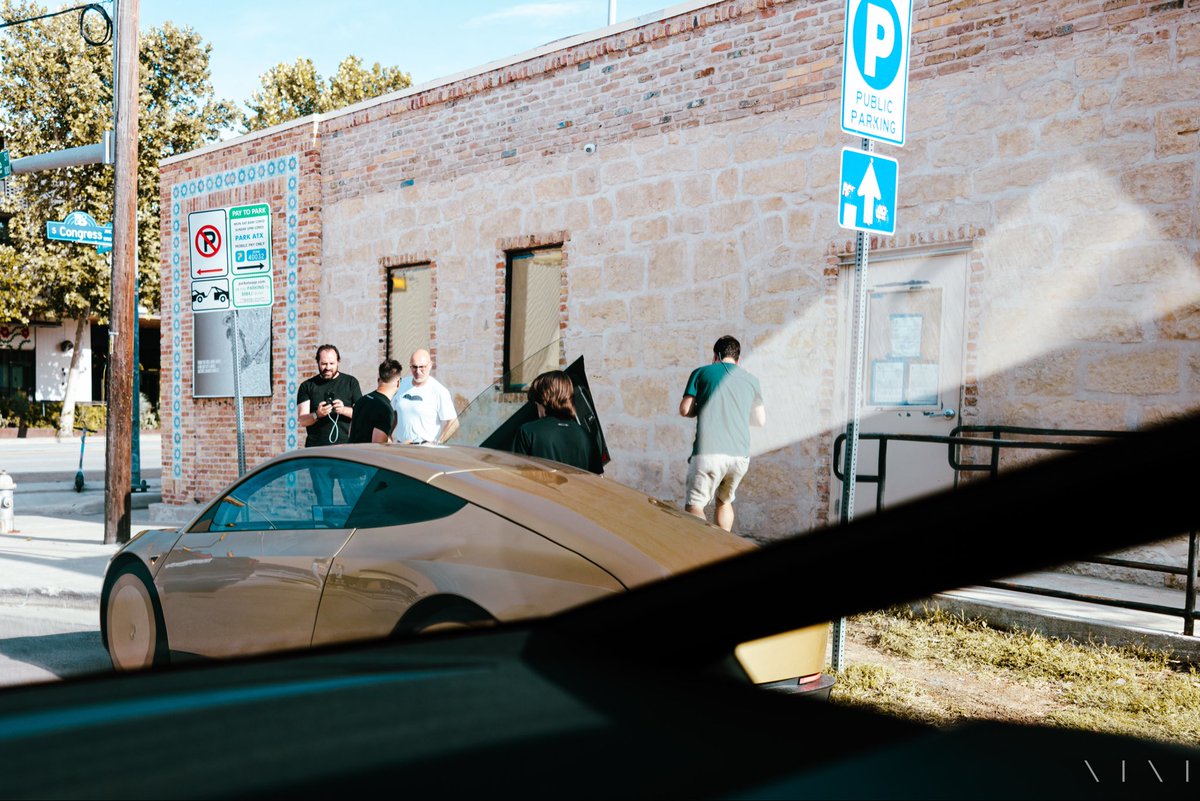
New footage circulating on X shows Tesla's Cybercab doing exactly what it was built for: pulling up, waiting, and moving on — the core loop of an autonomous ride-hailing service. The simulated pickup and drop-off sequences, captured at multiple locations, offer the clearest public signal yet that Tesla's robotaxi operation is moving from concept to operational rehearsal.

Where Testing Is Happening
According to verified reports, Cybercab pickup and drop-off simulations have been observed at Twin Peaks in San Francisco and at multiple sites in Dallas, Texas. Active testing is also confirmed in Austin and Arizona. The geographic spread matters: Tesla isn't rehearsing this in a single controlled environment — it's stress-testing the passenger handoff workflow across real urban and suburban settings with varied road layouts and traffic conditions.
Texas has already granted Tesla Robotaxi LLC a permit for automated vehicle operations with or without safety drivers, meaning some Cybercabs in Austin, Dallas, and Houston are running without a human backup. California remains under supervised testing permits, requiring a safety driver to be present. That regulatory split explains why the most aggressive operational testing is concentrated in Texas.
How Close Is Commercial Launch?
The Cybercab received its EPA Certificate of Conformity on May 26, 2026, with an official Introduction into Commerce date of May 29. Production is underway at Giga Texas, with more than 100 units recently observed on-site and dozens already positioned at robotaxi hubs across the state. Volume targets are currently in the hundreds of units per week, with long-term ambitions scaling into the millions annually.
The vehicle itself is cleared for sale and operation in the United States. What remains unresolved is full federal regulatory approval for unsupervised autonomous operation of the Cybercab specifically — a distinction worth keeping in mind. Based on current trajectory, Cybercabs are expected to enter active robotaxi fleet service as early as July 2026, with August cited as the more conservative estimate.
What the Cybercab Is
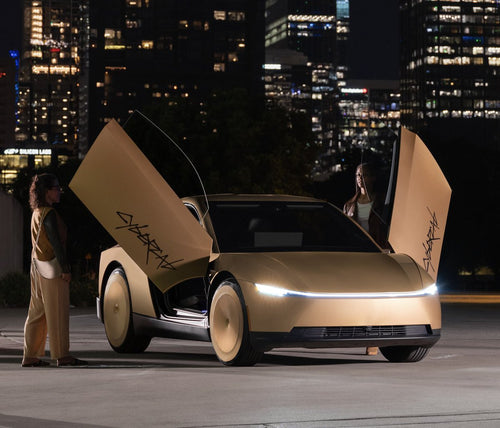
For context on the hardware involved: the Cybercab is a two-seat vehicle with no steering wheel or pedals, relying entirely on a steer-by-wire system. It carries a 48 kWh lithium-ion battery pack with an EPA-adjusted range of 293 miles — and an efficiency rating of 6 miles per kilowatt-hour (165 Wh/mi), which makes it the most efficient production vehicle by that measure. The motor produces 219 horsepower on the front axle, and the curb weight sits at 3,113 pounds. Tesla unveiled it with a projected price under $30,000.
Simulating pickups and drop-offs might sound mundane, but it's one of the most operationally complex parts of running a robotaxi service. The vehicle has to identify a safe stopping point, communicate its arrival to the passenger app, hold position, confirm boarding, and re-enter traffic — all without human intervention. Seeing this workflow being rehearsed at real-world locations, not just a test track, is a meaningful step. The question now is how quickly Tesla can satisfy the remaining regulatory requirements and scale the fleet to match the demand it's already generating.
🚕 Following the Robotaxi rollout? See every operating city, launch date and announced market in our Tesla Robotaxi Tracker.
Related Gear
Gear up your Tesla with tested, custom-fit BASENOR accessories — shop Tesla accessories →
Sources & reporting notes
The links below identify the material source records used for this report.
- @TeslaNewswire on X (2026-06-21T05:38:49.000Z) — Direct source
- @TeslaNewswire on X (2026-06-22T04:36:11.000Z) — Direct source
- @JoeTegtmeyer on X (2026-06-22T14:58:24.000Z) — Direct source
- @JoeTegtmeyer on X (2026-06-24T20:44:47.000Z) — Direct source
- @JoeTegtmeyer on X (2026-06-24T20:44:39.000Z) — Direct source
- @TeslaNewswire on X (2026-06-25T19:00:42.000Z) — Direct source
- @SawyerMerritt on X (2026-06-27T19:32:56.000Z) — Direct source
- @TeslaNewswire on X (2026-06-27T19:36:09.000Z) — Direct source
Source links are preserved as published or accessed. See our editorial standards and corrections policy.
The BASENOR Editorial Desk covers Tesla, SpaceX, and related technology, curating reporting from primary sources — official accounts, regulatory filings, and software release data. Every article passes source-record and fact-checking review before publication. About the newsroom.
This report was curated by the BASENOR Editorial Desk from the sources listed above. Read our editorial standards or email editorial@basenor.com to report an error.