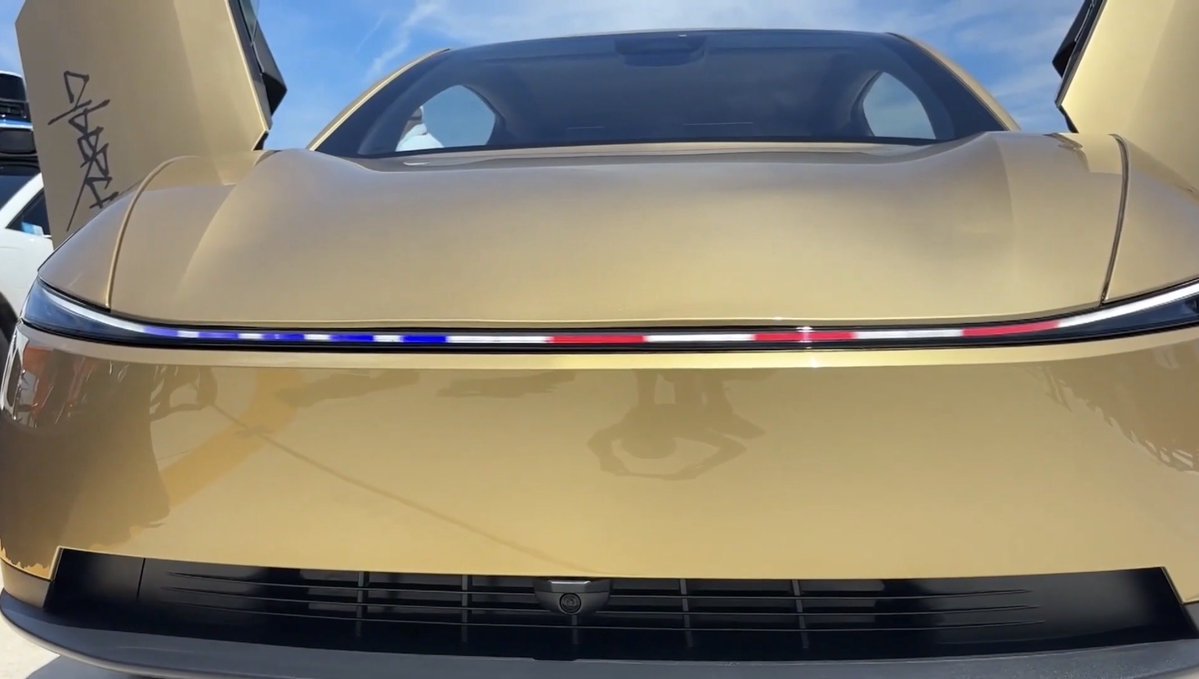
A Tesla Cybercab was recently spotted with its front light bar glowing red, white, and blue — the colors of the American flag. The sighting raises a pointed question: is the Cybercab's light bar RGB-capable? If it is, the implications for Tesla's Robotaxi service go well beyond aesthetics. Here are five details worth understanding.

1. What Was Actually Spotted
The video, shared by @TeslaNewswire, shows a Cybercab's front light bar cycling through red, white, and blue — a deliberate multi-color sequence, not a glitch or reflection. That's the key observation. A single-color LED strip cannot produce this effect; producing distinct color segments requires individually addressable RGB LEDs. Tesla has not confirmed RGB capability for the front bar, but the footage is the most direct evidence yet that the hardware may support it.
2. The Cybercab Already Has a Layered Lighting System
The American flag sighting doesn't exist in a vacuum. According to background research, the Cybercab already features multiple distinct lighting elements: glowing light strips integrated into its body panels, illuminated rescue logos on the sides and rear, rapidly flashing hazard lights for emergency pull-overs, and — most recently observed — new LED strips along the rear doors that cast light onto the pavement when a door opens. The front light bar is just one layer of what appears to be a deliberately designed, multi-purpose lighting architecture.
3. Interior RGB Is Already Confirmed
Pilot production Cybercabs on display in Austin, TX are equipped with ambient interior lighting that riders can change in color via the center touchscreen — similar to the system in the Model 3 Highland, according to background research. That Tesla has already built color-changing capability into the interior makes RGB on the exterior a smaller engineering leap than it might first appear. The question is whether the same addressable LED logic extends to the front bar.
4. The Robotaxi Use Cases Are Practical, Not Just Flashy
If the front light bar is RGB, the most meaningful application isn't patriotic displays — it's rider communication. A fully autonomous vehicle with no driver has no one to wave you over, roll down a window, or nod at you from the front seat. Color-coded light signals could fill that gap: a specific color to indicate the car has identified you and is pulling up, another to signal the door is unlocked and ready, another to flag that the ride is occupied. This kind of external human-machine interface becomes genuinely important at scale, when hundreds of Cybercabs are operating in a city simultaneously.
5. Production Is Underway, but Specs Remain Sparse
Elon Musk confirmed that Cybercab production began in April 2026 at Gigafactory Texas, with a target price of approximately $25,000 for the Robotaxi version. The vehicle runs on FSD v14.3 paired with Hardware 4.5, carries a 47.6 kWh battery, and is EPA-filed with a single 163 kW front-wheel-drive motor. What Tesla has not published is a detailed lighting specification — which means the RGB question remains officially open. The American flag sighting is a strong signal, but until Tesla documents the capability or it appears in a software update changelog, it stays in the "observed but unconfirmed" category.
The Cybercab's lighting system is shaping up to be more sophisticated than a simple design flourish. Whether RGB turns out to be a confirmed feature or a one-off test, the underlying logic is sound: a driverless car needs new ways to communicate with the world outside it, and light is the most universally readable language available.
🚕 Following the Robotaxi rollout? See every operating city, launch date and announced market in our Tesla Robotaxi Tracker.
Related Gear
Gear up your Tesla with tested, custom-fit BASENOR accessories — shop Tesla accessories →
Sources & reporting notes
The links below identify the material source records used for this report.
- @TeslaNewswire on X (2026-08-11T18:34:19.000Z) — Direct source
Source links are preserved as published or accessed. See our editorial standards and corrections policy.
The BASENOR Editorial Desk covers Tesla, SpaceX, and related technology, curating reporting from primary sources — official accounts, regulatory filings, and software release data. Every article passes source-record and fact-checking review before publication. About the newsroom.
This report was curated by the BASENOR Editorial Desk from the sources listed above. Read our editorial standards or email editorial@basenor.com to report an error.