📌 UPDATE — August 10, 2026
Tesla has officially revealed a revised rear hatch design for Cybercabs rolling off the Giga Texas line, specifically re-engineered to accommodate Starlink V5 dish installation. The design change confirms that V5 Starlink integration is being built in at the factory level rather than retrofitted — a meaningful shift from the aftermarket-style fitment seen on earlier spotted units. Aerial observer Joe Tegtmeyer captured the reveal in a video from Giga Texas on the morning of August 10, 2026, noting heavy construction activity alongside the newly visible hatch configuration. This factory-native integration suggests Tesla is standardizing Starlink V5 connectivity across its robotaxi fleet ahead of broader Cybercab deployment.
📹 Source: @JoeTegtmeyer via X, Aug 10 2026
📌 UPDATE — August 10, 2026
New details confirm that Cybercab's Starlink integration isn't limited to Tesla's internal vehicle operations — riders themselves will be able to connect to Starlink during their trips. According to Sawyer Merritt, passengers will be able to stream 4K video, work remotely, and browse the internet while riding in the Cybercab, positioning in-ride connectivity as a premium passenger perk rather than just a backend fleet management tool. This reframes the Starlink antenna as a dual-purpose feature: autonomous driving infrastructure and a consumer-facing amenity that could meaningfully differentiate the Robotaxi experience from traditional rideshare services.
@SawyerMerritt · Aug 10, 2026
"It's worth noting that this Starlink integration isn't just for Tesla's use. Cybercab riders will also be able to connect to Starlink to stream 4K video, work, browse the internet, etc."

📌 UPDATE — August 10, 2026
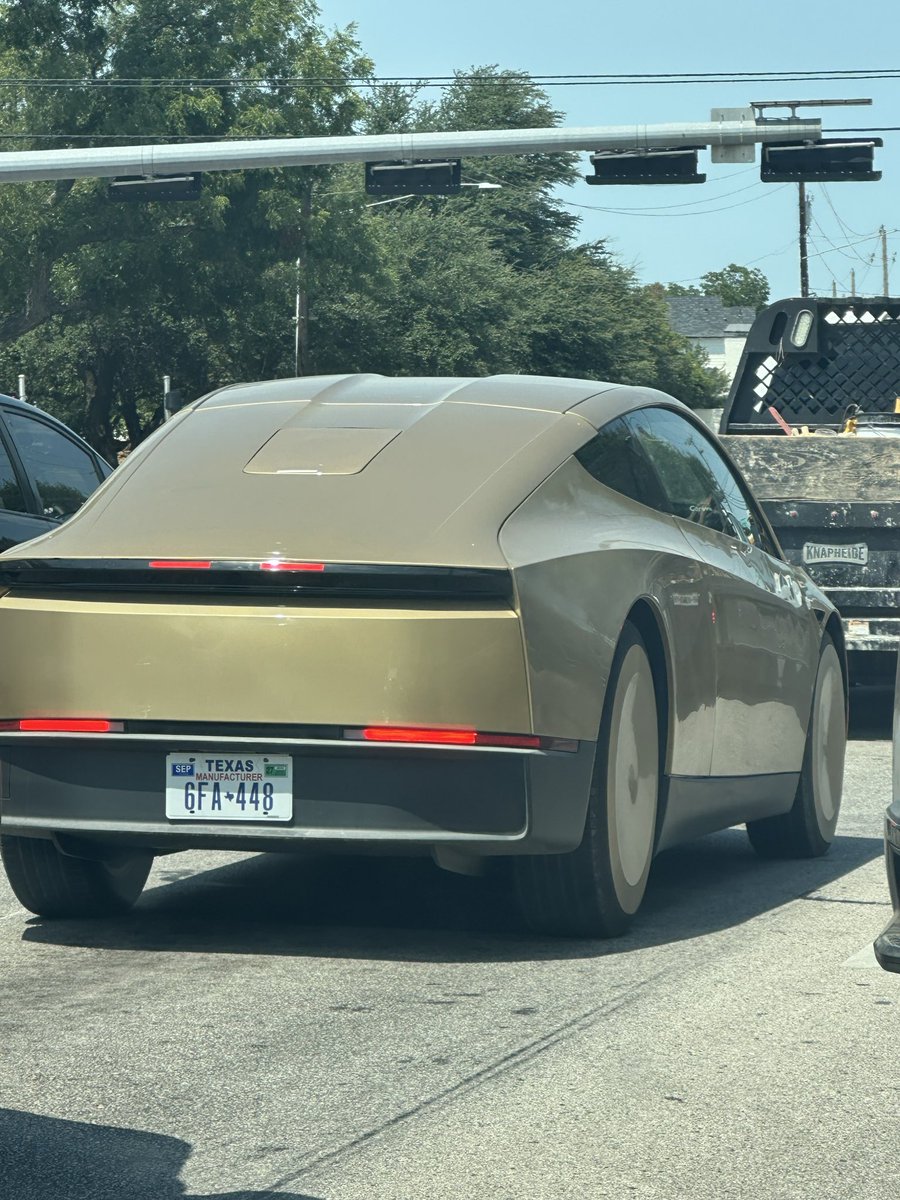
Tesla has officially confirmed the Cybercab's integrated Starlink antenna, moving this story from spotted-in-the-wild to officially unveiled. The antenna features a distinctive gold cover and flush mounting, giving it a far more polished look than the prototype unit seen in Dallas two days ago. Tesla also highlighted the Cybercab's lack of a rear windshield — a deliberate design choice made possible by the vehicle's steering wheel- and pedal-free architecture. Sawyer Merritt and other prominent Tesla watchers noted the official reveal confirms the Dallas sighting was the real deal.


📸 Via @SawyerMerritt · Aug 10, 2026
📌 UPDATE — August 8, 2026 🔍
A newly spotted Cybercab appears to feature a redesigned Starlink dish integration — distinct from earlier sightings. The updated unit sports a gold cover and flush mounting, making it far more seamlessly integrated into the vehicle's bodywork compared to the more exposed dish hardware seen in previous Cybercab spottings. Automotive journalist Sawyer Merritt flagged the difference on X, noting this may represent Tesla's production-intent Starlink antenna design. The change suggests Tesla is actively refining how Starlink hardware is embedded into the Cybercab's roofline for both aesthetics and aerodynamics — though Tesla has not officially confirmed a design revision.


Left: New gold-cover flush-mount Starlink dish. Right: Earlier Cybercab Starlink hardware. Via @SawyerMerritt
A Tesla Cybercab spotted in Dallas, Texas is giving the clearest real-world look yet at what connectivity will look like inside Tesla's upcoming robotaxi service. The vehicle was photographed with a fully integrated Starlink antenna — not an external dish bolted on for testing, but a built-in unit. Here's what we know about what it does, how it works, and what it means for passengers.

What exactly was spotted in Dallas?
A production-intent Cybercab was photographed in Dallas, Texas with a Starlink V5 antenna integrated directly into the vehicle's body — believed to be mounted in the rear of the car, possibly beneath the trunk lid. This is distinct from earlier prototype sightings where engineers had strapped Starlink Mini dishes to the exterior during testing. The Dallas unit shows the antenna as a designed-in component, not a test fixture.

Which version of Starlink is it, and how fast is it?
According to Tesla's official confirmation in late July 2026, the Cybercab uses the Starlink V5 terminal — the latest generation. V5 delivers download speeds exceeding 375 Mbps, which is more than enough for simultaneous 4K video streams across multiple passengers. Compared to the previous V4, the V5 is 35% smaller and 62% lighter at just 1.1 kg, draws roughly half the power (35–50 watts), and is rated for wind resistance up to 265 km/h — relevant for a vehicle that will operate continuously in varied weather conditions.
Does the Cybercab need Starlink to drive itself?
No. Tesla VP of AI Software Ashok Elluswamy has explicitly stated that Starlink connectivity is not required for the Cybercab's autonomous driving stack to function safely. The car's onboard computers handle perception, decision-making, and control entirely independently of any satellite or cellular connection. Starlink is a passenger and fleet-management layer, not a safety-critical one.
So what is Starlink actually used for in the Cybercab?
Three primary functions, according to Tesla's official communications. First, navigation and mapping — keeping the vehicle's maps current in real time, particularly useful in areas where cellular coverage is patchy. Second, fleet operations — enabling two-way communication between the car, passengers, and Tesla's remote operations team for customer service and incident management. Third, in-cabin entertainment — the V5's bandwidth is sufficient to stream 4K video to passengers during a ride, which becomes a meaningful differentiator for a paid robotaxi service competing on experience.

Will Starlink come to other Tesla vehicles too?
Elon Musk stated on July 22, 2026 that Starlink integration is intended for the entire Tesla lineup going forward — not just the Cybercab. That said, this applies to future production vehicles. There is no indication of a retrofit program for existing Model 3, Model Y, or Cybertruck owners. Think of it as a hardware feature that will roll into the broader fleet over time as new units roll off the production line.
Where does the Cybercab program stand right now?
Pilot production of the Cybercab began at Gigafactory Texas in February 2026, with steering-wheel-free builds confirmed by April 2026. Tesla is targeting large-scale robotaxi deployment by late 2026. The Dallas sighting — in a major metro market rather than a controlled test environment — suggests the operational footprint is expanding ahead of that timeline. Seeing a fully integrated Starlink antenna in the wild, rather than on a showroom infographic, is a meaningful step toward a vehicle that looks ready for real-world service.
🚕 Following the Robotaxi rollout? See every operating city, launch date and announced market in our Tesla Robotaxi Tracker.
Related Gear
Gear up your Tesla with tested, custom-fit BASENOR accessories — shop Tesla accessories →
Sources & reporting notes
The links below identify the material source records used for this report.
- @TeslaNewswire on X (2026-08-08T19:37:23.000Z) — Direct source
Source links are preserved as published or accessed. See our editorial standards and corrections policy.
The BASENOR Editorial Desk covers Tesla, SpaceX, and related technology, curating reporting from primary sources — official accounts, regulatory filings, and software release data. Every article passes source-record and fact-checking review before publication. About the newsroom.
This report was curated by the BASENOR Editorial Desk from the sources listed above. Read our editorial standards or email editorial@basenor.com to report an error.