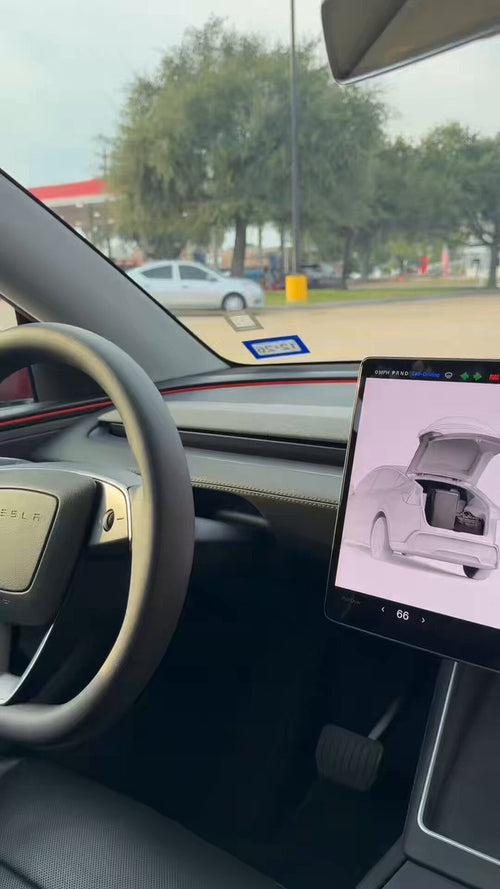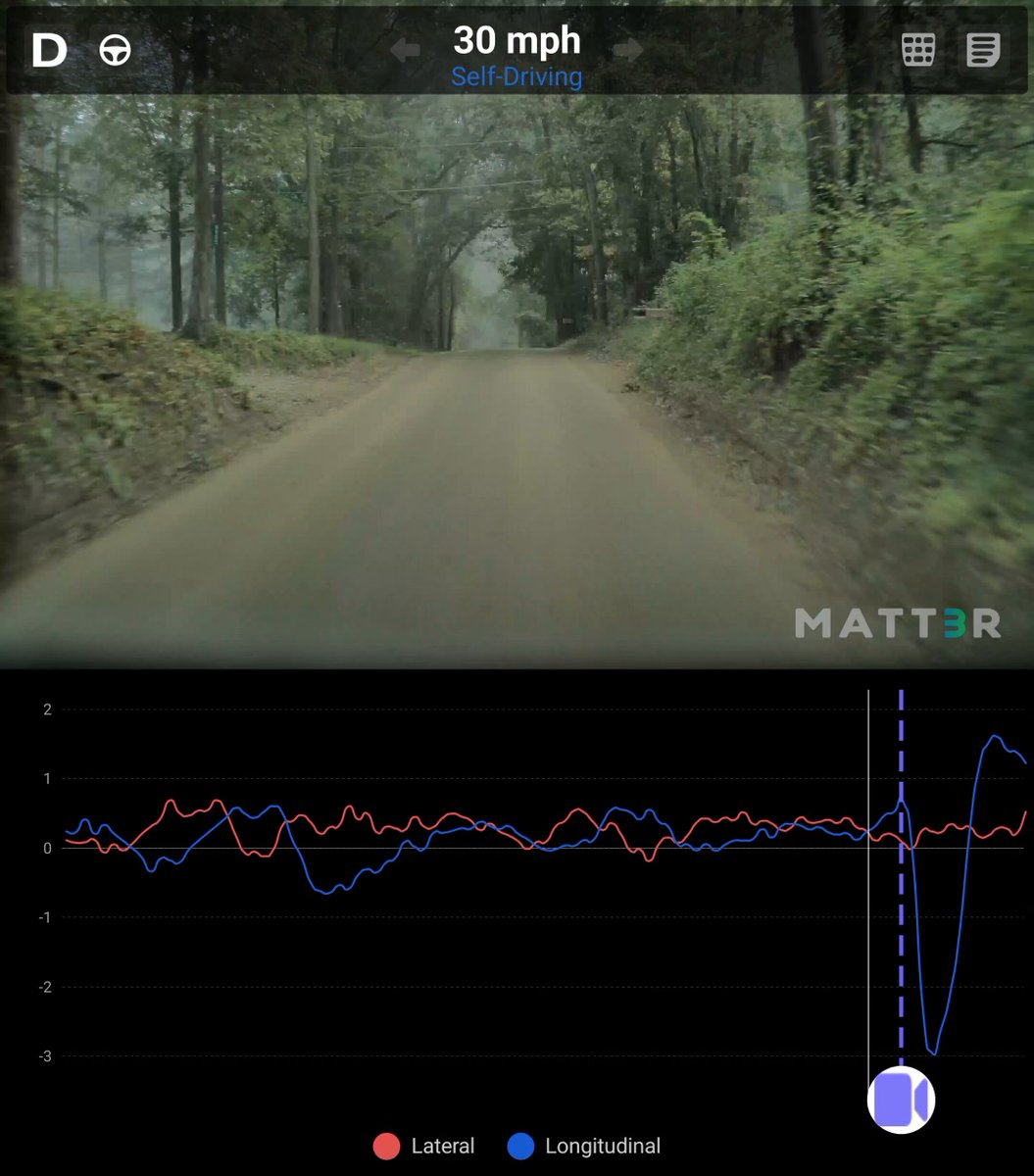
Tesla owner and well-known community voice Dirty Tesla posted a glowing take on FSD braking this week — calling it 'SO good' and praising its precision and passenger comfort. It's a single data point, but it lands against a backdrop of several concrete software changes Tesla has made to braking behavior across 2026. Here's what's actually behind the improvement.

What specifically has changed about how FSD brakes?
Several updates have stacked up over 2026. The most relevant for everyday smoothness is Comfort Braking, which rolled out with software update 2026.8 in March. It targets the final phase of a stop — the moment the car settles to zero — making it noticeably less abrupt for passengers. Separately, FSD v14.3.7 (August 2026) fixed a specific regression from v14.3.6 that caused brake-stuttering — a hesitant, choppy deceleration pattern that had frustrated owners. That fix alone likely accounts for a meaningful chunk of the 'this feels different' reaction from drivers who lived through the regression.
What is Automatic Collision Evasion, and how does it relate to braking?
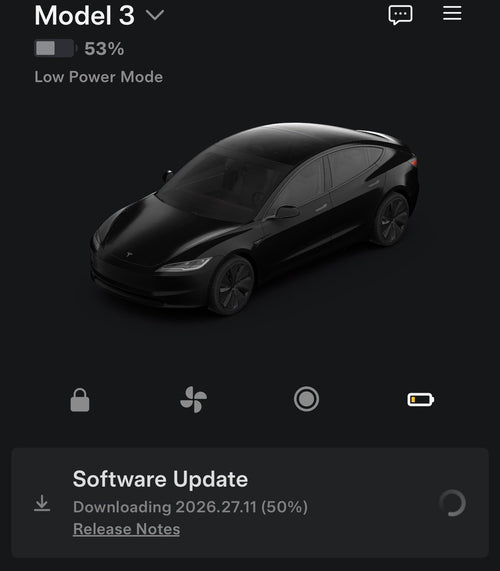
ACE is a newer safety layer introduced in software updates 2026.27.10 and 2026.27.11, which began rolling out September 19 and 23 respectively. It's not about comfort — it's about emergency response. If FSD detects an imminent frontal collision and braking alone won't be enough, ACE can combine steering, braking, and acceleration to avoid the impact, even when the driver is manually in control. It operates below 85 mph and requires FSD to be available and enabled on the vehicle. On AI4/HW4 cars it runs with FSD v14.3.10; HW3 vehicles get a lighter version via FSD v14.2 Lite.
Is the 20% faster reaction time claim real, and what does it mean in practice?
Yes — this comes directly from Tesla's release notes for FSD v14.3.10. The AI compiler and runtime were rewritten using MLIR (a modern compiler infrastructure), which Tesla says produced a 20% improvement in reaction time for the neural network. In braking terms, that means FSD is processing what it sees and issuing brake commands faster. Whether a human occupant can perceive 20% faster neural network latency is debatable, but in edge cases — a car cutting in at close range, a pedestrian stepping off a curb — that margin can matter.
Is Comfort Braking available on all Tesla models?
No — and this is an important caveat. Comfort Braking is currently exclusive to the refreshed Model Y (Juniper, model year 2025 and above). The reason is hardware: the Juniper redesign introduced a dual master brake cylinder system that allows for finer hydraulic pressure control. Older Model Y, Model 3, and other vehicles don't have the same braking architecture, so the software feature can't be applied in the same way. Owners of non-Juniper vehicles will benefit from the FSD neural network improvements and the brake-stutter fix, but not from Comfort Braking specifically.
Should owners do anything to make sure they're getting these improvements?
The main action is keeping FSD enabled and your software current. Check Controls → Software to confirm you're on the latest available version — 2026.27.11 is the most recent batch rolling out as of late September. If you're on an AI4/HW4 vehicle, also verify that FSD (Supervised) is active under Autopilot → Full Self-Driving, since ACE requires it to be enabled. There's no separate toggle for Comfort Braking or the neural network improvements — they apply automatically once the update installs.
Is one owner's positive experience enough to call this a real improvement?
Dirty Tesla's post is a single first-person account, and it's worth treating it as such. That said, it's consistent with the documented changes: a brake-stutter regression was fixed, a faster neural network is processing decisions, and Comfort Braking has been live for months on Juniper hardware. The combination of those changes gives the positive feedback a credible technical foundation. What's harder to quantify is how much of the improvement is software versus the natural variance in driving conditions and routes. More owner reports across different hardware generations will fill in that picture over the coming weeks. For our FSD coverage, we'll be tracking whether this sentiment holds as the 2026.27.11 rollout expands further.
Related Gear
Gear up your Tesla with tested, custom-fit BASENOR accessories — shop Tesla accessories →
Sources & reporting notes
The links below identify the material source records used for this report.
- @DirtyTesLa on X (2026-09-28T14:57:23.000Z) — Direct source
Source links are preserved as published or accessed. See our editorial standards and corrections policy.
The BASENOR Editorial Desk covers Tesla, SpaceX, and related technology, curating reporting from primary sources — official accounts, regulatory filings, and software release data. Every article passes source-record and fact-checking review before publication. About the newsroom.
This report was curated by the BASENOR Editorial Desk from the sources listed above. Read our editorial standards or email editorial@basenor.com to report an error.