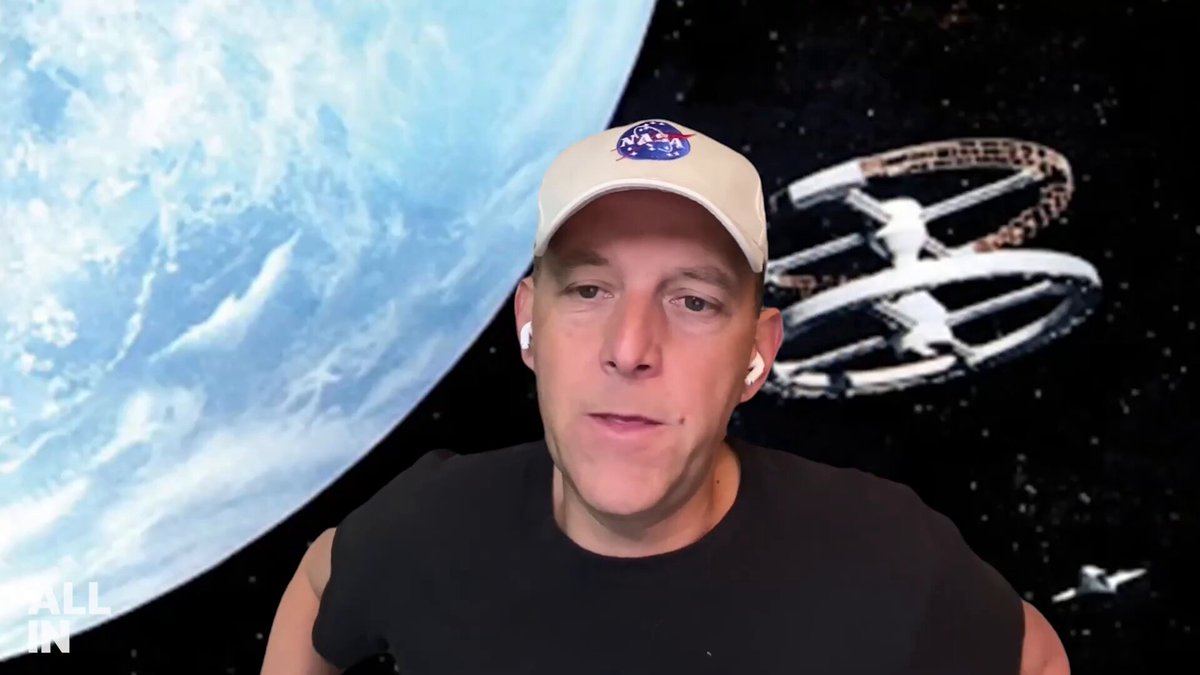
The News: Investor David Friedberg predicted that Tesla will ultimately be remembered not as an EV company, but as the company whose autonomy competency ignited a full-scale robotics revolution.
Why It Matters: For Tesla owners, this framing recontextualizes the car in your garage — it may be a node in a much larger autonomous and robotic ecosystem that Tesla is quietly building around you.
Source: @SawyerMerritt on X
Tesla's Three-Act Story: Electric Cars Were Just the Opening Scene
Most people still think of Tesla as a car company that happens to have impressive software. David Friedberg — a prominent investor and co-host of the All-In Podcast — thinks that framing will look laughably narrow in hindsight. His argument, shared publicly on April 4, 2026, is that Tesla's electric vehicle origins are merely Act One of a three-part story: EVs led to autonomy, and autonomy will lead to a robotics revolution that reshapes entire industries.
It's a bold thesis. But when you look at where Tesla is actually allocating its engineering resources right now, it's hard to dismiss.

🔭 The BASENOR Take
| Timeline | Long-term (5–15 year horizon) |
| Impact Level | 🔴 High — reframes the entire Tesla investment and ownership thesis |
| Confidence | Medium — directionally well-supported, execution risk remains significant |
Friedberg's framing isn't just punditry — it maps directly onto Tesla's actual product roadmap. The company has spent years training its neural networks on billions of miles of real-world driving data, building the kind of spatial reasoning and real-time decision-making infrastructure that is extraordinarily difficult to replicate from scratch. That same stack, with modifications, is what powers Optimus.
Think about it from a first-principles perspective: teaching a robot to navigate a factory floor, pick up objects, and avoid obstacles is a fundamentally similar problem to teaching a car to navigate city streets, merge onto highways, and avoid pedestrians. Tesla didn't have to start from zero on robotics — it had a multi-billion-dollar head start baked into every mile its fleet has ever driven.
Where Tesla Actually Stands Today
On the autonomy front, Full Self-Driving (Supervised) is currently available exclusively via a $99/month subscription in the United States — the one-time purchase option was permanently discontinued on February 14, 2026. Elon Musk has stated publicly that the subscription price is expected to rise as the system approaches unsupervised capability. That pricing trajectory is itself a signal: Tesla is treating FSD less like a feature and more like a platform — one it expects to become significantly more valuable over time. For more context on where FSD is headed, see our FSD coverage.
On the robotics side, Optimus remains Tesla's most audacious bet. The humanoid robot is designed to perform physical labor tasks, and Tesla has indicated it intends to deploy Optimus units internally in its own factories before making them commercially available. The logic is deliberate: use the factory floor as a proving ground, iterate rapidly, then scale. It's the same playbook Tesla used with FSD — deploy to real-world conditions, collect data, improve, repeat.
What This Means for Tesla Owners
If Friedberg's thesis plays out, the implications for current Tesla owners are significant — and mostly positive. Here's why:
- Your vehicle becomes more capable over time. Every software update to FSD isn't just a feature add — it's a training cycle that feeds back into Tesla's broader AI stack, including robotics. Owners are, in a real sense, participants in this development loop.
- The FSD subscription cost may look cheap in retrospect. If unsupervised autonomy arrives and Tesla's robotaxi network launches, the $99/month entry point for access to that technology will seem like a bargain. Musk has already telegraphed price increases ahead.
- Tesla's long-term valuation thesis shifts. If the market begins pricing Tesla as a robotics and AI company rather than an automaker, that changes the conversation around resale values, fleet longevity, and the strategic importance of staying within the Tesla ecosystem.
📰 Deep Dive
What makes Friedberg's observation particularly sharp is the word "competency." He isn't just saying Tesla will sell robots — he's saying the organizational and technical capability Tesla built to solve autonomy is itself the asset. That's a subtler and more durable claim. Companies can copy products; they can't easily copy a decade of compounding institutional knowledge in perception, planning, and real-world AI deployment.
There's also a strategic moat argument embedded here. Tesla's fleet of millions of vehicles continues to generate training data at a scale that no robotics startup — and very few tech giants — can match organically. Every edge case a Tesla encounters on a rain-slicked highway at 2 a.m. is a data point that makes the system smarter. Applied to Optimus, that same philosophy means Tesla's robots could improve faster than competitors who are starting their data collection from scratch in controlled lab environments.
The honest caveat is execution risk. Tesla has missed self-imposed autonomy deadlines before, and Optimus is still in early deployment phases. Friedberg's timeline is deliberately vague — "one day" and "look back" are not quarterly guidance. But the directional argument — that Tesla's true legacy will be measured in autonomous systems, not vehicle units — is one that more investors and analysts are beginning to take seriously. For Tesla owners, the practical takeaway is straightforward: the car you're driving today is a lot more than transportation. It's a data point in one of the most ambitious technological bets of the decade.
🤖 Tracking Tesla's humanoid robot? See every Optimus production milestone and appearance in our Tesla Optimus Tracker.
Related Gear
Gear up your Tesla with tested, custom-fit BASENOR accessories — shop Tesla accessories →
Sources & reporting notes
The links below identify the material source records used for this report.
- @SawyerMerritt on X (2026-04-04T00:36:06.000Z) — Direct source
Source links are preserved as published or accessed. See our editorial standards and corrections policy.
The BASENOR Editorial Desk covers Tesla, SpaceX, and related technology, curating reporting from primary sources — official accounts, regulatory filings, and software release data. Every article passes source-record and fact-checking review before publication. About the newsroom.
This report was curated by the BASENOR Editorial Desk from the sources listed above. Read our editorial standards or email editorial@basenor.com to report an error.