Tesla is facing a compounding legal crisis over Autopilot and Full Self-Driving misuse — and critics argue the company is doing little to stop it. A $243 million jury verdict upheld in February 2026 may be the most visible data point, but behind it sits a litigation landscape that spans dozens of fatal crashes, hundreds of injury cases, and escalating regulatory scrutiny from federal and state agencies alike.

The $243 Million Verdict Is Not an Outlier
In August 2025, a jury found Tesla 33% liable for a 2019 Autopilot crash that killed Naibel Benavides Leon and severely injured Dillon Angulo. The verdict totaled $243 million — $43 million in compensatory damages and $200 million in punitive damages. A federal judge upheld that verdict on February 20, 2026.
That case is one node in a much larger network. According to verified reporting, Tesla is currently managing litigation across at least 21 separate tracks, tied to 50–60 fatal Autopilot and FSD incidents. Since the Benavides verdict, Tesla has settled at least four additional Autopilot crash lawsuits rather than risk another jury trial. As of October 2025, NHTSA had recorded 65 reported fatalities involving Autopilot variants, with 54 verified through investigations or expert testimony. Two post-2022 fatalities were specifically linked to FSD engagement.
| Metric | Figure |
|---|---|
| Jury verdict (Benavides case) | $243 million |
| Active litigation tracks | 21+ |
| Fatal incidents in litigation | 50–60 |
| NHTSA-recorded Autopilot fatalities | 65 reported / 54 verified |
| Post-verdict settlements | 4+ |
| Vehicles in NHTSA FSD probe (March 2026) | 3.2 million |
Regulators Are Closing In
In March 2026, NHTSA escalated its investigation into 3.2 million Tesla vehicles equipped with FSD, citing concerns that the system may fail to detect or adequately warn drivers in poor visibility conditions. That probe follows a December 2025 ruling in which a California judge sided with the state DMV's finding that Tesla's use of the terms "Autopilot" and "Full Self-Driving" in marketing constituted deceptive advertising under state law.
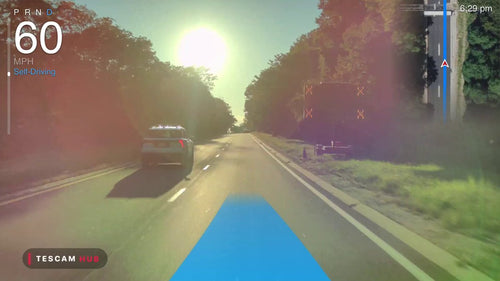
The regulatory pressure is not purely domestic. As Tesla expands FSD into Europe — Belgium approved the system on June 11, 2026, following Denmark, the Netherlands, Lithuania, and Estonia — the promotional material accompanying those launches has drawn criticism. A Tesla Europe video released June 9, 2026 to celebrate FSD's approval in Denmark reportedly depicted the system committing multiple traffic violations. A separate Tesla official X post from May 26, 2026 showed a driver making espresso while FSD Supervised was active, captioned "Try it yourself."
That kind of messaging sits in direct tension with FSD's legal classification. FSD (Supervised) is a Level 2 advanced driver-assistance system — meaning the driver must remain attentive and in control at all times. Elon Musk acknowledged in April 2026 that Hardware 3 vehicles "simply does not have the capability to achieve unsupervised FSD."
The Marketing Gap Is the Core Problem
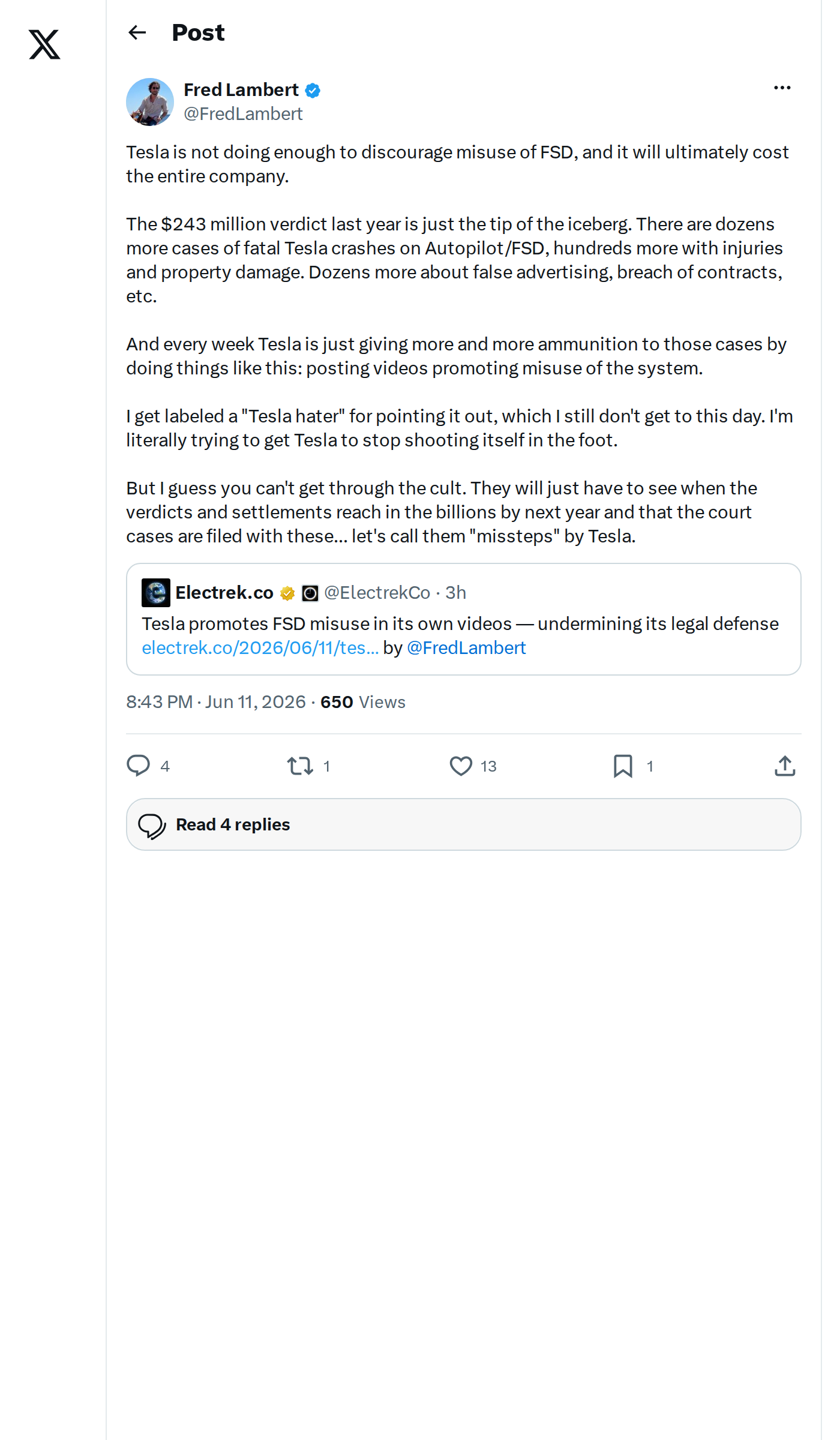
The tension Fred Lambert identifies is structural: Tesla markets FSD with aspirational language and hands-free imagery, while simultaneously classifying it as a supervised system that requires constant driver engagement. That gap between perception and legal reality is exactly what plaintiffs' attorneys have exploited in court — and what punitive damages are designed to punish.
There is also a contract dispute dimension. Tesla has been accused of retroactively modifying FSD purchase agreements to include "supervised" language that was absent from original contracts signed between 2016 and 2024. Some owners report that older agreement documents have become inaccessible entirely.
For Tesla owners, the practical implication is straightforward: FSD Supervised is a driver-assistance tool, not an autonomous system. Hands off the wheel, eyes off the road, or attention diverted — regardless of what a promotional video suggests — remains both legally and physically dangerous. The courtroom record is now extensive enough that this is no longer a theoretical risk. It is a documented pattern with a growing dollar figure attached to it.
Whether Tesla changes its messaging, its technology, or its litigation strategy first remains the open question. What is clear is that the current trajectory — more European markets, more promotional content, more lawsuits — is not a stable equilibrium.
Related Gear
Gear up your Tesla with tested, custom-fit BASENOR accessories — shop Tesla accessories →
Sources & reporting notes
The links below identify the material source records used for this report.
- @FredLambert on X (2026-06-11T20:43:01.000Z) — Direct source
Source links are preserved as published or accessed. See our editorial standards and corrections policy.
The BASENOR Editorial Desk covers Tesla, SpaceX, and related technology, curating reporting from primary sources — official accounts, regulatory filings, and software release data. Every article passes source-record and fact-checking review before publication. About the newsroom.
This report was curated by the BASENOR Editorial Desk from the sources listed above. Read our editorial standards or email editorial@basenor.com to report an error.