📌 UPDATE — June 14, 2026
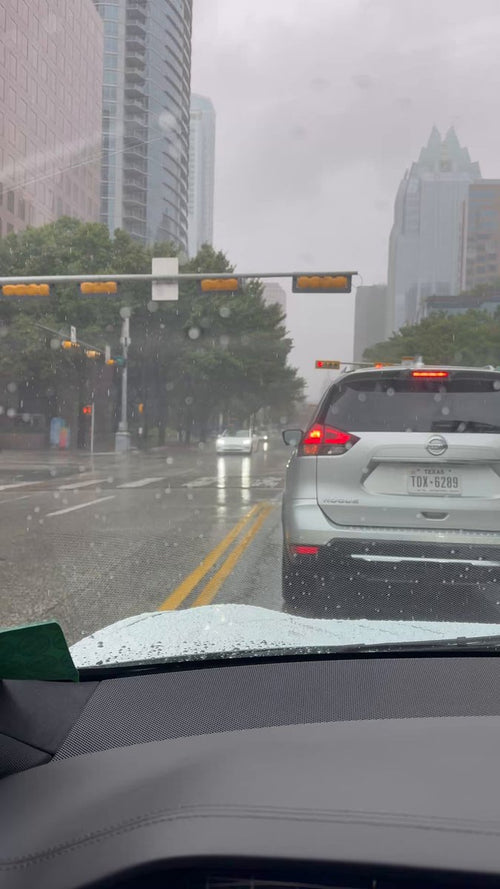
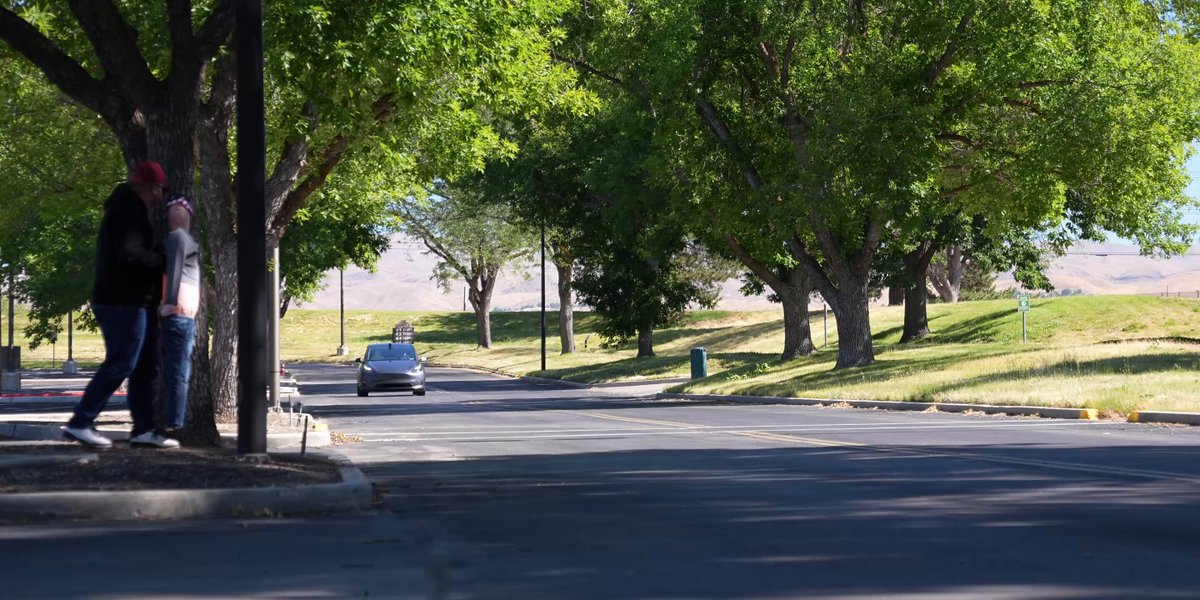
New video footage has emerged showing Tesla FSD (Supervised) initiating a head-on collision avoidance maneuver before the oncoming vehicle even begins to react — a real-world demonstration of the superhuman reaction times discussed in this article. The clip, shared by The Tesla Newswire, shows the system detecting the threat and steering clear instantaneously, reinforcing Tesla's claim that FSD's perception-to-action loop operates faster than any human driver could manage. This is among the clearest on-road examples yet of FSD's predictive collision avoidance in action, going beyond controlled testing scenarios.

📌 UPDATE — June 11, 2026
New video footage has emerged showing Tesla FSD (Supervised) reacting instantaneously to a crash test dummy thrown directly into its path while traveling at 45 mph (72 km/h). The clip provides a striking real-world demonstration of the system's hazard detection pipeline in action, complementing Tesla's broader claim of superhuman reaction times. The vehicle's avoidance response appears to trigger with no perceptible delay from the moment the obstacle enters its path, lending further weight to the sub-100ms reaction figures cited in our original breakdown.

Tesla is making a bold claim about its Full Self-Driving (FSD) Supervised system: it now reacts faster than a human ever could. The official Tesla account posted the statement on June 11, 2026, backed by a video — and the research behind it points to a fundamental architectural overhaul that produced a verified 20% improvement in reaction time.

What's Actually Behind the Claim
This isn't marketing language without substance. According to Tesla's official release notes for FSD (Supervised) versions 14.3, 14.3.2, and 14.3.3, the company rewrote its AI compiler and runtime using Multi-Level Intermediate Representation (MLIR) — a compiler infrastructure originally developed by Google and championed in the AI space by Chris Lattner, the creator of LLVM. The result: a confirmed 20% faster reaction time across the system.
Lattner himself publicly acknowledged Tesla's adoption of the MLIR stack, calling the reaction time improvement a "break-through." That's a meaningful endorsement from the person who built the underlying technology.
To put 20% in human terms: the average driver reaction time is roughly 1.5–2.5 seconds from perceiving a hazard to applying the brakes. A 20% improvement on an already sub-second AI baseline pushes FSD's response window well below anything a human nervous system can physically achieve.
The Broader Picture: What Else Changed in v14.3
The reaction time headline is the most attention-grabbing number, but the v14.3 series brought a wider set of improvements that together paint a picture of a system maturing rapidly. According to Tesla's release notes, the update also addressed:
- Reinforcement learning refinements
- Neural network vision encoder upgrades
- Better handling of emergency vehicles and school buses
- Improved responses to right-of-way violators and small animals
- More reliable navigation through complex traffic light intersections
FSD v14.3 initially rolled out to Hardware 4 (HW4) vehicles starting around April 7, 2026, with software version 2026.2.9.6. The most recent iteration, v14.3.3, bundled with software version 2026.14.6.6, began rolling out around May 17–18, 2026.
Milestones That Add Weight to the Claim
Tesla's superhuman reaction time claim lands alongside a run of credibility-building milestones. On April 7, 2026 — the same day v14.3 began rolling out — Tesla announced that FSD Supervised completed an 850-mile journey with zero human interventions, including autonomous parking and Supercharger stops. As of February 2026, Tesla owners had surpassed 8 billion cumulative miles driven with FSD engaged, a dataset that dwarfs any competitor's real-world training corpus.
Regulatory progress is also accelerating. As of June 11, FSD Supervised has received preliminary regulatory approval in Denmark, following earlier approvals in Estonia and the Netherlands — a sign that European regulators are beginning to accept Tesla's safety case.
What This Means If You're on HW4
If your Tesla is equipped with Hardware 4 and you haven't yet received v14.3.3 (software version 2026.14.6.6), check your update queue in the Tesla app. The faster reaction time is a function of the new MLIR-based compiler — it's not a setting to enable, it's baked into the software. Once the update installs, you're running on the architecture behind the superhuman reaction claim.
HW3 owners are not yet on this branch. Tesla has not announced a timeline for bringing the MLIR-based compiler to older hardware, and the architectural differences between HW3 and HW4 make a direct port non-trivial. For now, this is an HW4 story.
The deeper question isn't whether FSD can react faster than a human — the data suggests it can. The question is how quickly Tesla translates that raw capability into the kind of consistent, trust-building performance that moves regulators and the public from skeptical to convinced. The 850-mile zero-intervention run and the European approvals suggest that gap is closing faster than most expected.
📋 Tracking Tesla software? See every firmware, FSD and app version in one place in our Tesla Software Update Tracker.
Related Gear
Gear up your Tesla with tested, custom-fit BASENOR accessories — shop Tesla accessories →
Sources & reporting notes
The links below identify the material source records used for this report.
- @Tesla on X (2026-06-11T19:46:26.000Z) — Direct source
- @TeslaNewswire on X (2026-06-11T20:22:00.000Z) — Direct source
- @TeslaNewswire on X (2026-06-14T07:04:09.000Z) — Direct source
Source links are preserved as published or accessed. See our editorial standards and corrections policy.
The BASENOR Editorial Desk covers Tesla, SpaceX, and related technology, curating reporting from primary sources — official accounts, regulatory filings, and software release data. Every article passes source-record and fact-checking review before publication. About the newsroom.
This report was curated by the BASENOR Editorial Desk from the sources listed above. Read our editorial standards or email editorial@basenor.com to report an error.