Brandenburg's Transport Minister Robert Crumbach has confirmed that his ministry is in active discussions with Tesla about deploying driverless vehicles — potentially autonomous shuttles or Robotaxis — in the German state. It's an early-stage conversation, but the timing is significant: Tesla is weeks away from a major Cybercab launch event, and Europe's regulatory path for autonomous driving is moving faster than most people realize.

Who confirmed this, and how official is it?
Brandenburg Transport Minister Robert Crumbach (SPD) confirmed the discussions directly. That makes this a ministerial-level acknowledgment, not a rumor or leak — a meaningful signal that the conversations are substantive enough to mention publicly. That said, no formal agreement, pilot program, or timeline has been announced. These are early-stage talks.
Why Brandenburg specifically?
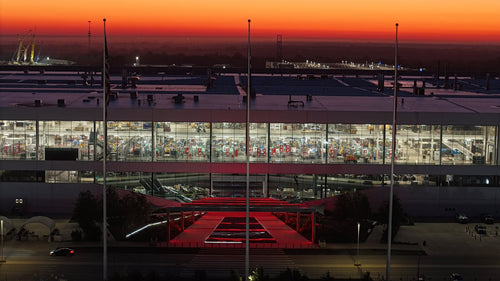
Brandenburg isn't a random choice. Tesla's Gigafactory Berlin-Brandenburg, located in Grünheide, sits within the state. The factory is already central to Tesla's European production strategy, and according to previous reports, it's expected to be the manufacturing base for the Cybercab in Europe. A state-level autonomous shuttle program would create a natural feedback loop: vehicles built locally, tested locally, with a government partner invested in making it work.
What exactly is being proposed — a Robotaxi network or something else?
The framing from Minister Crumbach points toward autonomous shuttles, which typically implies fixed or semi-fixed routes serving underserved areas rather than an open ride-hail network. Germany has a well-documented rural mobility gap — areas where public transit is thin and private car dependency is high. An autonomous shuttle service in Brandenburg would fit that profile. Whether Tesla's Cybercab (a two-passenger vehicle with no steering wheel or pedals) or a different vehicle configuration is being discussed hasn't been specified publicly.
Where does German regulation stand on fully driverless vehicles?
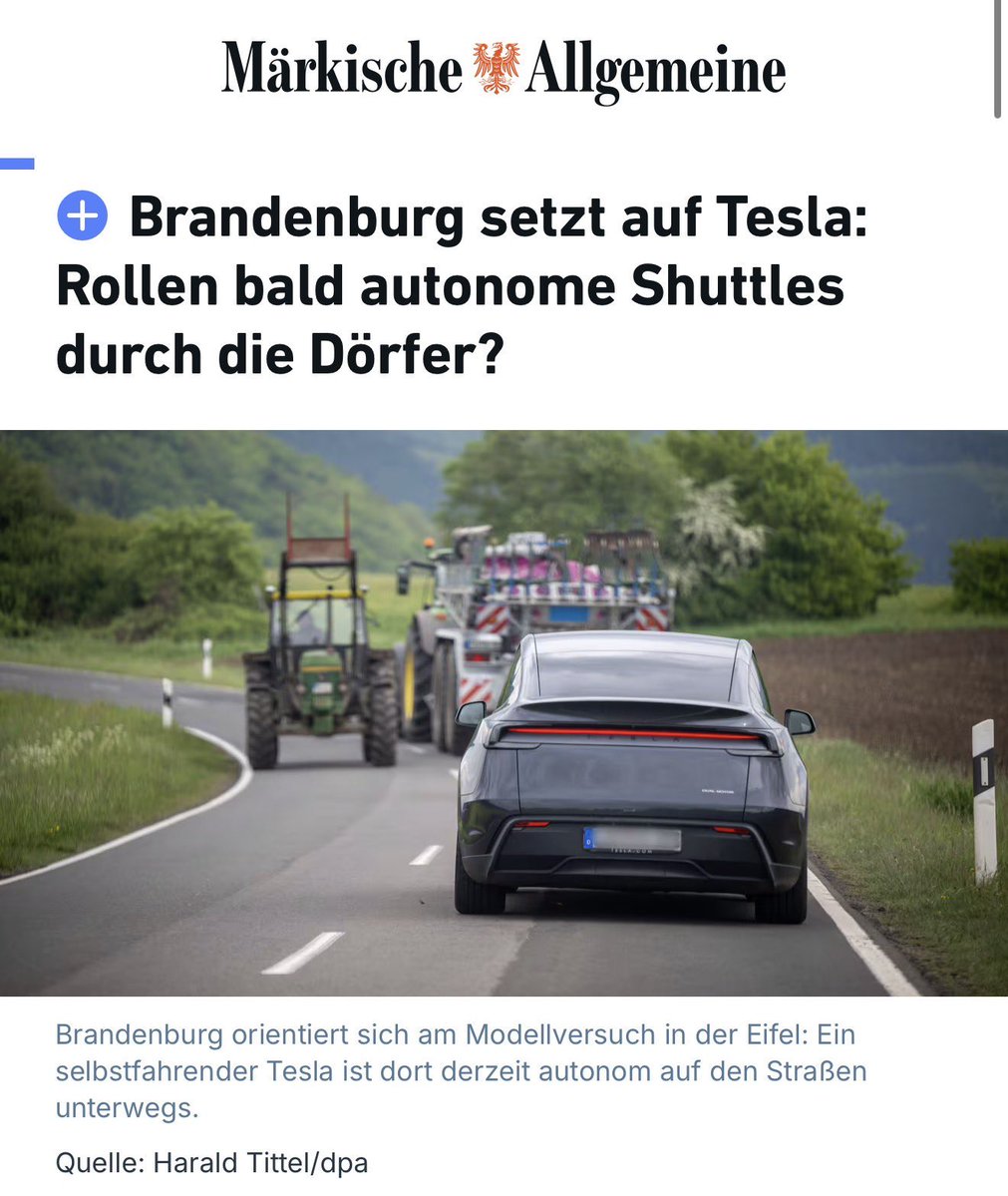
This is the key constraint. As of now, German law still requires a human safety driver for autonomous vehicle operations on public roads. The first European Tesla FSD public shuttle pilot — launched in the rural Eifelkreis Bitburg-Prüm district in December 2025 — operates with a safety driver present for exactly this reason. However, Germany's Federal Motor Transport Authority (KBA) is actively evaluating Tesla's FSD system, and an EU-wide approval vote for FSD (Supervised) is reportedly scheduled for October 6, 2026, at a TCMV meeting. Full driverless authorization would require additional steps beyond that, but the regulatory direction is clearly forward.

How does this connect to Tesla's broader Cybercab rollout?
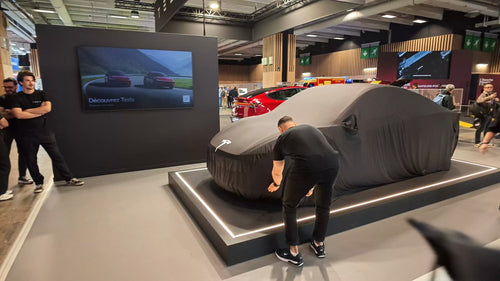
Tesla has an exclusive Cybercab launch event scheduled for September 3, 2026, in Austin, Texas. The company has been building toward a commercial Robotaxi service in the US, with Austin serving as the initial market. A European government actively seeking to integrate Tesla's autonomous vehicles — before the US rollout is even fully underway — suggests Tesla's international expansion conversations are running in parallel with domestic launch preparations. Brandenburg would represent a meaningful early foothold in a major European market.
What should Tesla owners in Germany watch for?
If you're in Germany and following FSD's regulatory progress, the October 6 TCMV vote is the nearest milestone worth tracking. Approval there wouldn't immediately enable fully driverless operation, but it would clear a significant hurdle for supervised FSD deployment across the EU. A Brandenburg pilot program — if it moves from talks to reality — would likely follow that regulatory progression rather than precede it. For now, the Eifelkreis Bitburg-Prüm shuttle project remains the only active public Tesla FSD program in Europe, and it still requires a safety driver. For the latest on Tesla's autonomous driving developments, the next few months are going to be worth watching closely.
🚕 Following the Robotaxi rollout? See every operating city, launch date and announced market in our Tesla Robotaxi Tracker.
Related Gear
Gear up your Tesla with tested, custom-fit BASENOR accessories — shop Tesla accessories →
Sources & reporting notes
The links below identify the material source records used for this report.
- @TeslaNewswire on X (2026-08-24T21:15:28.000Z) — Direct source
Source links are preserved as published or accessed. See our editorial standards and corrections policy.
The BASENOR Editorial Desk covers Tesla, SpaceX, and related technology, curating reporting from primary sources — official accounts, regulatory filings, and software release data. Every article passes source-record and fact-checking review before publication. About the newsroom.
This report was curated by the BASENOR Editorial Desk from the sources listed above. Read our editorial standards or email editorial@basenor.com to report an error.