📌 UPDATE — April 1, 2026
Tesla is officially celebrating the 10th anniversary of the Model 3's launch, and the milestone numbers are in: the sedan has now surpassed 3 million units sold globally. China continues to be a standout market, with 200,361 Model 3 units sold in 2025 — a 13.33% year-on-year increase — underscoring the vehicle's enduring demand even as the Cybercab era approaches.
via @CnEVPost · Apr 1, 2026
📌 UPDATE — April 1, 2026
As Tesla marks the 10th anniversary of the Model 3, fresh sales data underscores the sedan's enduring strength in its most competitive market. The Model 3 moved 200,361 units in China in 2025, a 13.33% year-on-year increase, according to CnEVPost — a notable gain given intensifying pressure from domestic rivals like BYD and Xiaomi. The China figure contributes meaningfully to Tesla's milestone of 3 million cumulative Model 3 sales globally, cementing the car's status as one of the best-selling EVs in history. The growth in China is particularly significant as that market has become the primary battleground for EV dominance heading into the Cybercab era.
30-Second Brief
The News: March 31, 2026 marks exactly 10 years since Tesla unveiled the Model 3 — the car that forced the entire auto industry to take EVs seriously — and the Tesla community is already looking ahead to the Cybercab era launching this year.
Why It Matters: The Model 3 anniversary is a useful measuring stick: Tesla went from a niche startup to the world's best-selling EV in a decade. The Cybercab era — with production starting in April 2026 and a Robotaxi network already live in Austin — could be an even bigger leap.
Source: @wholemars on X
Tesla Model 3 Turns 10: The Car That Changed Everything — and What Comes Next
Ten years ago today, Elon Musk walked onto a stage in Hawthorne, California and unveiled a $35,000 electric sedan that would go on to become the best-selling EV in history. The Tesla Model 3 didn't just disrupt the auto industry — it rewrote what was considered possible for electric vehicles at scale. And now, as the Model 3 hits its 10-year anniversary, Tesla is preparing to do it all over again with the Cybercab.

📊 Key Figures: A Decade of the Model 3
| Milestone | Detail |
|---|---|
| Unveil Date | March 31, 2016 |
| First Deliveries | July 28, 2017 |
| 2026 Starting Price (Highland) | $38,630 (Standard RWD) |
| EPA Range (2026) | 309–363 miles |
| 0–60 mph (Base) | 5.8 seconds |
| 0–60 mph (Performance) | 2.9 seconds |
| Cybercab Production Start | April 2026 (Gigafactory Texas) |
| Robotaxi Paid Miles Logged | ~700,000 (Austin + Bay Area, as of Feb 2026) |
| Robotaxi Ride Price | $4.20 per ride (temporary fixed fare) |
| Cybercab Target Price | Under $30,000 |
The Car That Forced an Industry to Change
When the Model 3 was unveiled in 2016, over 325,000 people placed reservations within the first week — before a single production vehicle existed. That number alone sent shockwaves through Detroit, Stuttgart, and Tokyo. Legacy automakers had been quietly betting that EV demand was a niche phenomenon. The Model 3 reservation wave proved them catastrophically wrong.
The road to production wasn't smooth. Tesla famously struggled through "production hell" in 2017 and 2018, with Musk sleeping on the factory floor at Fremont to hit targets. But the Model 3 eventually became the world's best-selling EV — not just best-selling electric car, but best-selling car, full stop, in multiple markets. It out-sold the Toyota Corolla in Europe. That's not a footnote; that's a seismic event in automotive history.
The 2024 "Highland" refresh brought a cleaner exterior, revised interior, and improved range — and the 2026 Model 3 continues to sit at the heart of Tesla's lineup at $38,630 to start, with EPA-estimated range between 309 and 363 miles depending on trim. The Performance variant still hits 60 mph in 2.9 seconds. A decade in, it remains a benchmark.
The Cybercab Era: What's Actually Happening Right Now
The anniversary timing is no accident as a conversation starter. Tesla's autonomous transportation ambitions — long discussed, long doubted — are now operational. Here's where things stand as of March 31, 2026:
Robotaxi is live and expanding. The service launched in Austin, Texas in June 2025 with Model Y vehicles and human safety monitors. By January 2026, unsupervised (fully driverless) operations began in limited capacity. The combined Austin and Bay Area fleet had logged nearly 700,000 paid miles as of early February 2026. Expansion to seven additional US cities — Dallas, Houston, Phoenix, Miami, Orlando, Tampa, and Las Vegas — is confirmed for the first half of 2026.
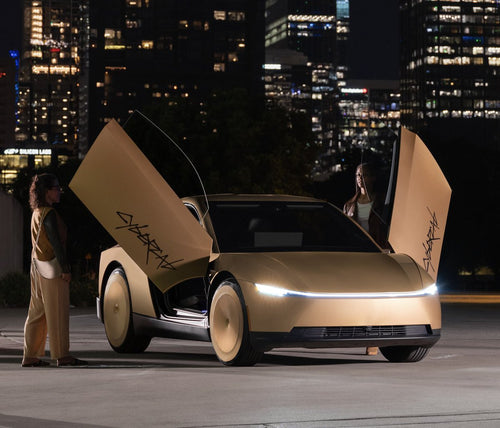
The purpose-built Cybercab is weeks away from production. The first Cybercab production vehicle rolled out of Gigafactory Texas in February 2026. Full production is scheduled to begin in April 2026. The vehicle is a two-seat, fully autonomous design with no steering wheel or pedals, built on Tesla's Hardware 5 (AI5) platform using cameras, radar, and ultrasonic sensors. Target price is under $30,000, and Tesla intends to offer a consumer version before 2027.
The manufacturing approach is as ambitious as the vehicle. Tesla's "Unboxed" production process targets a production rate of less than 10 seconds per vehicle at scale — a figure that, if achieved, would represent a fundamental reinvention of how cars are made. The Cybercab is also designed for wireless inductive charging, though test prototypes have been spotted with a concealed NACS port as well.
🔭 The BASENOR Take
Timeline: Model 3 unveiled March 31, 2016 → First deliveries July 2017 → Production hell 2017–2018 → Best-selling EV globally → Highland refresh 2024 → Cybercab production April 2026
Impact Level: 🔴 High — The Cybercab era represents a fundamental shift in Tesla's business model, from selling cars to operating (and selling) autonomous transportation
Confidence: High — Cybercab production timeline has been confirmed multiple times; Robotaxi operations are already generating real revenue
The Model 3 anniversary matters because it gives us a calibration point. In 2016, the idea of a mass-market Tesla seemed audacious. In 2026, the idea of a sub-$30,000 autonomous vehicle going into production feels equally audacious — but Tesla has earned the benefit of the doubt in a way it simply hadn't a decade ago.
The more interesting question for owners isn't whether the Cybercab will exist — it's what the Robotaxi network's expansion means for the value of their existing Tesla. Every mile logged by the autonomous fleet is training data. Every city added is infrastructure that makes FSD more capable everywhere. The Model 3 was the product that funded the AI ambition. The Cybercab is where that investment pays out.
What the community is watching closely: whether the April 2026 Cybercab production start holds, how quickly the Robotaxi network scales beyond the initial seven expansion cities, and whether the consumer Cybercab purchase option materializes before the end of 2026 as promised. The Model 3 took 16 months from unveil to first delivery. The Cybercab has already produced its first unit. The pace is different this time.
🚕 Following the Robotaxi rollout? See every operating city, launch date and announced market in our Tesla Robotaxi Tracker.
Related Gear
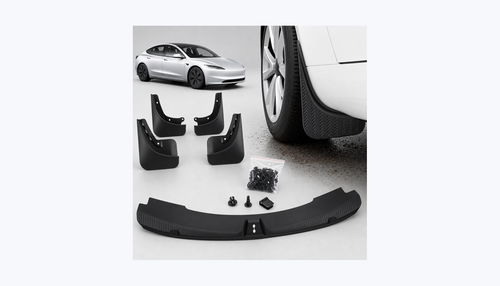
Gear up your Model 3 with tested, custom-fit BASENOR accessories — shop Model 3 accessories →
Sources & reporting notes
The links below identify the material source records used for this report.
- @wholemars on X (2026-03-31T16:53:05.000Z) — Direct source
- @CnEVPost on X (2026-04-01T07:04:22.000Z) — Direct source
Source links are preserved as published or accessed. See our editorial standards and corrections policy.
The BASENOR Editorial Desk covers Tesla, SpaceX, and related technology, curating reporting from primary sources — official accounts, regulatory filings, and software release data. Every article passes source-record and fact-checking review before publication. About the newsroom.
This report was curated by the BASENOR Editorial Desk from the sources listed above. Read our editorial standards or email editorial@basenor.com to report an error.