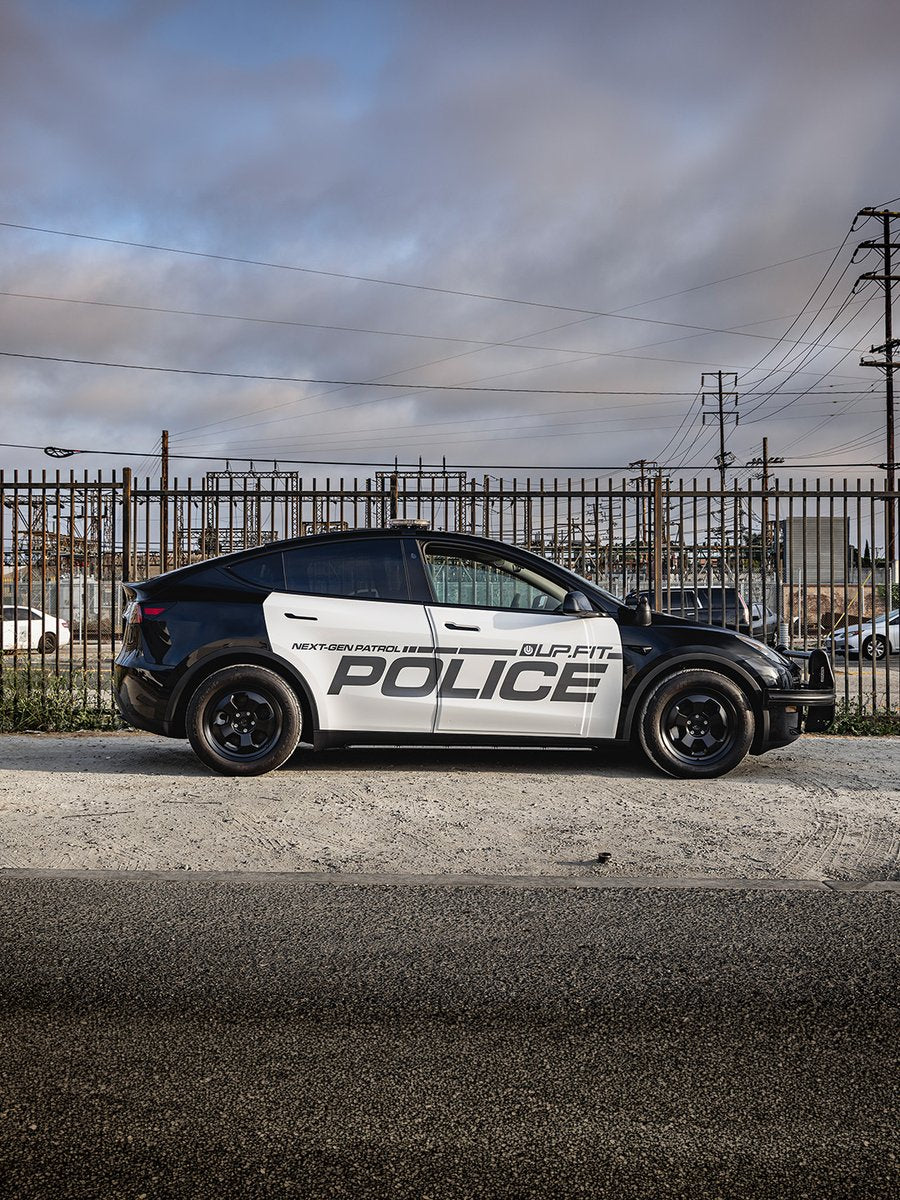
Tesla North America put a hard number on something police fleet managers have been quietly calculating for months: a Model Y patrol vehicle saves roughly $64,000 per unit compared to a conventional gas-powered cruiser over its working life. That figure, drawn from an analysis by upfitter UP.FIT, is now driving real procurement decisions at departments from Kentucky to Texas. Here's what the data actually shows.

1. The Core Comparison: $19,500 vs. $84,000 Over Five Years
According to UP.FIT's analysis — highlighted by Tesla — operating a Model Y patrol vehicle for five years and 100,000 miles costs approximately $19,500 total. A Ford Police Interceptor Utility over the same period runs roughly $84,000. That's not a rounding error; it's a 4x difference. The gap compounds quickly when a department is running 20, 50, or 200 units.
2. Fuel Is Where the Gap Opens Up
The Ford Police Interceptor burns through an estimated $62,800 in fuel over 100,000 miles of patrol duty. The Model Y's electricity bill for the same distance? Around $9,800. That single line item — fuel vs. electricity — accounts for the majority of the $64,000 swing. Patrol vehicles idle constantly, run climate control around the clock, and log far more miles per year than a typical consumer car, which amplifies the fuel cost difference.
3. Maintenance Savings Are Real, But Smaller
The Model Y's maintenance costs over 100,000 miles come in at roughly $9,700, compared to $21,100 for the Interceptor. That's a meaningful gap — no oil changes, fewer brake jobs thanks to regenerative braking, and a simpler drivetrain — but it's the secondary driver of savings, not the headline. Murphy, Texas, which deployed two 2026 UP.FIT Model Y Juniper patrol units in February 2026, reported a projected 75% reduction in maintenance costs per vehicle.
4. Real Departments Are Already Running the Numbers
The savings aren't theoretical. Covington, Kentucky launched a pilot program with seven Model Y Premium AWD SUVs on April 23, 2026, projecting roughly $23,000 in combined annual fuel and maintenance savings across the fleet. Over an eight-year lifecycle, the city estimates nearly $123,000 in total savings for those seven vehicles. Murphy, Texas projects annual per-vehicle savings ranging from $4,100 for single-officer units to $12,000 for shared-shift cars logging over 140 hours per week.
5. Usage Pattern Matters — High-Mileage Fleets Win More
The Murphy data points to something important: the savings scale with usage intensity. A patrol car that sits in a lot half the day captures less of the fuel advantage than one running double shifts. Departments considering a transition should model their own average annual mileage per unit — the higher the utilization, the faster the payback period shrinks. For high-activity urban departments, the economics are particularly compelling.
5-Year Operating Cost Snapshot (100,000 miles)
| Cost Category | Model Y Patrol | Ford Police Interceptor |
|---|---|---|
| Fuel / Electricity | $9,800 | $62,800 |
| Maintenance | $9,700 | $21,100 |
| Total | $19,500 | $84,000 |
Source: UP.FIT analysis via Tesla North America
The $64,000-per-vehicle figure is striking precisely because it's operational, not aspirational. Departments in Covington and Murphy aren't waiting on projections — they're already logging miles and watching their fuel budgets shrink. As more upfitters like UP.FIT build purpose-built patrol packages around the Model Y Juniper, the conversion case for municipal fleet managers only gets easier to make.
Related Gear
Gear up your Model Y with tested, custom-fit BASENOR accessories — shop Model Y accessories →
Sources & reporting notes
The links below identify the material source records used for this report.
- @tesla_na on X (2026-09-18T21:35:20.000Z) — Direct source
Source links are preserved as published or accessed. See our editorial standards and corrections policy.
The BASENOR Editorial Desk covers Tesla, SpaceX, and related technology, curating reporting from primary sources — official accounts, regulatory filings, and software release data. Every article passes source-record and fact-checking review before publication. About the newsroom.
This report was curated by the BASENOR Editorial Desk from the sources listed above. Read our editorial standards or email editorial@basenor.com to report an error.