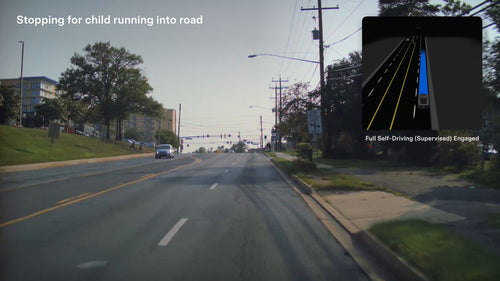
A report from Tesla community observer Dirty Tesla suggests the company's Robotaxi fleet may already be running FSD V15 in real-world conditions — potentially months ahead of any broader consumer rollout. If accurate, it would mark the first confirmed deployment of Tesla's next-generation autonomous driving architecture outside of internal lab testing, and it raises a pointed question: why are the majority of customer vehicles still on older software?

What the Report Claims
Dirty Tesla — a well-known Tesla owner and community commentator — posted on July 23 that the Robotaxi is "already on FSD V15," adding that early adopters willing to take manual override responsibility effectively serve as a proving ground before new software reaches the broader fleet. The observation carries a note of frustration that's familiar to anyone who has followed Tesla's staged rollout strategy: the most capable software often appears in the most controlled environment first, while everyday owners wait.
It's worth being precise about what this claim is and isn't. This is a community report, not an official Tesla announcement. Tesla has not confirmed that V15 is live on any Robotaxi unit. The background on V15's development timeline makes the claim plausible but also worth scrutinizing carefully.
Where FSD V15 Actually Stands
According to verified reporting, FSD V15 is a significant architectural overhaul — not an incremental update. Elon Musk confirmed during the Q1 2026 earnings call that V15 will be compatible with current Hardware 4 (HW4/AI4) systems, removing a major concern about forced hardware upgrades. The version is expected to scale the neural network from roughly 1 billion to 10 billion parameters — a 10x increase — targeting what Tesla describes as "superhuman" reliability in complex and edge-case driving scenarios.
The timeline, per official statements, targets a release at the end of 2026 or early 2027. Musk has also indicated that material unsupervised FSD and Robotaxi revenue is more likely a 2027 story than a 2026 one. That context makes early Robotaxi testing of V15 in mid-2026 plausible from a development standpoint — Tesla would need real-world validation miles well before any public release — but it also means consumer vehicles are unlikely to see V15 soon.
For reference, consumer vehicles are currently running FSD v14.3.x, according to previous reporting. The Robotaxi service itself launched in Austin in June 2025 and has since expanded to Miami (July 3, 2026), Orlando and Tampa (July 21, 2026), Houston, Dallas, and the San Francisco Bay Area — accumulating 2.4 million paid cumulative miles through Q2 2026, with roughly 900,000 of those miles logged in Q2 alone.
The Testing Logic — and the Tension It Creates
Tesla's approach here follows a recognizable pattern. The Robotaxi fleet operates in a more controlled, monitored environment than a privately owned consumer vehicle — routes are logged, interventions are tracked, and the data feedback loop is tighter. Running V15 on that fleet first makes engineering sense: Tesla gets high-quality real-world training data in conditions it can monitor closely, before pushing the software to millions of vehicles driven in unpredictable ways by unpredictable people.
But Dirty Tesla's underlying frustration points to a real tension. Early adopters — particularly those who opted into FSD supervision roles — have long operated under the implicit understanding that they were part of Tesla's data collection and validation process. If V15 is now being validated primarily through the commercial Robotaxi fleet rather than through the broader FSD user base, that relationship shifts. The "guinea pig" dynamic that early adopters accepted may be giving way to a more formalized, fleet-based testing pipeline.
That's not necessarily a bad outcome for safety. A controlled commercial fleet provides cleaner data than millions of diverse consumer use cases. But it does raise the question of when — and how — V15 transitions from Robotaxi testing to consumer availability. Tesla has not outlined a staged consumer rollout path for V15 the way it has for previous FSD versions.
What This Means for FSD Owners Right Now
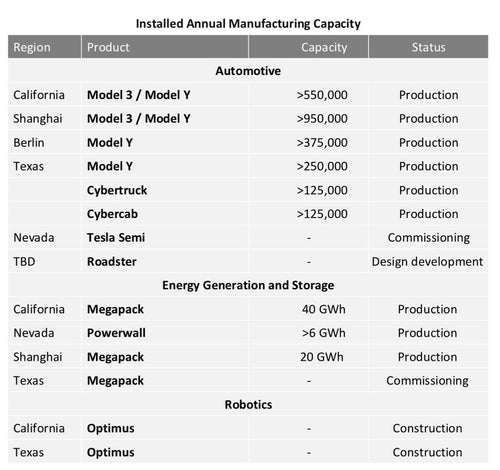
If you're on FSD v14.3.x today, nothing changes in the near term. The Robotaxi testing report, if accurate, is a signal that V15 development is progressing on schedule — not a sign that a consumer OTA is imminent. The end-of-2026 target remains the most credible public timeline. Cybercab production, which began in Q2 2026 with an installed annual capacity exceeding 125,000 units, will likely be the primary beneficiary of V15 at launch, given that the purpose-built autonomous EV is designed around unsupervised operation from the ground up.
The more interesting question for owners is whether V15's architectural leap — that 10x parameter expansion — will translate into a meaningfully different day-to-day driving experience, or whether the gains will show up primarily in rare edge cases that most drivers rarely encounter. Tesla's history with major FSD version transitions suggests the answer is usually both: headline improvements in difficult scenarios, plus a general smoothness uplift that owners notice within the first few drives. Whether V15 delivers on the "superhuman" framing is something only real-world miles will settle — and it sounds like those miles are already being logged.
🚕 Following the Robotaxi rollout? See every operating city, launch date and announced market in our Tesla Robotaxi Tracker.
Related Gear
Gear up your Tesla with tested, custom-fit BASENOR accessories — shop Tesla accessories →
Sources & reporting notes
The links below identify the material source records used for this report.
- @DirtyTesLa on X (2026-07-23T00:11:06.000Z) — Direct source
Source links are preserved as published or accessed. See our editorial standards and corrections policy.
The BASENOR Editorial Desk covers Tesla, SpaceX, and related technology, curating reporting from primary sources — official accounts, regulatory filings, and software release data. Every article passes source-record and fact-checking review before publication. About the newsroom.
This report was curated by the BASENOR Editorial Desk from the sources listed above. Read our editorial standards or email editorial@basenor.com to report an error.