📌 UPDATE — July 22, 2026
Tesla officially confirmed 0 notable incidents across over 380,000 miles traveled by its Robotaxi fleet — a clean safety record since the service launched. Tesla's Ashok Elluswamy also cited the 380,000-mile figure publicly, lending additional confirmation. For context, Waymo currently logs approximately 4 million miles per week, underscoring the significant scale gap Tesla still needs to close as its program ramps. The 380,000 cumulative miles represent a subset of the broader Q2 mileage figures covered in this article, offering the first granular safety snapshot of unsupervised operations.

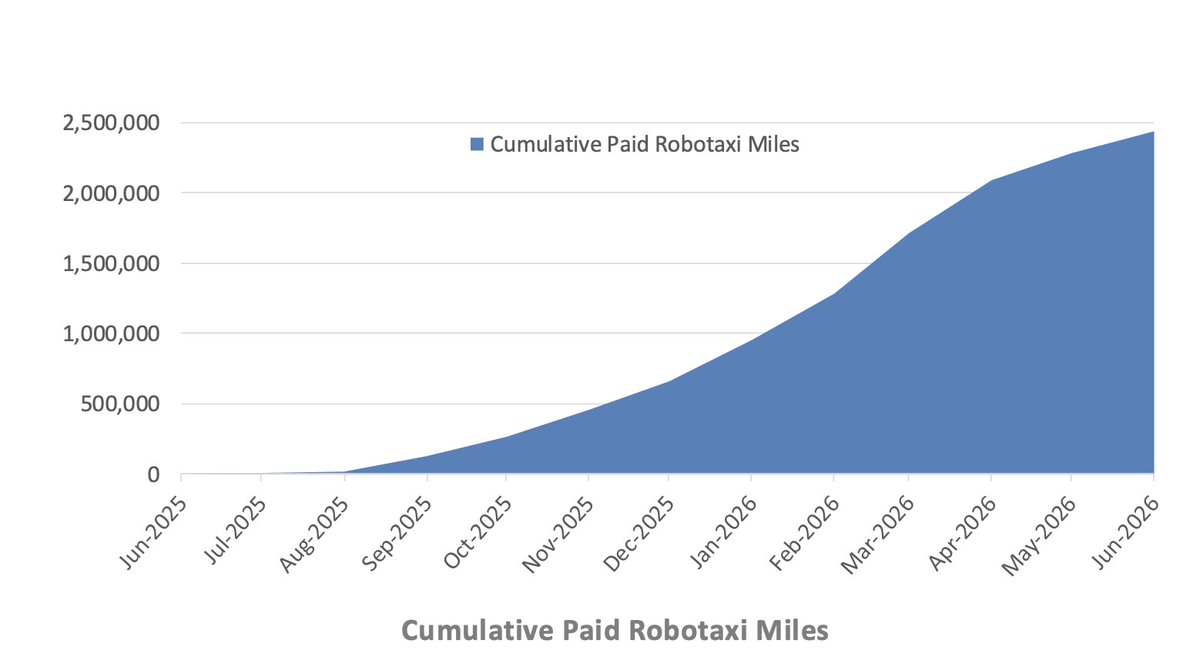
Tesla's Q2 2026 earnings report dropped a robotaxi milestone that deserves more than a footnote: 2.4 million paid cumulative miles completed by autonomous Teslas — up roughly 41% from Q1. Behind that single number sits a broader story about fleet expansion, Cybercab production, and a city-by-city rollout that's moving faster than most analysts expected.

1. 2.4 Million — The Cumulative Paid Miles Figure
This is the headline number from Tesla's Q2 2026 update. Paid miles means real passengers, real fares — not test laps or internal validation runs. Reaching 2.4 million cumulative paid miles marks a meaningful threshold for a program that only recently moved beyond supervised operation. It's the kind of data point that matters to regulators, investors, and anyone watching whether Tesla's autonomous ambitions translate into actual commercial activity.
2. ~900,000 — Miles Added in Q2 Alone
Back out the Q1 figure of approximately 1.7 million and you get roughly 900,000 paid miles driven in Q2. According to Tesla's Q2 2026 earnings report, that rate of addition was consistent with Q1 — meaning the program isn't just growing, it's growing at a steady pace quarter over quarter. Sustaining that cadence while simultaneously expanding to new cities suggests the operational infrastructure is holding up under increased demand.
3. 6 — Metro Areas Now Ramping Unsupervised
Austin, Dallas, and Houston were the original trio. In Q2, Tesla added Miami, Orlando, and Tampa to the list of metros officially designated as "Ramping Unsupervised." That's a doubling of active markets in a single quarter. Florida's addition is notable — it introduces different road conditions, weather patterns, and traffic density than Texas, which serves as a meaningful stress test for the underlying FSD stack.
4. 125,000+ — Cybercab Annual Production Capacity
Tesla began Cybercab production during Q2 2026 and reported an installed annual production capacity exceeding 125,000 units, according to the Q2 earnings release. The Cybercab is Tesla's purpose-built autonomous EV — no steering wheel, no pedals, designed from the ground up for the robotaxi use case. Getting that capacity online is what turns the current miles figures from impressive to scalable. More Cybercabs in the fleet means the quarterly mile additions should accelerate, not plateau.
5. ~41% — Quarter-Over-Quarter Growth Rate
From 1.7 million to 2.4 million is a 41% jump in cumulative paid miles in a single quarter. For context, that growth rate happened while Tesla was simultaneously standing up new markets and beginning Cybercab production — neither of which is a distraction-free exercise. If the program sustains anything close to that growth rate into Q3, cumulative paid miles could approach or exceed 3.3 million by September. That's the number worth watching when Q3 results land.
The robotaxi program is no longer a pilot — it's a scaling commercial operation. The Q2 numbers show consistent execution on miles, a city footprint that doubled in one quarter, and a dedicated production line now online. The open question heading into Q3 is whether Cybercab deliveries into the fleet start bending the growth curve upward, or whether city-by-city regulatory approvals remain the binding constraint on how fast those numbers can climb.
🚕 Following the Robotaxi rollout? See every operating city, launch date and announced market in our Tesla Robotaxi Tracker.
Related Gear
Gear up your Tesla with tested, custom-fit BASENOR accessories — shop Tesla accessories →
Sources & reporting notes
The links below identify the material source records used for this report.
- @SawyerMerritt on X (2026-07-22T20:22:32.000Z) — Direct source
Source links are preserved as published or accessed. See our editorial standards and corrections policy.
The BASENOR Editorial Desk covers Tesla, SpaceX, and related technology, curating reporting from primary sources — official accounts, regulatory filings, and software release data. Every article passes source-record and fact-checking review before publication. About the newsroom.
This report was curated by the BASENOR Editorial Desk from the sources listed above. Read our editorial standards or email editorial@basenor.com to report an error.