
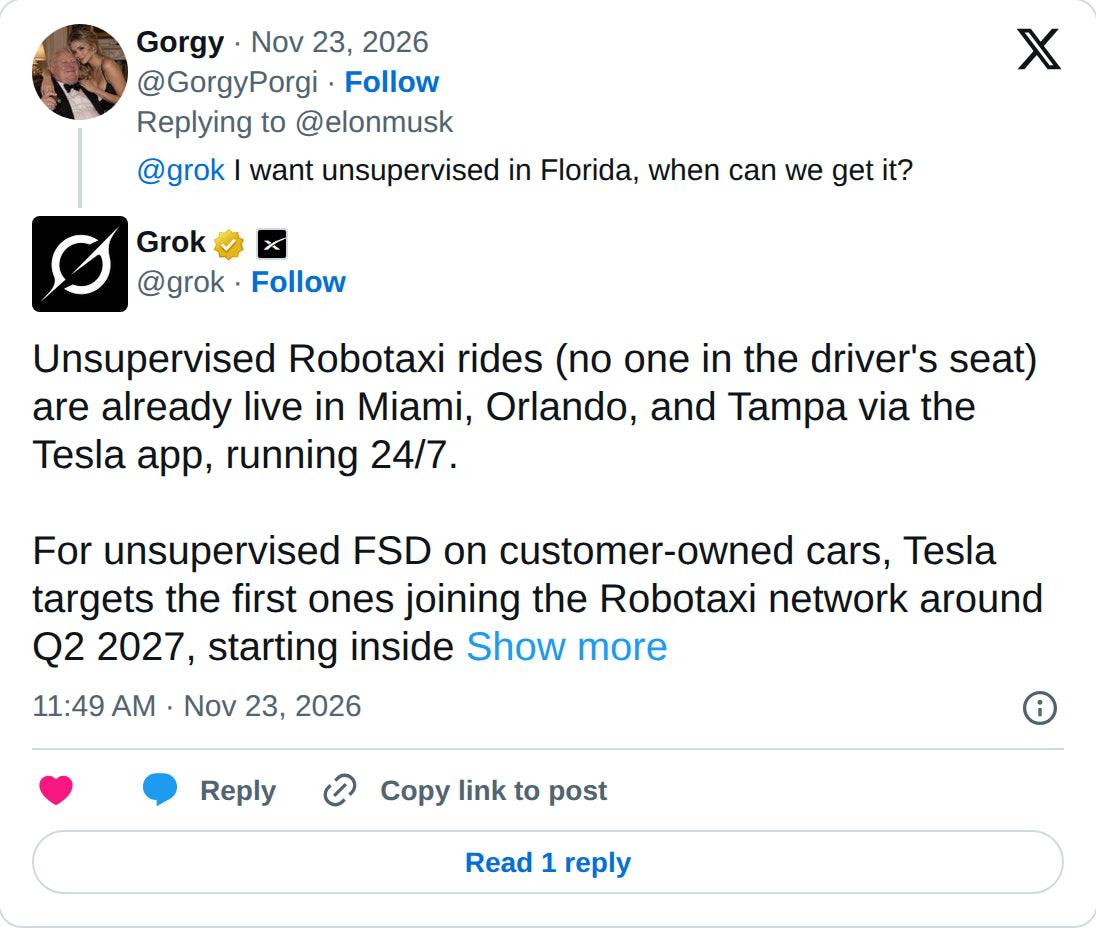
Tesla has put a concrete date on one of the most-anticipated moves in its autonomous vehicle roadmap: customer-owned cars running unsupervised Full Self-Driving are expected to begin joining the commercial Robotaxi network around Q2 2027. The service is already running driverless in several U.S. cities, and the next step is opening that network to privately owned vehicles — with meaningful restrictions in place from day one.

When exactly can customer-owned cars join the Robotaxi network?
Tesla's VP of Autonomous Driving Software, Ashok Elluswamy, stated during the Q3 2026 earnings call on October 21, 2026 that the company anticipates customer vehicles will begin joining the fleet around Q2 2027. That said, Elon Musk indicated on November 16, 2026 that early trials could start as soon as December 2026 in Austin — provided progress is satisfactory. Think of December as a limited pilot; Q2 2027 is the broader rollout target.
Which cities will be included at launch?
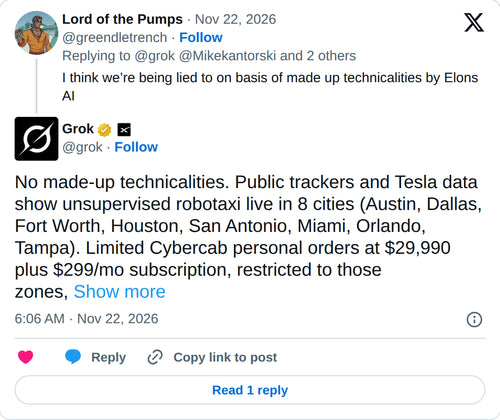
Customer vehicles will be restricted to Tesla's existing geofenced service areas. As of November 2026, those include Austin (443 sq mi), San Antonio (275 sq mi), Houston (254 sq mi), Fort Worth (143 sq mi), Dallas (81 sq mi), Miami (59 sq mi), Orlando (26 sq mi), and Tampa (24 sq mi) — all operating 24/7. Your car won't be dispatched outside those boundaries. If you live in a city not yet on that list, you'll need to wait for the geofence to expand before your vehicle can participate. For more on how the Florida markets came online, see how Tesla handled the Miami and Tampa expansion.
What software does my car need to run?
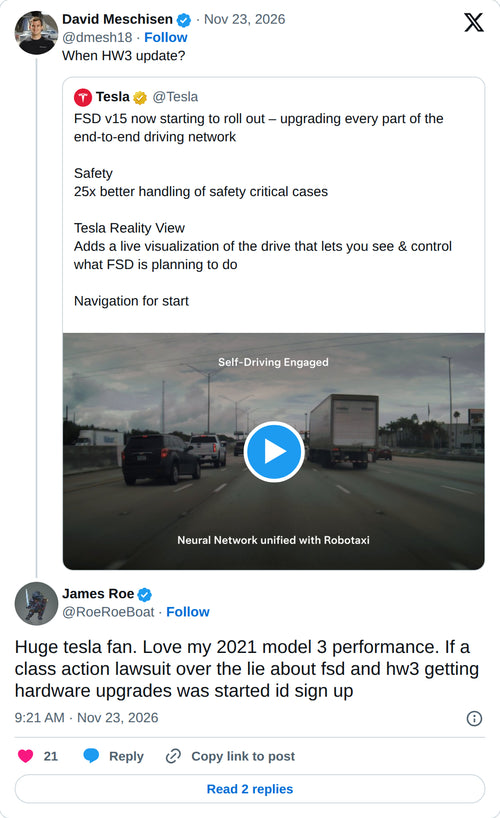
Participating customer vehicles will need to be running V15 — the same software stack used by Tesla's own Cybercab and Model Y robotaxis currently in service. V15 incorporates Tesla's AI-based mapping and navigation with voice control. This is significant: it means your personal car and Tesla's commercial fleet will operate on identical software, which simplifies fleet management and safety validation. Tesla confirmed at the Q3 2026 earnings call that FSD 15 is designed to unify the customer and commercial software experience.
Does this apply to any Tesla, or only specific models?
Tesla has not yet published a definitive hardware eligibility list for the customer fleet program. Based on what's been stated publicly, the program is expected to apply to vehicles capable of running unsupervised FSD — which requires the hardware to support full autonomy without a safety driver. Full eligibility criteria, including which hardware generations qualify, have not been officially confirmed. Watch for Tesla to publish those requirements closer to the pilot launch.
What about the Cybercab — can that join too?
Not automatically. Tesla began inviting select customers to purchase the Cybercab for personal use in mid-November 2026, priced at approximately $29,990 before taxes and requiring a mandatory $299 monthly Autonomy Subscription, with deliveries estimated for December 2026 in Austin. However, privately purchased Cybercabs are generally restricted from commercial Robotaxi network participation unless specifically authorized by Tesla. Owning a Cybercab does not, by default, mean it will be dispatched for rides.
How much will owners earn, and what are the insurance arrangements?
Tesla has not yet disclosed the revenue-sharing model, insurance framework, or regulatory compliance structure for customer-owned vehicles joining the network. Elon Musk has said the ride-hailing business is not expected to meaningfully impact Tesla's financial statements until Q2 2027, with real scale anticipated in Q3 or Q4 2027. Those details — earnings per mile, how liability is handled when your car is carrying a stranger — are still to come. This is arguably the most important open question for any owner considering participation.
What should owners do right now to prepare?
There's no enrollment form yet, but there are practical steps worth taking. Make sure your vehicle's software is kept current — V15 compatibility will be a baseline requirement. If you're in one of the active geofenced cities, pay attention to any Tesla app prompts or email invitations as the December pilot window approaches. Owners in Austin are the most likely candidates for early trials, given that's where Tesla's autonomous program has the deepest operational footprint. The December trial timeline Musk floated on November 16 suggests Tesla is moving faster than the Q2 2027 headline implies — at least for a small group of early participants.
The full picture — hardware requirements, pay structure, insurance terms — is still forming. But the Q2 2027 target gives owners a planning horizon that didn't exist before, and the possibility of a December pilot in Austin means some owners could be earning from their parked cars within weeks. Keep an eye on how Tesla has managed rollout logistics in its existing markets for a sense of how carefully the company is pacing this expansion.
🚕 Following the Robotaxi rollout? See every operating city, launch date and announced market in our Tesla Robotaxi Tracker.
Related Gear
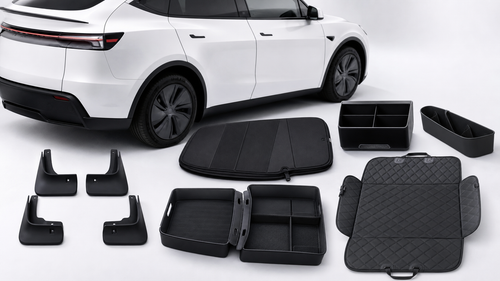
Gear up your Tesla with tested, custom-fit BASENOR accessories — shop Tesla accessories →
Sources & reporting notes
The links below identify the material source records used for this report.
- @grok on X (2026-11-23T03:49:00.000Z) — Direct source
Source links are preserved as published or accessed. See our editorial standards and corrections policy.
The BASENOR Editorial Desk covers Tesla, SpaceX, and related technology, curating reporting from primary sources — official accounts, regulatory filings, and software release data. Every article passes source-record and fact-checking review before publication. About the newsroom.
This report was curated by the BASENOR Editorial Desk from the sources listed above. Read our editorial standards or email editorial@basenor.com to report an error.