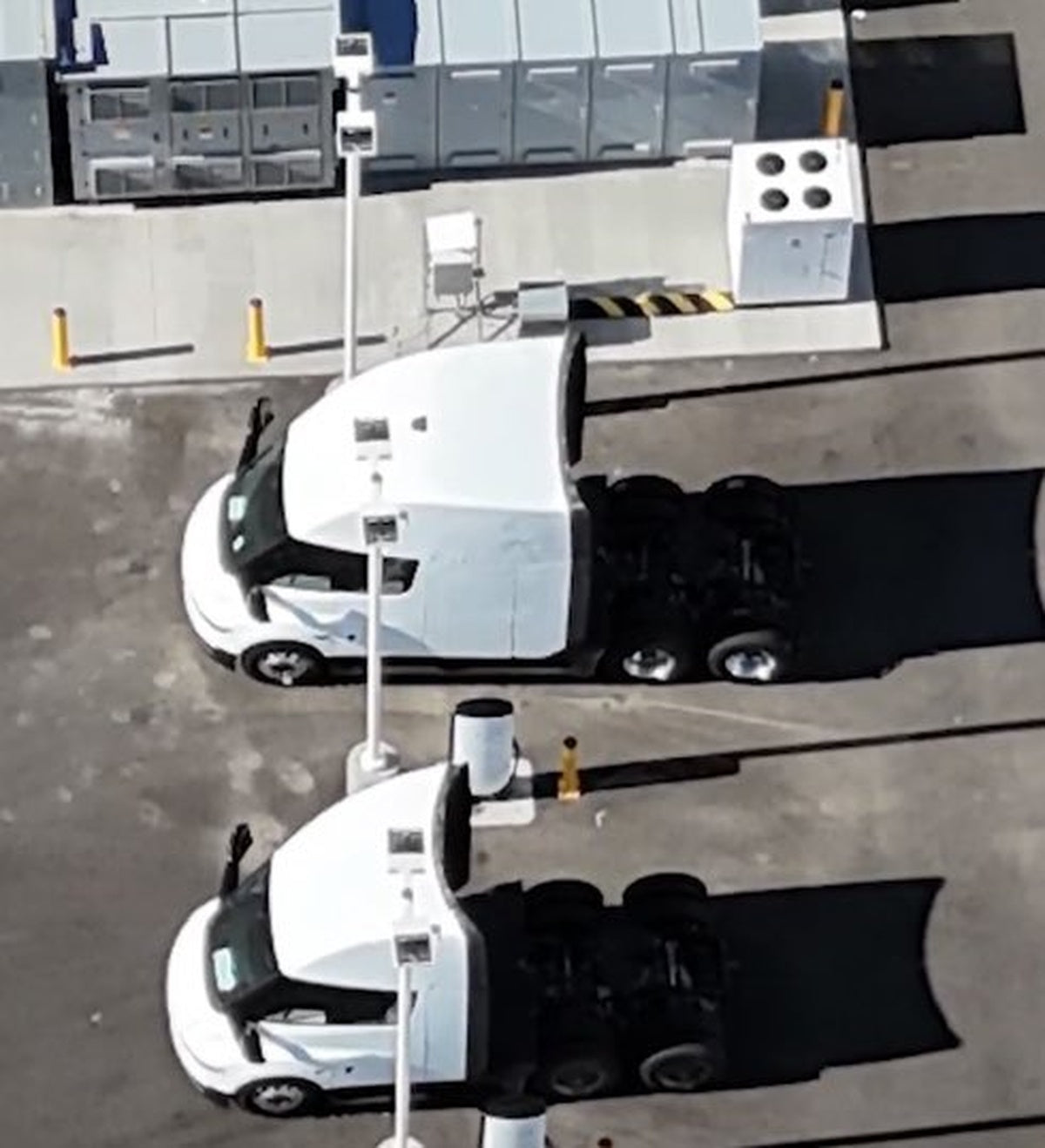
New side-by-side details on the Tesla Semi's two production variants are coming into focus, and the differences go well beyond range. With volume production underway at Giga Nevada since April 2026, fleet operators now have a clearer picture of which truck fits which job — and the Standard Range variant is shaping up to be a surprisingly capable urban workhorse.

5 Things That Separate the Two Tesla Semi Variants
1. Range and the Mission Behind It
The Long Range delivers 500 miles at a full 82,000 lb gross combination weight — enough to handle most interstate and regional haul routes without a mid-trip charge stop. The Standard Range covers 325 miles under the same load conditions. That gap is intentional: Tesla engineered each variant around a specific use case rather than simply offering a cheaper version of the same truck. For city loops, port drayage, and warehouse-to-store runs, 325 miles is more than sufficient — and the tradeoffs in size and weight are where the Standard Range earns its place.
2. Physical Size — A Meaningful 25-Inch Difference
The Long Range tractor measures approximately 245 inches (20.4 ft) in length. The Standard Range comes in at around 220 inches (18.3 ft) — a 25-inch reduction that has real-world consequences for maneuverability in tight delivery environments. That shorter wheelbase is what allows the Standard Range to achieve a turning radius comparable to a Tesla Model S, according to reporting by @SawyerMerritt. For drivers navigating urban loading docks, narrow streets, or congested port facilities, that's a genuine operational advantage over a conventional Class 8 tractor.
3. Weight: The Sub-20,000 lb Advantage
The Standard Range weighs under 20,000 lbs — a figure that matters enormously for payload math. The Long Range tips the scales at approximately 23,000 lbs. Both trucks share the same 82,000 lb GCW limit, which means every pound saved on the tractor is a pound that can go toward cargo. For operators running weight-sensitive loads — beverages, consumer goods, dense retail freight — the Standard Range's lighter curb weight directly translates to more revenue per trip.
4. Battery and Charging
The Long Range carries an 822 kWh usable battery pack; the Standard Range uses a 548 kWh pack. Both variants are compatible with MCS 3.2 charging and can recover 60% of range in approximately 30 minutes. The Long Range also supports up to 1.2 MW peak charging via Megacharger — useful for minimizing dwell time on longer corridors. Both trucks share the same powertrain architecture: three independent rear motors producing up to 800 kW of drive power, 4680 cylindrical cells with NMCA chemistry, and a 48-volt electrical system with up to 25 kW of electric power take-off (ePTO) for auxiliary equipment.
5. Pricing Expectations
Tesla has not officially announced production pricing for either variant. Industry estimates, based on pre-production commitments and fleet discussions, put the Standard Range at approximately $260,000 and the Long Range at approximately $290,000. Those figures remain unconfirmed by Tesla directly, but they give fleet procurement teams a working number for total cost of ownership modeling — particularly when factoring in fuel savings against diesel equivalents over a multi-year contract.
Which Variant Makes Sense for Which Fleet?
| Spec | Standard Range | Long Range |
|---|---|---|
| Range (82,000 lb GCW) | 325 miles | 500 miles |
| Curb Weight | Under 20,000 lbs | ~23,000 lbs |
| Battery (usable) | 548 kWh | 822 kWh |
| Tractor Length | ~220 in (18.3 ft) | ~245 in (20.4 ft) |
| Peak Charge Speed | MCS 3.2 | Up to 1.2 MW |
| Est. Price | ~$260,000* | ~$290,000* |
| Best For | City, port, regional loops | Interstate, extended haul |
*Pricing unconfirmed by Tesla. Industry estimates only.
The Standard Range isn't a compromise — it's a purpose-built tool for high-frequency, shorter-distance operations where maneuverability and payload capacity matter more than maximum range. The Long Range, meanwhile, is built to replace diesel on the routes where diesel has historically had no electric alternative. Volume production for both variants is underway at Giga Nevada, with the facility targeting 50,000 units annually at full capacity. The question now is how quickly fleet operators move from pilot programs to full-scale commitments.
Related Gear
Gear up your Tesla with tested, custom-fit BASENOR accessories — shop Tesla accessories →
Sources & reporting notes
The links below identify the material source records used for this report.
- @SawyerMerritt on X (2026-06-25T19:18:55.000Z) — Direct source
Source links are preserved as published or accessed. See our editorial standards and corrections policy.
The BASENOR Editorial Desk covers Tesla, SpaceX, and related technology, curating reporting from primary sources — official accounts, regulatory filings, and software release data. Every article passes source-record and fact-checking review before publication. About the newsroom.
This report was curated by the BASENOR Editorial Desk from the sources listed above. Read our editorial standards or email editorial@basenor.com to report an error.