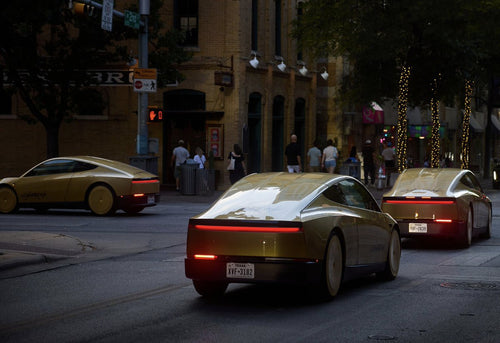

Tesla didn't mention this in their release notes, but we found four distinct features shipping inside FSD (Supervised) v14.3 Lite — tracked by Teslascope from software versions 2026.38.5 through 2026.38.5.11. The update targets Hardware 3 vehicles and represents a meaningful step forward for HW3 owners who've been waiting for the intelligence gains that HW4 cars received earlier this year. Here's what's actually in the build.
1. Start Self-Driving from Park

This is the headline addition and the one generating the most attention. Previously, engaging FSD required the vehicle to already be in motion or at least in Drive. Now, according to Teslascope's tracking, you can initiate a self-driving session directly from a parked state — the car handles the transition from Park into the route entirely on its own. For owners who use FSD as their primary driving mode, this removes a small but genuinely annoying friction point every single trip.
2. Speed Profiles

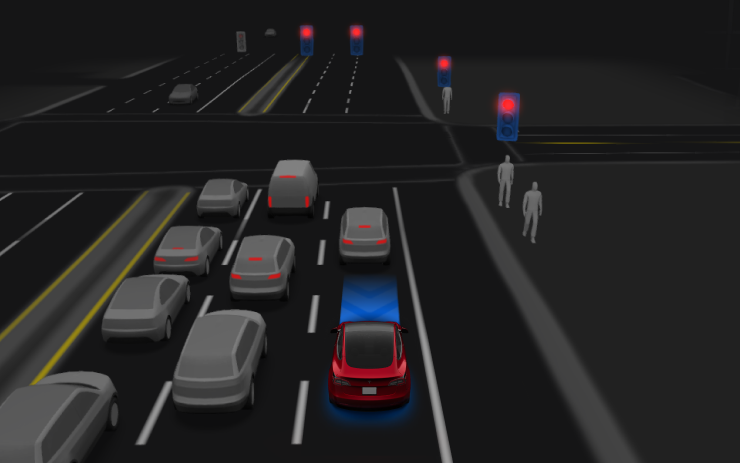
Speed Profiles gives HW3 owners a new layer of control over how assertively FSD drives. According to background research from notateslaapp.com, the update introduces a "SLOTH" profile that sits below the existing "CHILL" setting — offering lower speeds and more conservative lane selection for drivers who want the most cautious possible behavior. The driver's own profile now also plays a larger role in shaping speed behavior, meaning the system adapts more personally to how you typically drive. Adjustments can be made directly from the self-driving visualization without digging into settings menus.
3. Arrival Options

Arrival Options addresses one of the more practical end-of-trip frustrations with FSD: where exactly does the car decide to stop? According to research from notateslaapp.com, this feature lets you specify whether FSD should pull into a Parking Lot, park on the Street, or pull into a Driveway when concluding a trip. Preferences are saved per destination, so your home gets treated differently from a grocery store. It's a small quality-of-life change that makes the full end-to-end FSD experience feel considerably more intentional.
4. UI Improvements

The UI changes are less dramatic but worth noting. Speed Profile and Arrival Options are now directly accessible from the self-driving visualization screen — no longer buried in a submenu. For owners who adjust these settings frequently, that's a real usability improvement. The changes are consistent with Tesla's broader push to surface FSD controls at the moment they're most relevant rather than requiring owners to hunt through menus before or after a trip.

Who Gets This — and What's Left Out
FSD v14.3 Lite is built specifically for Hardware 3 vehicles. According to background research, the build is a distilled version of the HW4 V14 model — Tesla's engineers essentially compressed the HW4 intelligence to run efficiently within HW3's compute constraints, bringing Reinforcement Learning and offline models to older hardware for the first time. HW3 Model 3 and Model Y owners began receiving it in June 2026; the expansion to legacy HW3 Model S and Model X vehicles with Intel processors started October 14, 2026, and the latest minor versions (2026.38.5.10 and 2026.38.5.11) began appearing around October 20–24.
What HW3 owners won't get: Halloween Mode and Automatic Collision Evasion (ACE) remain restricted to HW4 hardware. FSD v14.3.12 and v14.3.13 are also HW4-only builds. The Lite designation is accurate — this is a capable but deliberately scoped release for the older compute platform. For our FSD coverage going further back, the pattern is consistent: HW3 gets meaningful improvements on a lag, not a parallel track. Whether that gap narrows further with v14.4 will be the thing to watch.
📋 Tracking Tesla software? See every firmware, FSD and app version in one place in our Tesla Software Update Tracker.
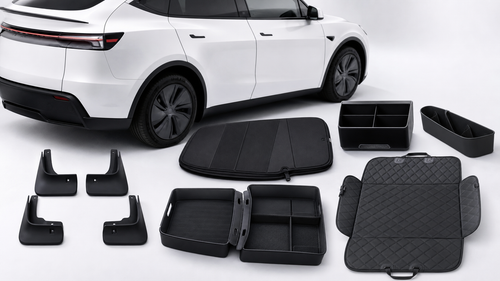
Related Gear
Gear up your Tesla with tested, custom-fit BASENOR accessories — shop Tesla accessories →
Sources & reporting notes
The links below identify the material source records used for this report.
- @teslascope on X (2026-10-25T00:18:11.000Z) — Direct source
- @teslascope on X (2026-10-25T00:18:13.000Z) — Direct source
- @teslascope on X (2026-10-25T00:18:16.000Z) — Direct source
- @teslascope on X (2026-10-25T00:18:18.000Z) — Direct source
- @teslascope on X (2026-10-25T00:18:21.000Z) — Direct source
Source links are preserved as published or accessed. See our editorial standards and corrections policy.
The BASENOR Editorial Desk covers Tesla, SpaceX, and related technology, curating reporting from primary sources — official accounts, regulatory filings, and software release data. Every article passes source-record and fact-checking review before publication. About the newsroom.
This report was curated by the BASENOR Editorial Desk from the sources listed above. Read our editorial standards or email editorial@basenor.com to report an error.