
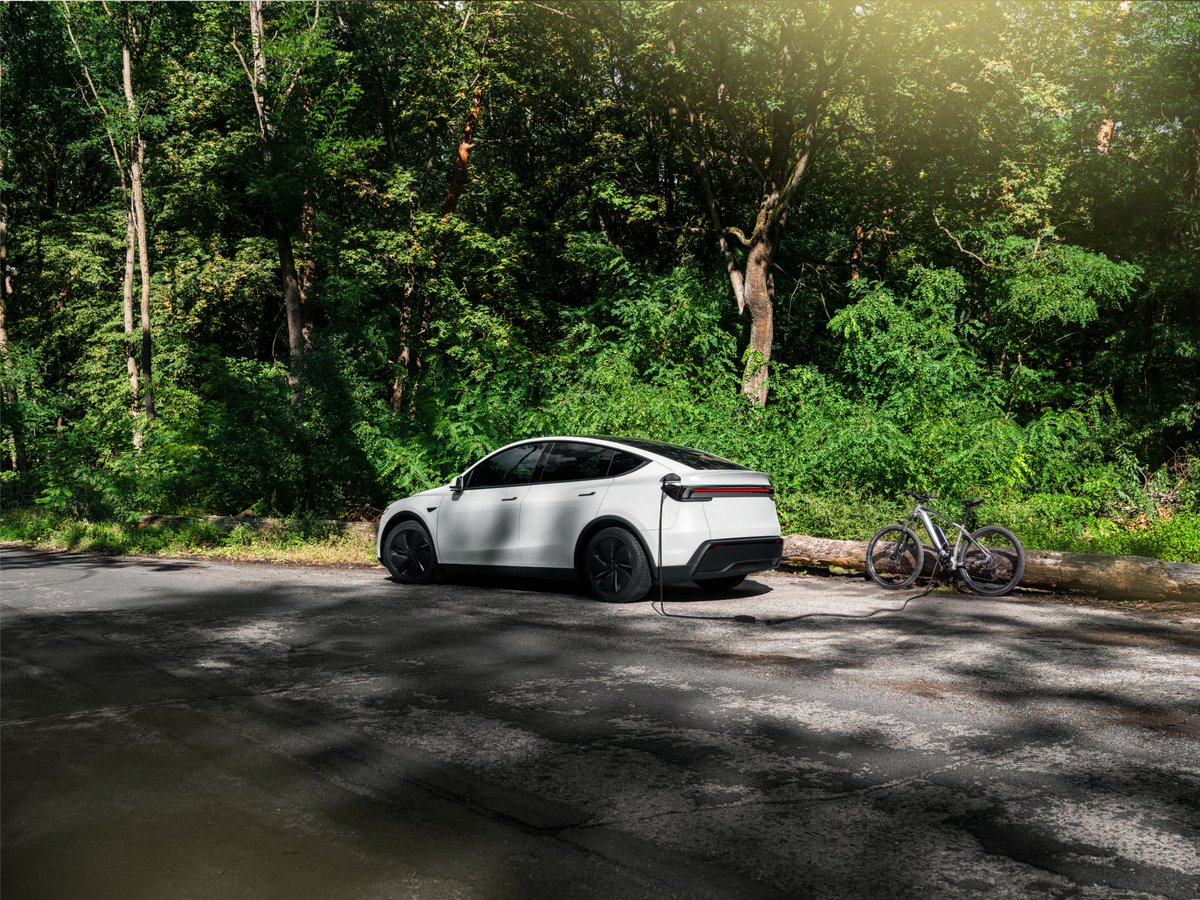
Tesla Singapore confirmed this week that Vehicle-to-Load (V2L) Powershare is now available on every new Tesla — a quiet but significant shift that turns your car into a portable power station. Whether you're camping, running tools on a job site, or preparing for a grid outage, here's exactly what the feature does and what you'll need to use it.

What exactly is V2L Powershare?
V2L stands for Vehicle-to-Load — it lets your Tesla push power out through its charge port to run external devices: appliances, power tools, laptops, camping gear, whatever you can plug in. Think of it as a very large, very mobile power bank. Powershare is Tesla's broader bidirectional energy platform, which also includes Vehicle-to-Home (V2H) backup and, in select markets, Vehicle-to-Grid (V2G) export. The V2L function is the most accessible tier — it requires only an inexpensive adapter and works anywhere you park.
Which vehicles now have it?
According to Tesla's own regional announcements, Powershare V2L is standard on all new 2027 Model 3 and Model Y vehicles ordered on or after October 1, 2026, as well as all Cybertruck variants. Tesla Australia & New Zealand confirmed the rollout for their market on October 2, 2026, and Tesla Singapore's announcement this week signals the feature is now live across major global markets. The Cybertruck has carried bidirectional capability since launch — what's new is that Model 3 and Model Y buyers are now getting it as standard, not as a future promise.
What hardware do I need to actually use it?
For Model 3 and Model Y, you'll need the Tesla Outlet Adapter, which converts the charge port into a 230V outlet (up to 13A) in markets like Singapore and Australia, or up to 2.4 kW at 120V/20A in the United States. The adapter is priced at approximately $80 USD. The Cybertruck is more generously equipped out of the box: AWD and Cyberbeast trims have two 120V outlets (up to 20A each) in the cabin and two 120V outlets plus one 240V outlet (up to 40A) in the cargo bed — no adapter needed for basic use.
Can I use it to back up my home during a power outage?
Yes, but it requires more setup. Powershare Home Backup (V2H) lets your Tesla supply electricity to your home when the grid goes down, with a maximum continuous output of 11.52 kW. For homes that already have a Powerwall 3 and a Wall Connector, no additional equipment is required. Cybertruck owners without a Powerwall can enable Home Backup using a Powershare Gateway and a Universal Wall Connector. For Model 3 and Model Y, V2H specifically requires a Powerwall 3 — Powerwall 2 and Powerwall+ compatibility is coming via a future OTA update, according to Tesla. Installation costs for V2H setups without an existing Powerwall typically run $2,000–$4,000 USD in labor, plus hardware that usually costs around $1,950 USD.
What about sending power back to the grid?
Vehicle-to-Grid (V2G) export — where you sell excess energy back to your utility — is currently available for Cybertruck owners in Texas and California. There's no confirmed timeline yet for V2G expansion to Model 3 and Model Y or to additional markets.
I already own a Model 3 or Model Y — can I get this retrofitted?
It depends on your model. Tesla published an official service procedure on August 16, 2026, allowing owners of US-built Model Y vehicles to upgrade their power conversion system to unlock V2L capability. Pricing for that retrofit has not yet been confirmed by Tesla. Existing Model 3 owners, however, are out of luck — Tesla has stated that the current Model 3 hardware cannot be retrofitted with V2L. If you're on the fence about upgrading or ordering new, this is a meaningful differentiator for the 2027 model year vehicles.
How do I check if my vehicle already has Powershare enabled?
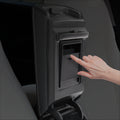
On your touchscreen, navigate to Software → Additional Vehicle Info and look for Powershare Support: Enabled. If you're taking delivery of a new Model 3 or Model Y ordered after October 1, 2026, it should be there. If you've had a retrofit done on a US Model Y, this is how you confirm the upgrade took effect.
The broader significance here is straightforward: bidirectional charging has moved from a Cybertruck-exclusive selling point to a baseline feature across Tesla's two highest-volume models. For owners in markets prone to outages — or anyone who spends time off-grid — that's a meaningful shift in what a new Tesla can do on day one.
Related Gear
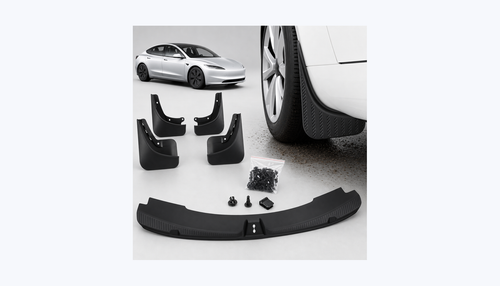
Gear up your Model 3 with tested, custom-fit BASENOR accessories — shop Model 3 accessories →
Sources & reporting notes
The links below identify the material source records used for this report.
- @tesla_singapore on X (2026-10-19T02:36:58.000Z) — Direct source
Source links are preserved as published or accessed. See our editorial standards and corrections policy.
The BASENOR Editorial Desk covers Tesla, SpaceX, and related technology, curating reporting from primary sources — official accounts, regulatory filings, and software release data. Every article passes source-record and fact-checking review before publication. About the newsroom.
This report was curated by the BASENOR Editorial Desk from the sources listed above. Read our editorial standards or email editorial@basenor.com to report an error.