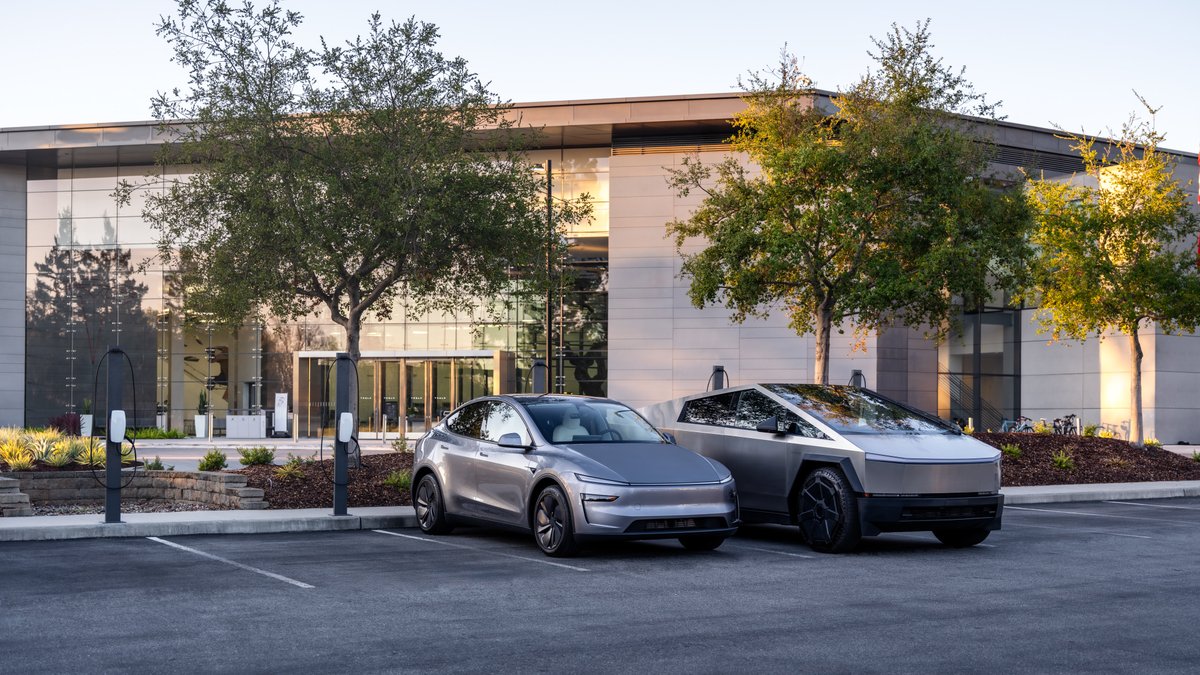
Tesla's Wall Connector for Business program just logged another significant two-week sprint: 90 new sites and 449 connectors activated across the United States, Taiwan, and Thailand. The pace of expansion is accelerating, and the program's reach now extends well beyond apartment parking garages into hospitals, corporate campuses, and international markets. Here's what this latest wave actually means.

1. The Numbers Are Bigger Than They Look
Ninety new sites sounds incremental until you do the math: 449 connectors across 90 locations averages roughly five chargers per site. That's not a token two-plug installation — it's meaningful charging infrastructure. For context, a prior two-week window in March 2026 brought 570 connectors online across the same 90-site count, and a September 2026 cycle added 500 connectors. The October figure of 449 is consistent with Tesla's sustained cadence of several hundred new connectors every fortnight.
2. The Geographic Mix Is Genuinely New
Previous Wall Connector for Business updates have leaned heavily on California and the Northeast. This cycle explicitly includes Taiwan and Thailand — two markets where Tesla's Supercharger footprint is thinner than in North America. Placing Wall Connectors at private and semi-public business properties in those markets gives Tesla owners in Asia-Pacific a meaningful charging option between Supercharger stops, and signals that the program is no longer a US-centric initiative.
3. The Site Mix Spans Unexpected Categories
The US portion of this expansion includes City of Hope Cancer Center in Arizona — a medical campus, not an apartment complex or office park. That matters because it signals Tesla is actively targeting healthcare and institutional properties, where employees and visitors may spend four-plus hours on-site. Long dwell times are exactly where Level 2 AC charging shines, and it broadens the program's reach beyond the apartment and workplace categories that dominated early rollouts.
4. Non-Tesla EVs Can Use These Chargers Too
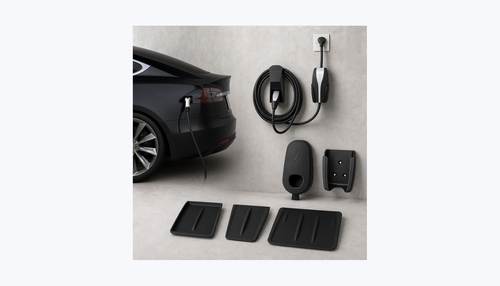
The Universal Wall Connector ships with a built-in NACS-to-J1772 adapter, according to Tesla's product documentation. That means any J1772-compatible EV — not just Teslas — can plug in at these business locations. For property owners, this is a meaningful selling point when pitching the installation to tenants or guests who drive non-Tesla EVs. For Tesla owners, it's worth knowing that a Wall Connector for Business site showing up in your navigation is also accessible to friends and colleagues in other EVs.
5. The Business Model Favors Rapid Deployment
Under the Wall Connector for Business program, the property owner covers hardware and installation costs. Tesla provides the software platform, management portal, and ongoing support at no additional charge — and takes a $0.03 per kWh fee if the business chooses to charge guests per kWh rather than offer free charging. That low friction on Tesla's side of the deal is a core reason the program can scale at this pace. There's no Tesla capital expenditure per site, so the bottleneck is business adoption, not Tesla's balance sheet.
6. These Sites Show Up in Your Tesla's Navigation
Every activated Wall Connector for Business location is added to Tesla's in-car navigation system. That's the practical takeaway for owners: the next time you're routing to a hospital, hotel, or office campus, your car may already know there's a Level 2 charger waiting. At up to 11.5 kW and 48 amps, a Wall Connector adds roughly 30 to 44 miles of range per hour — enough to meaningfully top up during a two-hour appointment or a half-day work visit. Check your navigation before assuming a destination has no charging.
Tesla hasn't published a cumulative total for Wall Connector for Business installations globally, but the bi-weekly update cadence suggests the network is growing by thousands of connectors per quarter. With international markets now appearing in these announcements, the program is evolving from a domestic amenity into a genuine piece of Tesla's global charging infrastructure strategy. Owners traveling in Taiwan or Thailand should keep an eye on their navigation — the map is filling in faster than most realize.
Related Gear
Gear up your Tesla with tested, custom-fit BASENOR accessories — shop Tesla accessories →
Sources & reporting notes
The links below identify the material source records used for this report.
- @TeslaCharging on X (2026-10-09T18:03:19.000Z) — Direct source
- @TeslaNewswire on X (2026-10-09T18:16:45.000Z) — Direct source
Source links are preserved as published or accessed. See our editorial standards and corrections policy.
The BASENOR Editorial Desk covers Tesla, SpaceX, and related technology, curating reporting from primary sources — official accounts, regulatory filings, and software release data. Every article passes source-record and fact-checking review before publication. About the newsroom.
This report was curated by the BASENOR Editorial Desk from the sources listed above. Read our editorial standards or email editorial@basenor.com to report an error.