📌 UPDATE — August 10, 2026
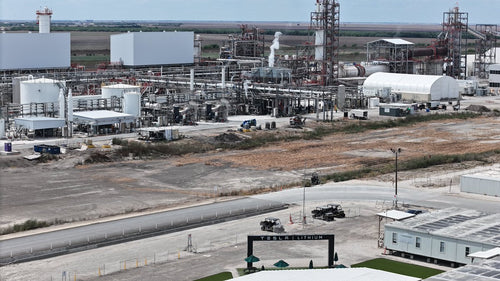
New drone footage has surfaced showing the Fort Bend County plot of land near Houston where Tesla is considering constructing its $10 billion solar manufacturing facility. The footage, shared by @SawyerMerritt, offers the clearest ground-level look yet at the undeveloped site earmarked for Project Crystal Sun. The clip confirms the scale of the land under consideration but shows no construction activity has begun, consistent with the previously reported 2026–2028 build timeline.

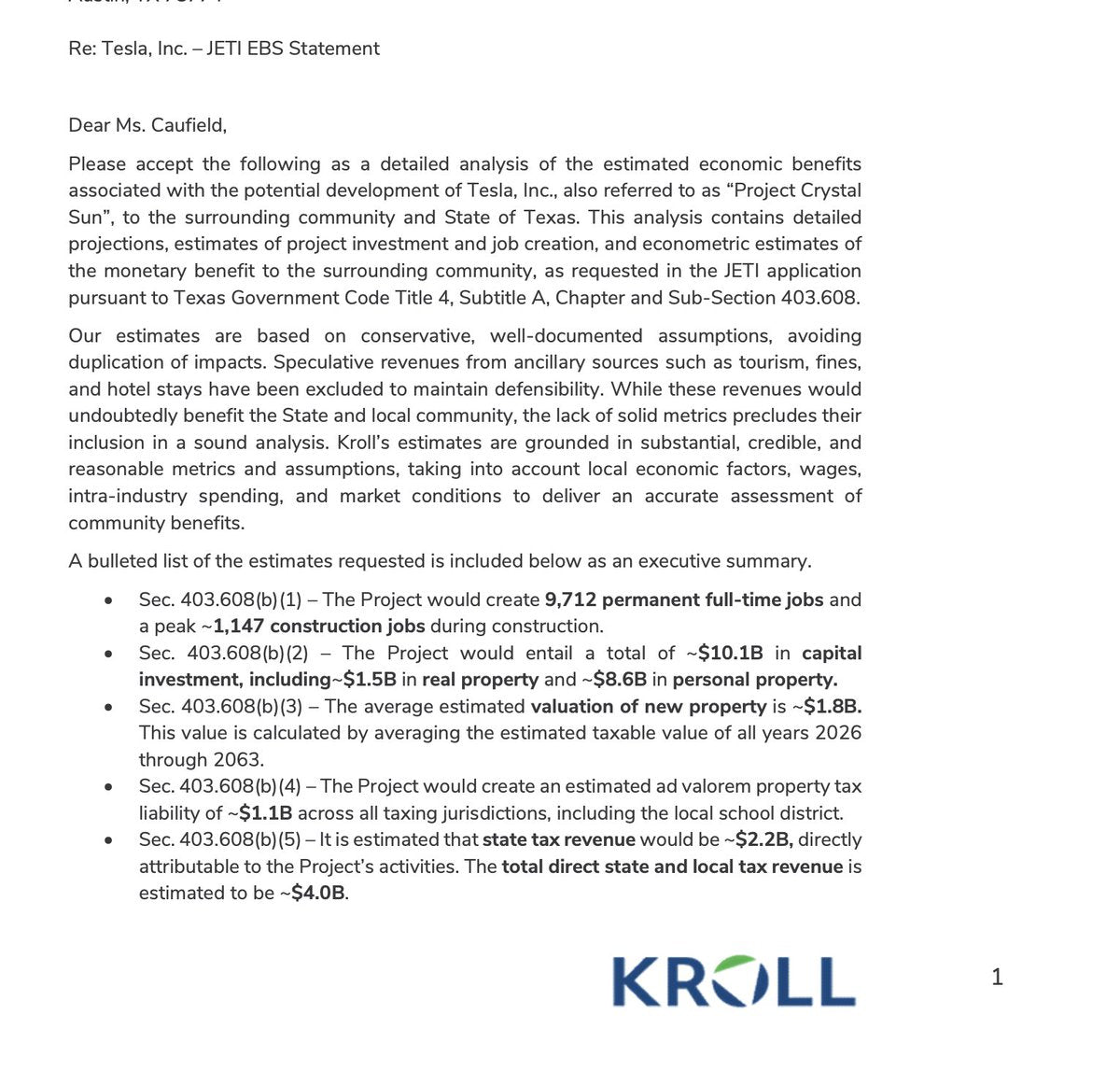
No new financial or job-count figures have emerged beyond the previously reported ~9,700 permanent full-time jobs and $10.1B investment.
Tesla is planning one of the largest solar manufacturing investments in U.S. history: a $10.1 billion vertically integrated solar cell facility in Fort Bend County, Texas, roughly 40 minutes southwest of Houston. According to a public application filing surfaced on August 7, the project is code-named 'Project Crystal Sun' and would create 9,712 permanent full-time jobs, with construction targeted to begin this year and wrap by 2028.
If executed as filed, the plant would mark Tesla's most ambitious energy manufacturing move to date — and its first serious attempt at bringing solar cell production, not just assembly, onto U.S. soil at scale.

What the Filing Reveals
The public application describes a vertically integrated operation — meaning Tesla intends to produce the full stack in-house rather than importing cells or wafers from overseas suppliers. That's a critical distinction. Nearly all solar manufacturing capacity added in the U.S. over the past three years has been module assembly, which imports cells from Southeast Asia and simply laminates and frames them domestically. A true cell-manufacturing plant is a categorically different investment involving high-purity polysilicon processing, ingot growth, wafering, and cell fabrication.
Key figures from the filing:
Key Figures
| Metric | Value |
|---|---|
| Total capital investment | ~$10.1 billion |
| Permanent full-time jobs | 9,712 |
| Project name | Project Crystal Sun |
| Location | Fort Bend County, Texas |
| Distance from Houston | ~40 minutes |
| Construction start | 2026 (this year) |
| Construction completion | 2028 |

Why Fort Bend County?
Fort Bend sits directly southwest of Houston, giving Tesla access to Gulf Coast petrochemical infrastructure, a deepwater port for equipment and material imports, and — critically — the industrial-grade power availability that a polysilicon-to-cell plant demands. Solar cell manufacturing is enormously energy-intensive in its early stages (polysilicon refining and ingot pulling), and Texas's ERCOT grid, combined with Tesla's own energy storage expertise, makes the state a logical home.
The site is also within Tesla's growing Texas orbit. Gigafactory Texas in Austin already houses vehicle assembly, 4680 cell production, and battery pack assembly. Adding solar cell manufacturing to the state gives Tesla a full clean-energy manufacturing corridor within a single regulatory environment.
How This Fits Tesla's Energy Strategy
Tesla's energy business has been quietly outpacing the automotive segment in growth rate. Megapack deployments, Powerwall installations, and grid-scale storage projects have driven the segment to become one of the company's fastest-expanding revenue lines. But solar has been the laggard — Solar Roof volumes remain modest, and the company has relied on third-party cells for years.
Building solar cells domestically at 10-figure scale accomplishes several things at once:
- Supply chain resilience: Removes dependence on Southeast Asian solar cell suppliers, which have been subject to tariff investigations and anti-circumvention duties.
- Tax credit capture: Domestic solar cell production qualifies for lucrative manufacturing tax credits under existing U.S. clean-energy legislation, which materially improves unit economics.
- Vertical integration: Pairs cell production with Tesla's existing inverter, battery, and installation businesses to control the entire residential and commercial solar stack.
- Megapack synergy: Solar-plus-storage projects at grid scale are increasingly bundled, and controlling both sides of the deal is a structural advantage.
What Tesla Owners Should Watch
For current Tesla vehicle owners, this project is not an immediate factor — it's a solar and grid-storage play, not an automotive one. But the ripple effects are worth tracking:
- Powerwall and Solar Roof pricing: If Tesla brings cell production in-house at scale, the cost structure of Solar Roof and traditional Tesla solar panels could shift meaningfully by late 2028.
- Home energy bundling: Expect Tesla to more aggressively pitch solar-plus-Powerwall bundles to EV owners once domestic cell supply is secured.
- Supercharger network economics: Tesla-produced solar cells feeding Tesla-owned Megapacks at Supercharger sites is the long-term vision. This plant is a foundational piece of that architecture.
What Comes Next
The filing is a public application — meaning it triggers a review process involving state incentives, local zoning, and environmental permitting. Tesla has stated the goal of breaking ground this year, but plants of this scale typically see timeline slippage of 6-18 months between filing and first equipment installation. A 2028 completion target is aggressive; realistic first-cell output is more likely to land in late 2028 or 2029.
The next signals to watch: confirmation of state and county incentive packages, environmental impact filings, and any public statement from Tesla leadership. As of publication, Tesla has not issued a corporate press release confirming the project details beyond what appears in the public filing.
Frequently Asked Questions
Is Project Crystal Sun officially confirmed by Tesla?
The project details come from a public application filing, not a Tesla corporate announcement. The $10.1 billion investment figure, job count, and timeline are drawn directly from that filing. Tesla has not yet issued its own press release on the project.
How does this compare to Gigafactory Texas?
Gigafactory Texas in Austin was initially announced with a roughly $1.1 billion investment and has since expanded considerably. Project Crystal Sun's $10.1 billion figure would make it one of Tesla's single largest capital commitments to date, though it covers a longer construction window and a more capital-intensive manufacturing process than vehicle assembly.
Will this affect Tesla vehicle prices or availability?
No direct impact on vehicles. This is a solar cell manufacturing facility, separate from Tesla's automotive supply chain. Any indirect effects would come through Tesla's broader capital allocation decisions.
When will the plant actually start producing solar cells?
The filing targets 2028 completion, but first commercial cell output typically lags construction completion by several months for calibration and yield ramp. A realistic first-output window is late 2028 through 2029.Does this mean cheaper Solar Roof and Powerwall?
Potentially, but not immediately. Domestic cell production qualifies for U.S. manufacturing tax credits that improve unit economics, and vertical integration typically compresses costs over time. Any consumer pricing impact would emerge after the plant reaches steady-state production — likely 2029 or later.
Related Gear
Gear up your Tesla with tested, custom-fit BASENOR accessories — shop Tesla accessories →
Sources & reporting notes
The links below identify the material source records used for this report.
- @SawyerMerritt on X (2026-08-07T16:33:12.000Z) — Direct source
- @SawyerMerritt on X (2026-08-07T16:33:12.000Z) — Direct source
- @SawyerMerritt on X (2026-08-07T16:51:31.000Z) — Direct source
Source links are preserved as published or accessed. See our editorial standards and corrections policy.
The BASENOR Editorial Desk covers Tesla, SpaceX, and related technology, curating reporting from primary sources — official accounts, regulatory filings, and software release data. Every article passes source-record and fact-checking review before publication. About the newsroom.
This report was curated by the BASENOR Editorial Desk from the sources listed above. Read our editorial standards or email editorial@basenor.com to report an error.