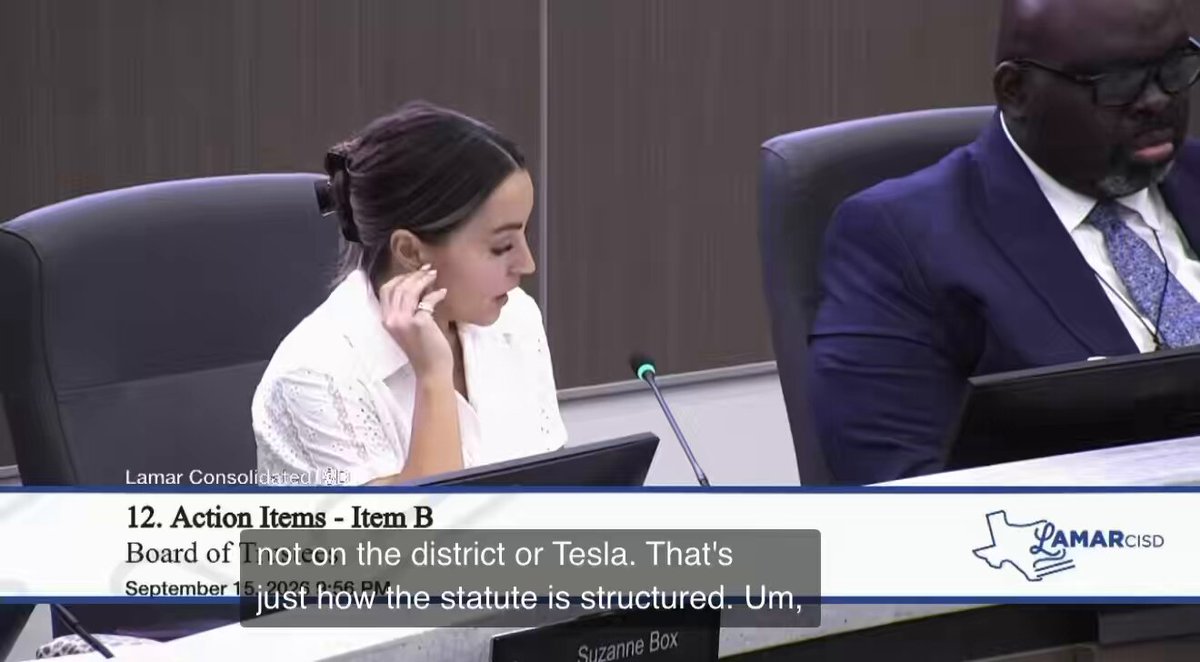
Tesla's long-rumored solar manufacturing megaproject in Texas just cleared one of its biggest local hurdles. On Tuesday, September 15, the Lamar Consolidated Independent School District (Lamar CISD) board unanimously approved a property tax incentive agreement for Tesla's proposed Project Crystal Sun, a $10.1 billion vertically integrated solar cell and module factory planned for a 3,050-acre site near Richmond, Texas, in Fort Bend County.
The vote doesn't guarantee construction — Tesla has not formally committed to the site — but it removes a significant obstacle and signals the deal is now structurally in place at the local level. If Tesla proceeds, this would be one of the largest single manufacturing investments in Texas history and the most ambitious Tesla Energy production build to date.

What Project Crystal Sun Actually Is
According to Tesla's Jobs, Energy, Technology and Innovation Act (JETI) application filed with the Texas Comptroller of Public Accounts on August 6, 2026, Project Crystal Sun is designed as a fully vertically integrated photovoltaic (PV) manufacturing facility. That's a meaningful phrase — it means Tesla would handle every step of solar cell production in-house on a single campus:
- Ingot manufacturing — growing the silicon crystal blocks
- Wafer slicing — cutting ingots into ultra-thin wafers
- Cell fabrication — turning wafers into functional PV cells
- Module assembly — packaging cells into finished solar panels
Very few companies operate this entire chain domestically. Most US-branded solar panels are assembled from cells imported from Asia. A vertically integrated cell-through-module plant on US soil would be a strategic asset both for Tesla Energy's residential and utility-scale solar business and for the broader domestic supply chain.
Key Figures
| Metric | Value |
|---|---|
| Total capital investment | $10.116 billion |
| Real property investment | ~$1.5 billion |
| Equipment & personal property | ~$8.6 billion |
| Site size | ~3,050 acres |
| New permanent jobs | 9,712 |
| Average annual wage | $134,149 |
| Construction jobs | 1,147 |
| Commercial production start | Q1 2029 |
Those figures come from Tesla's JETI filing with the Texas Comptroller, according to reporting by PV Tech and ESG Dive. The average wage number — over $134,000 — is notable because JETI agreements specifically require wages significantly above local averages to qualify for tax abatement.
How the Tax Deal Works
Under Texas's JETI program (the successor to the expired Chapter 313 incentive program), qualifying projects receive a 10-year limitation on the taxable value of eligible property for school district Maintenance and Operations (M&O) tax purposes. Because Project Crystal Sun's proposed site is not located in a designated Opportunity Zone, the limitation is set at 50% of market value — a less aggressive discount than what Opportunity Zone projects receive, but still substantial over a decade on nearly $10 billion in equipment.
Tuesday's Lamar CISD board vote was the school district's piece of the puzzle. Earlier, the Fort Bend County Commissioners Court had already voted to create Reinvestment Zone 34 to cover the site — a procedural step needed to enable county-level tax incentives. Each taxing entity has to approve its own piece independently, which is why deals of this scale often take months of public meetings.
Timeline and What Comes Next
Per Tesla's own JETI application documents, the anticipated schedule looks like this:
- August 6, 2026: JETI application filed with Texas Comptroller
- September 15, 2026: Lamar CISD tax agreement approved
- 2026-2028: Construction phase
- Q1 2029: Commercial solar cell and module production begins
The critical caveat, as reported by Carbon Credits and confirmed in the filing itself: Tesla is still evaluating alternative sites outside Texas. That language is standard in JETI applications — companies are required to demonstrate that the incentive is a material factor in their site selection, so listing competing options is procedurally normal. But it also means the Fort Bend approval isn't a groundbreaking ceremony. It's Tesla securing the option to build here on favorable terms.
Why This Matters for Tesla Energy
Tesla Energy has been the company's fastest-growing segment for several quarters running, driven primarily by Megapack utility-scale battery storage. Solar, by contrast, has been Tesla's quietest business — the Solar Roof product has never scaled the way early projections suggested, and Tesla currently sources its solar panels rather than manufacturing them.
A domestic, vertically integrated solar cell factory changes that math in several ways. It would reduce Tesla's exposure to Asian solar supply chains and the associated tariff volatility. It would allow tighter integration between Tesla's solar hardware and its Powerwall/Megapack storage products. And at 9,700+ permanent jobs, the workforce implies annual production capacity in the multi-gigawatt range — enough to make Tesla a top-tier US solar manufacturer rather than a niche installer.
It's also worth noting the timing. US solar manufacturing has been a policy priority under recent federal tax credits for domestically produced clean energy components. A plant coming online in 2029 would arrive with those incentive structures still relevant to project economics.
What to Watch Next
Three signals will indicate whether Project Crystal Sun is actually moving from paperwork to concrete:
- Fort Bend County final abatement vote — the county-level tax agreement still needs to be finalized separately from the school district approval.
- Texas Comptroller certification — the state-level JETI approval closes out the incentive package.
- Site preparation activity — grading, permitting, or utility work on the FM 762 / FM 1994 acreage would be the first visible sign Tesla has committed.
Until Tesla publicly confirms the location choice, treat Project Crystal Sun as a highly probable — but not yet finalized — expansion of Tesla's Texas manufacturing footprint. The Lamar CISD vote makes the deal materially more likely, but the ball is now in Tesla's court.
Related Gear
Gear up your Tesla with tested, custom-fit BASENOR accessories — shop Tesla accessories →
Sources & reporting notes
The links below identify the material source records used for this report.
- @SawyerMerritt on X (2026-09-16T19:18:54.000Z) — Direct source
Source links are preserved as published or accessed. See our editorial standards and corrections policy.
The BASENOR Editorial Desk covers Tesla, SpaceX, and related technology, curating reporting from primary sources — official accounts, regulatory filings, and software release data. Every article passes source-record and fact-checking review before publication. About the newsroom.
This report was curated by the BASENOR Editorial Desk from the sources listed above. Read our editorial standards or email editorial@basenor.com to report an error.