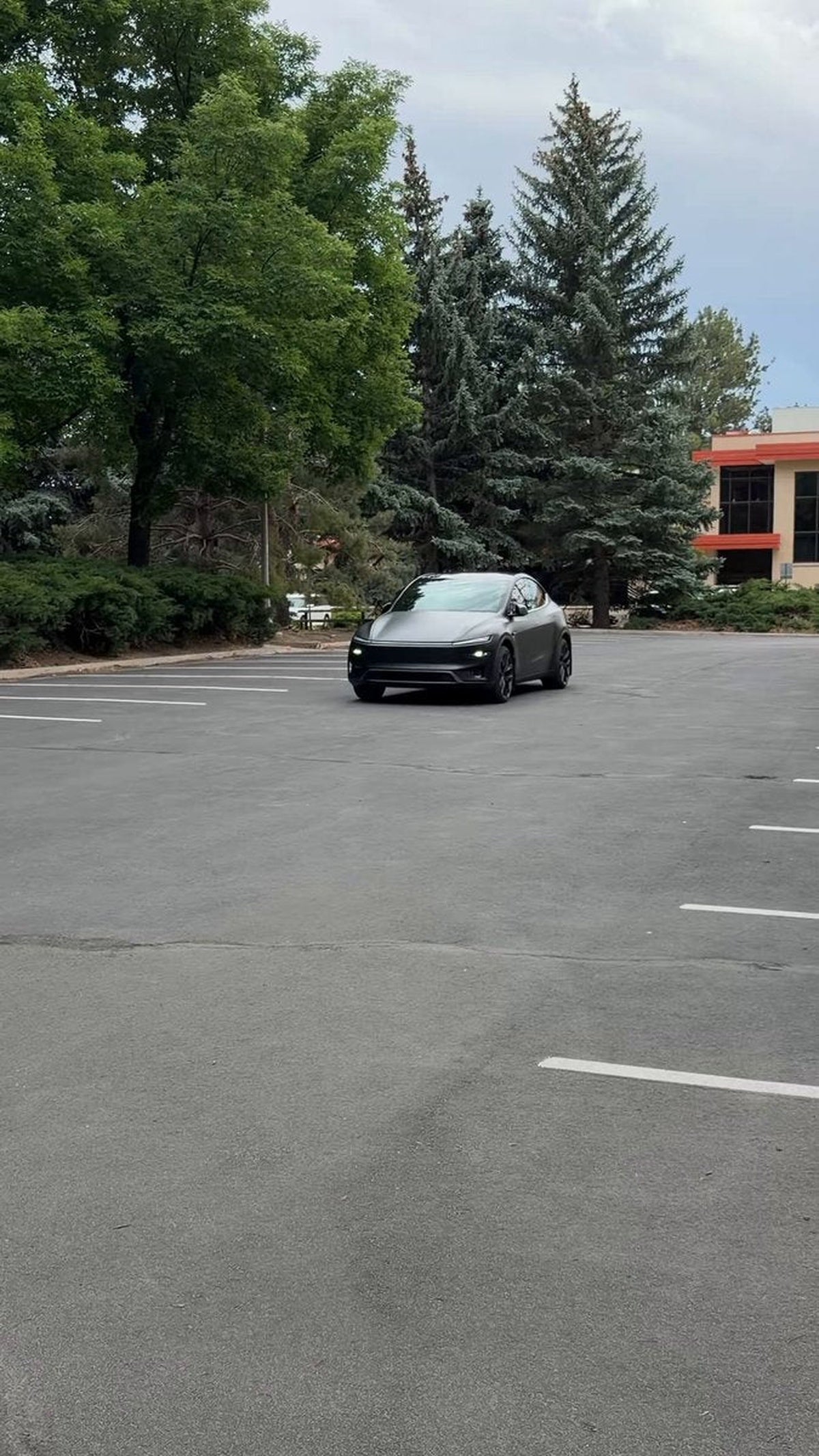
Tesla's driverless valet feature — nicknamed 'Banish' — isn't a distant roadmap item. According to Whole Mars Catalog, the underlying capability already exists inside the FSD model right now. The missing piece isn't the AI; it's a parking reliability threshold Tesla needs to hit before flipping the switch for everyone.

What exactly is 'Banish'?
Banish is Tesla's envisioned hands-free valet parking system. The idea: you pull up to your destination, step out, and your Tesla autonomously drives off to find a parking spot on its own. When you're ready to leave, you summon it back. Elon Musk teased the feature by name, describing it as the car going to 'park itself' while you go about your day — no driver required, no remote control needed.
If the capability is already in the model, why can't owners use it today?
The AI model contains the foundational capability, but Tesla hasn't activated the user interface for it yet. According to Whole Mars Catalog, Tesla is waiting until FSD (Supervised) can successfully find a parking spot autonomously more than 90% of the time before enabling the feature for drivers. Parking is one of the harder edge cases in autonomous driving — tight spaces, ambiguous markings, pedestrians, and unpredictable lot layouts all create failure scenarios that need to be driven down to an acceptable rate before Tesla will let the car operate without a human ready to intervene.
What has Tesla done to build toward this?
FSD (Supervised) v14.1, released in late 2025, introduced 'Arrival Options' — a feature that lets drivers select a specific parking scenario before the car takes over: Charger, Parking Lot, Curbside, Street, Driveway, or Parking Garage. That wasn't just a convenience feature. It was a data collection mechanism, allowing Tesla to gather structured, labeled parking attempts across its fleet at massive scale. Every successful and failed parking attempt feeds back into the model. In April 2026, Tesla demonstrated FSD completing an 850-mile journey without human intervention, which included fully autonomous parking and Supercharger stops — a meaningful proof point that the system is closing in on the reliability bar.
Is the 90% threshold an official Tesla number?
Not officially confirmed by Tesla. The 90%+ figure comes from Whole Mars Catalog, a well-connected Tesla observer, as the implied internal benchmark. Tesla hasn't published a specific success-rate target for Banish activation. What is clear from the research is that Tesla considers current parking performance insufficient for a fully driverless, unsupervised deployment — and that the Arrival Options data pipeline is the mechanism being used to close that gap.
Does this mean Banish will require unsupervised FSD?
Almost certainly yes for the full vision. A car parking itself without any driver present is, by definition, an unsupervised operation. Elon Musk has projected unsupervised FSD for consumer vehicles arriving in Q4 2026 at the earliest, with a geography-specific rollout. It's plausible that an early, limited version of Banish could appear before full unsupervised FSD — perhaps in geofenced areas or specific lots — but the complete drop-off-and-go experience requires the car to operate legally and safely with no one behind the wheel.
What should owners do right now?
If you're running FSD (Supervised), use the Arrival Options feature actively. Every parking attempt you complete with FSD engaged contributes real-world data to the model. Selecting the correct scenario type (Parking Lot vs. Parking Garage, for example) gives Tesla cleaner training signal. It's the most direct way an individual owner can contribute to accelerating the reliability threshold that unlocks Banish. FSD (Supervised) is currently available as a $99/month subscription in North America — the one-time purchase option was discontinued in February 2026.
The gap between 'capability exists in the model' and 'UI is live for owners' is essentially a reliability audit. Tesla has done this before — features sit dormant in firmware until the team is confident enough to surface them. Banish appears to be next in that queue, waiting on parking success rates to clear the bar. Given the pace of FSD improvement through 2025 and into 2026, that threshold may not be far off.
📋 Tracking Tesla software? See every firmware, FSD and app version in one place in our Tesla Software Update Tracker.
Related Gear
Gear up your Tesla with tested, custom-fit BASENOR accessories — shop Tesla accessories →
Sources & reporting notes
The links below identify the material source records used for this report.
- @wholemars on X (2026-06-02T21:07:20.000Z) — Direct source
Source links are preserved as published or accessed. See our editorial standards and corrections policy.
The BASENOR Editorial Desk covers Tesla, SpaceX, and related technology, curating reporting from primary sources — official accounts, regulatory filings, and software release data. Every article passes source-record and fact-checking review before publication. About the newsroom.
This report was curated by the BASENOR Editorial Desk from the sources listed above. Read our editorial standards or email editorial@basenor.com to report an error.