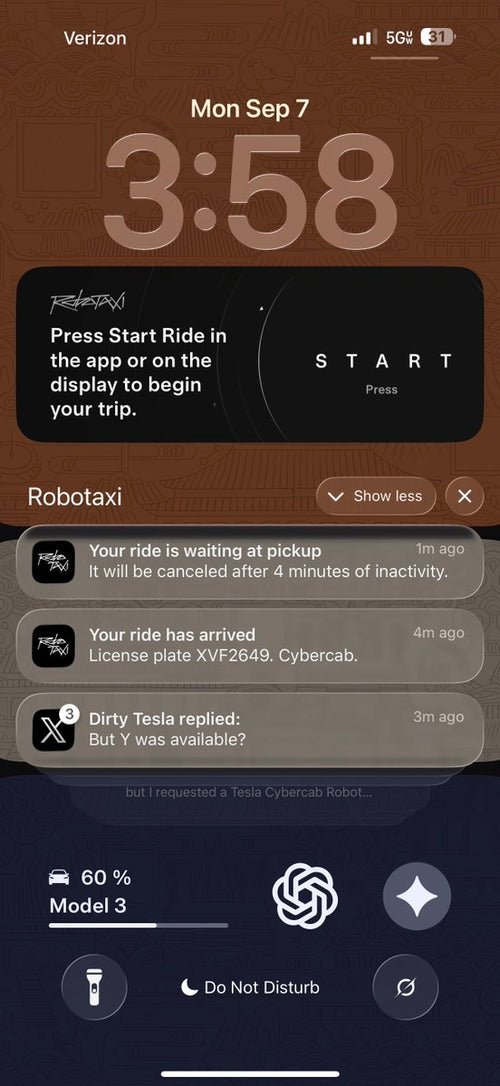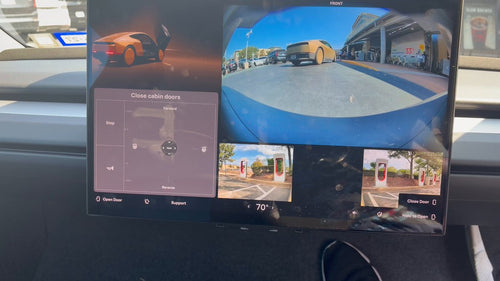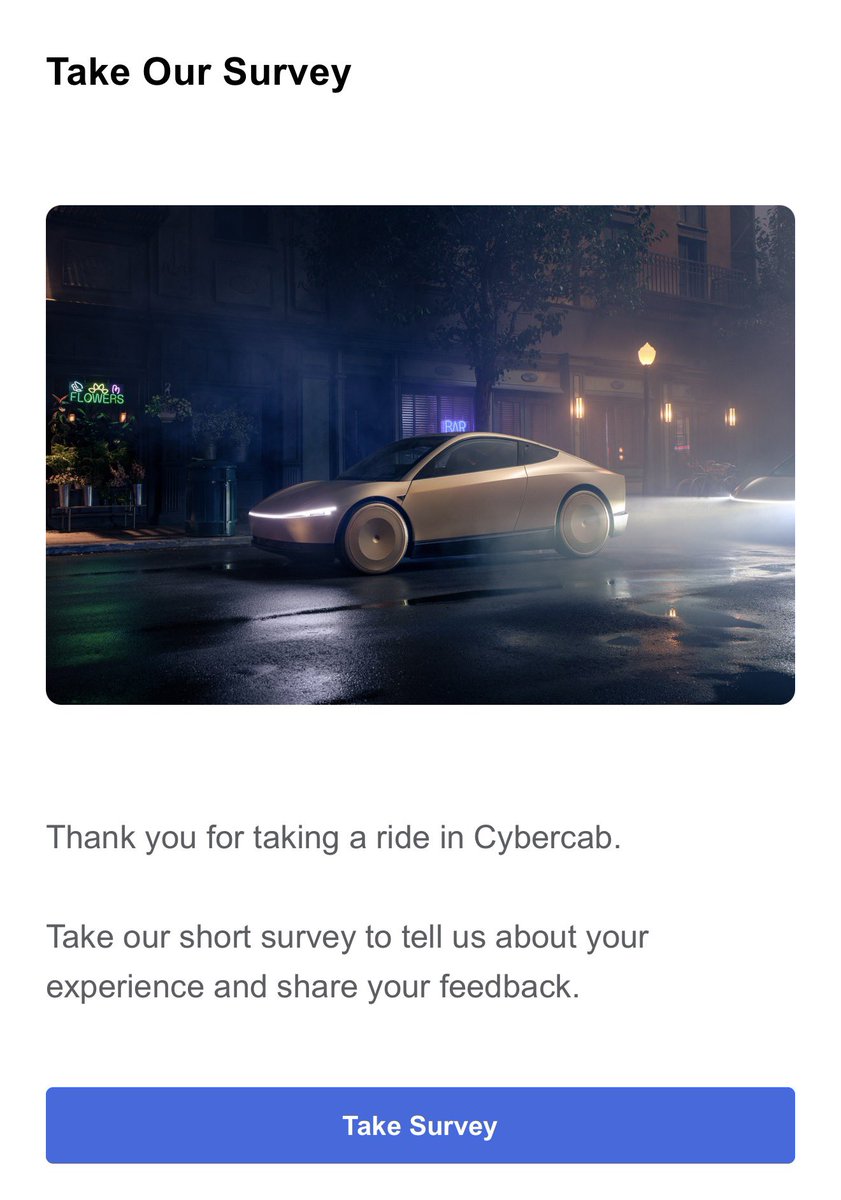
Less than a week after Cybercab paid rides began in Austin, Tesla is already asking the public what they want from the service. On September 8, Sawyer Merritt shared that Tesla sent out a Cybercab rider experience survey — inviting participants to rank and prioritize features for the autonomous ride-hailing platform. Here's what the survey signals about Tesla's development roadmap and what it means for prospective riders.

1. Tesla launched the survey days after Austin went live
Paid Cybercab rides in Austin began on September 4, 2026 — making this survey one of Tesla's first formal feedback loops with the public since commercial operations started. The timing isn't accidental. Collecting feature preferences this early in a limited rollout gives the product team actionable data before expanding to additional cities, when reversing design decisions becomes far more costly.
2. Riders get to vote on up to three features they want most
The survey asks participants: "Which of these features would you most like to have in Cybercab? (Select up to three)" — a classic prioritization exercise that forces respondents to make trade-offs rather than simply checking every box. The constraint is deliberate: it reveals genuine preference hierarchies, not just wish lists. The specific feature options shown in the survey screenshots are visible below.

3. The Cybercab is a purpose-built autonomous vehicle with no manual controls
Context matters here: the Cybercab is not a retrofitted Tesla — it's a two-passenger vehicle with no steering wheel, no pedals, and no side mirrors, running entirely on FSD v15. It launched with 45 units commercially registered in Texas. Because riders cannot intervene in the driving experience, in-cabin features — climate, entertainment, communication, comfort — are the primary levers Tesla can pull to differentiate the service. That makes this survey's results especially consequential.
4. This is a direct feedback channel to the Cybercab product team
Merritt noted the survey lets participants "give feedback to the team" — phrasing that suggests responses feed directly into product planning rather than a generic marketing database. For a vehicle category with no established consumer expectations, early rider input can shape everything from app UX to in-cabin hardware decisions. Tesla has historically used owner feedback loops (including in-app ratings and service data) to iterate quickly on software; applying the same model to robotaxi features is a logical extension.
5. Expansion decisions will likely be informed by this data
With Austin serving as the proving ground and Tesla's long-term target sitting at 2 million Cybercabs per year, the company needs to understand what converts a first-time rider into a repeat user. Feature prioritization data from this survey could directly influence which capabilities ship before the service expands beyond Austin — and which get deprioritized or dropped entirely. If you've received the survey, filling it out is one of the more direct ways to influence what the Cybercab experience looks like at scale.
The survey's existence five days into commercial operations suggests Tesla is treating the Austin launch as a live product sprint, not a static debut. What riders ask for now could show up in a software update before the year is out.
🚕 Following the Robotaxi rollout? See every operating city, launch date and announced market in our Tesla Robotaxi Tracker.
Related Gear
Gear up your Tesla with tested, custom-fit BASENOR accessories — shop Tesla accessories →
Sources & reporting notes
The links below identify the material source records used for this report.
- @SawyerMerritt on X (2026-09-08T00:10:58.000Z) — Direct source
- @SawyerMerritt on X (2026-09-08T00:12:48.000Z) — Direct source
Source links are preserved as published or accessed. See our editorial standards and corrections policy.
The BASENOR Editorial Desk covers Tesla, SpaceX, and related technology, curating reporting from primary sources — official accounts, regulatory filings, and software release data. Every article passes source-record and fact-checking review before publication. About the newsroom.
This report was curated by the BASENOR Editorial Desk from the sources listed above. Read our editorial standards or email editorial@basenor.com to report an error.