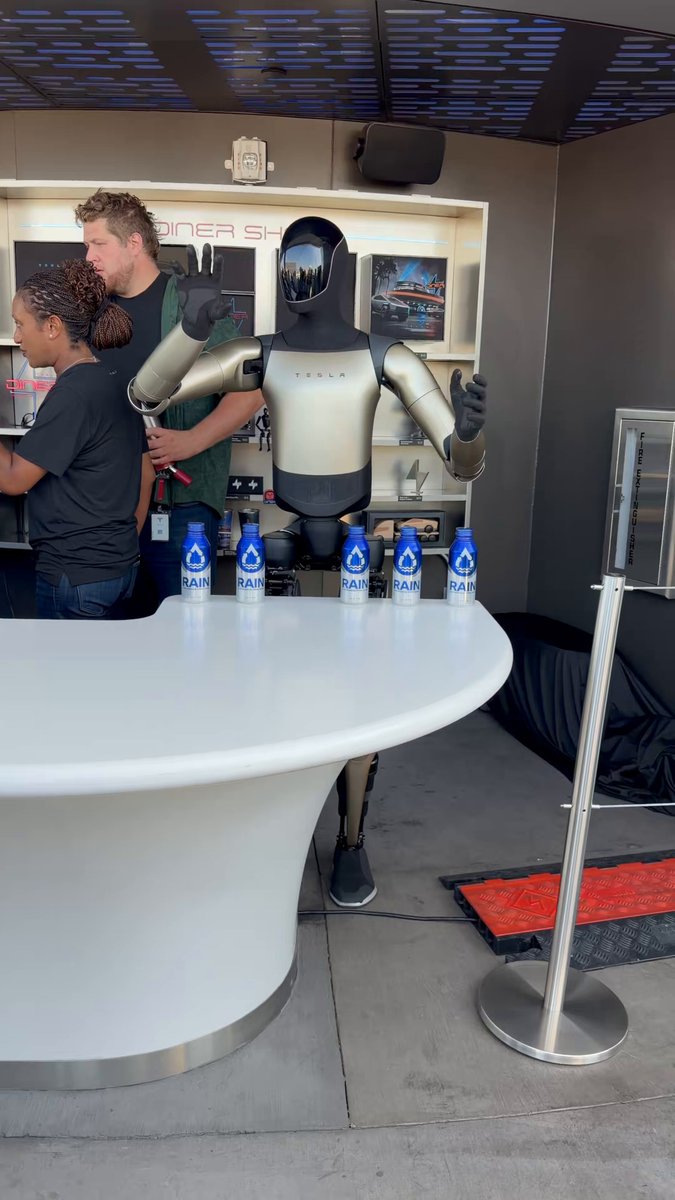
A gold-colored Tesla Optimus robot was caught on video this week performing a simple but telling task — handing over a bottle of water. The clip, shared by Sawyer Merritt, is brief, but it's the first clear look at what appears to be a distinct new variant of the humanoid robot. Here's what we know, and what questions it raises.

What exactly is the 'Gold Optimus'?
It's a visually distinct version of Tesla's Optimus humanoid robot, featuring a gold-toned exterior finish rather than the matte white or silver coloring seen on previous units. Based on available information, it corresponds to Optimus Version 2.5 — a transitional prototype sitting between the Gen 2 hardware that Tesla has been deploying in its Fremont factory and whatever comes next. Whether the gold finish is purely aesthetic, tied to a hardware revision, or used internally to differentiate prototype batches isn't confirmed yet.
What was it doing in the video?
The robot was performing a straightforward interaction task: retrieving and handing a bottle of water to a person. That's not a headline-grabbing feat on its own, but context matters. Fluid, low-latency object handoff — especially to a human — requires solid hand-eye coordination, grip calibration, and situational awareness. The fact that it executed this smoothly enough to be worth sharing publicly suggests the underlying dexterity improvements Tesla has been working on are continuing to progress.
Is this a new product, or just a prototype variant?
Almost certainly a prototype variant, not a separate product line. Tesla has historically used visual differentiation — color coding, finish changes — to distinguish hardware generations during internal testing. The gold finish likely serves a practical purpose on the factory floor or in demo environments: making it immediately obvious which units are running newer hardware or software configurations. Don't expect a 'Gold Edition' Optimus on a spec sheet anytime soon.
Where does this fit in Optimus's development timeline?
Tesla has been scaling Optimus deployment inside its own factories, with Elon Musk previously targeting thousands of units working in Tesla facilities by end of 2025 and external sales beginning in 2026. The emergence of a Version 2.5 designation suggests the engineering team is iterating faster than the major Gen 1 → Gen 2 cadence implied — refining hardware in smaller steps rather than waiting for a full generational leap. That's consistent with how Tesla approaches software: ship often, iterate continuously.
Should Tesla owners or investors read anything into this?
For owners, not directly — Optimus isn't a vehicle feature yet. For anyone watching Tesla's longer-term trajectory, a mid-generation hardware revision appearing in public-facing demos is a signal that the program is moving fast enough to warrant incremental hardware updates, not just software patches. The water-handoff demo is also a deliberate choice: it's the kind of task that resonates with everyday observers and helps build the case for domestic and commercial utility use cases beyond factory automation.
🤖 Tracking Tesla's humanoid robot? See every Optimus production milestone and appearance in our Tesla Optimus Tracker.
Related Gear
Gear up your Tesla with tested, custom-fit BASENOR accessories — shop Tesla accessories →
Sources & reporting notes
The links below identify the material source records used for this report.
- @SawyerMerritt on X (2026-07-30T16:57:18.000Z) — Direct source
Source links are preserved as published or accessed. See our editorial standards and corrections policy.
The BASENOR Editorial Desk covers Tesla, SpaceX, and related technology, curating reporting from primary sources — official accounts, regulatory filings, and software release data. Every article passes source-record and fact-checking review before publication. About the newsroom.
This report was curated by the BASENOR Editorial Desk from the sources listed above. Read our editorial standards or email editorial@basenor.com to report an error.