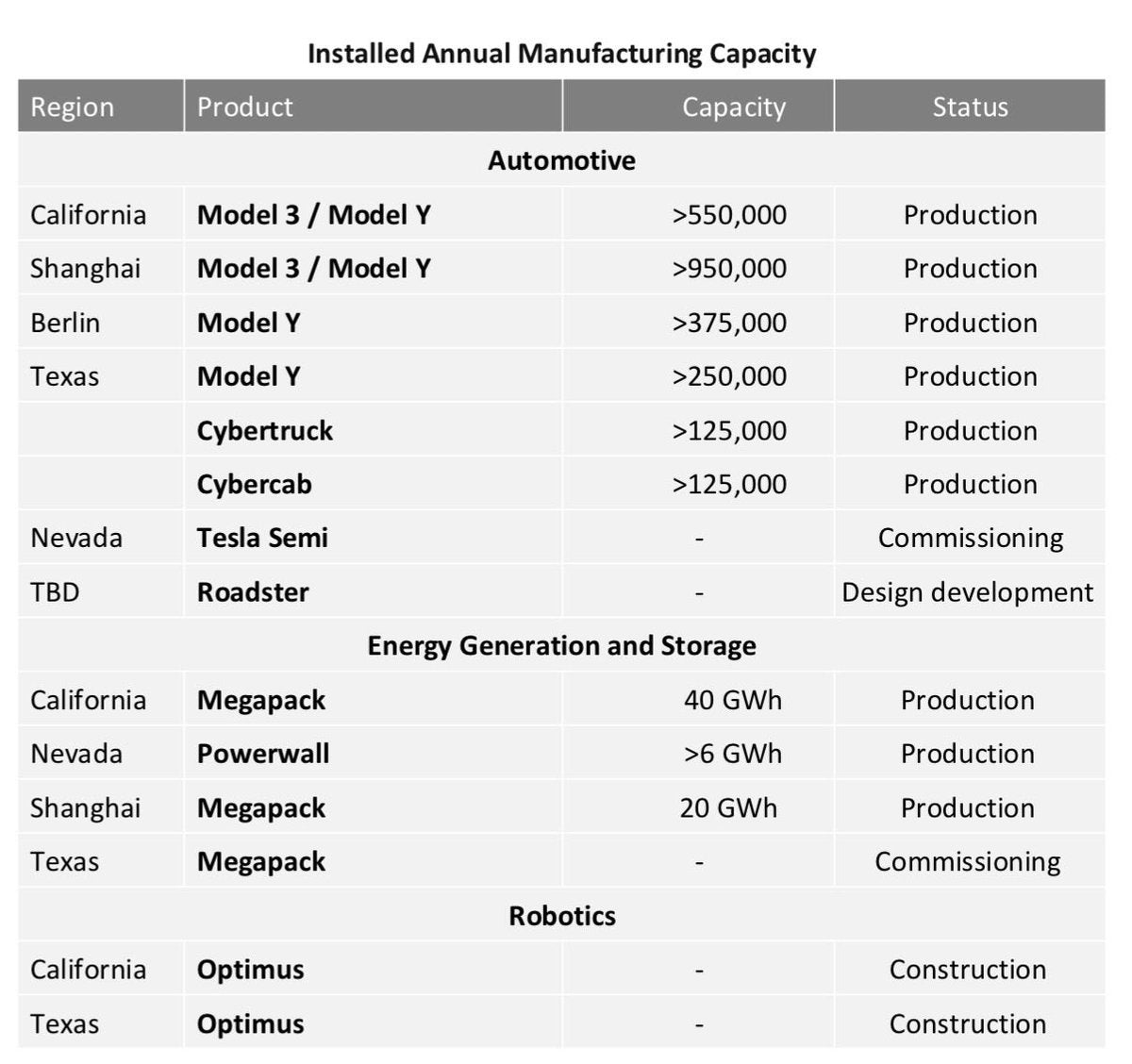
Tesla's Q2 2026 manufacturing capacity report, released July 22, quietly confirmed a significant milestone for the company's energy business: the Megapack factory in Brookshire, Texas has moved from construction to commissioning. That single status change carries a lot of weight — here's what you need to know about the facility and what comes next.

1. Commissioning Means Production Is Weeks, Not Years, Away
In manufacturing terminology, commissioning is the phase between construction completion and full commercial production. Equipment is installed, systems are tested, and the first production units are validated. For the Texas Megapack factory, this means the facility is past the hard infrastructure work. According to Tesla's Q2 2026 earnings call, Megapack 3 production is expected to start soon, with first deliveries targeted for the second half of 2026.
2. The Factory Is Built for Megapack 3 and a New Product Called Megablock
The Brookshire facility isn't producing the same Megapack units coming out of Lathrop, California. It's purpose-built for Megapack 3, which offers approximately 5 MWh of LFP battery capacity — a roughly 28% increase over the Megapack 2's 3.9 MWh. It also features a redesigned thermal management system that reduces connections by 78%. The factory will also produce the Megablock, a new integrated assembly that combines four Megapack 3 units with a transformer and switchgear into a single 20 MWh unit, cutting on-site installation time by 23% and construction costs by 40%, according to Tesla.
3. At Full Ramp, Texas Adds 50 GWh — More Than Doubling Current U.S. Capacity
The Brookshire plant targets 50 GWh of annual production capacity once fully ramped. To put that in context: Tesla's Lathrop, California factory currently produces 40 GWh annually, and the Shanghai facility adds another 20 GWh. The Texas factory alone would push Tesla's total global nameplate energy storage manufacturing capacity to 110 GWh — a number that would have seemed implausible just a few years ago. Q2 2026 already set a record with 13.5 GWh deployed in a single quarter.
4. Tesla Has Put $200 Million Into the Facility
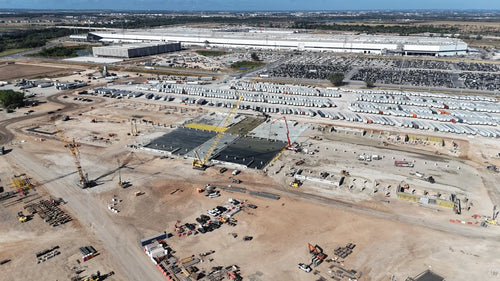
The investment breakdown, according to public records, is $44 million for facility upgrades and $150 million for manufacturing equipment. The site sits in the Empire West Industrial Park in Waller County, near Houston. Waller County approved a 10-year property tax reduction of up to 60%, contingent on Tesla meeting specific hiring and investment milestones — a sign local government is treating this as a long-term economic anchor.
5. LG Energy Solution Is Supplying the Cells — From Michigan
The LFP prismatic cells for the Texas plant won't come from China. LG Energy Solution will supply them from its facility in Lansing, Michigan, under a $4.3 billion supply deal effective from 2027. That domestic cell sourcing is notable for projects that may qualify for federal incentives tied to domestic content requirements. It also reduces supply chain exposure compared to relying entirely on overseas cell production.
6. The Factory Is Expected to Employ 1,500 People by 2028
Tesla has committed to 375 jobs at the site by the end of 2026, scaling to 750 by 2027 and up to 1,500 by 2028. Those numbers are tied to the tax incentive agreement with Waller County, so they carry some accountability. For context, commissioning-phase hiring is already underway — the workforce ramp will track closely with production ramp over the next 18 months.
The Texas Megapack factory entering commissioning is one of three status upgrades Tesla disclosed in its Q2 2026 capacity report — Cybercab moved to full production and Semi advanced to commissioning as well. But the energy storage story may be the most consequential for Tesla's long-term financials. With grid-scale storage demand accelerating globally, getting a 50 GWh factory online before year-end could define Tesla Energy's trajectory for the rest of the decade.
Related Gear
Gear up your Tesla with tested, custom-fit BASENOR accessories — shop Tesla accessories →
Sources & reporting notes
The links below identify the material source records used for this report.
- @TeslaNewswire on X (2026-07-22T22:44:17.000Z) — Direct source
Source links are preserved as published or accessed. See our editorial standards and corrections policy.
The BASENOR Editorial Desk covers Tesla, SpaceX, and related technology, curating reporting from primary sources — official accounts, regulatory filings, and software release data. Every article passes source-record and fact-checking review before publication. About the newsroom.
This report was curated by the BASENOR Editorial Desk from the sources listed above. Read our editorial standards or email editorial@basenor.com to report an error.