📌 UPDATE — August 10, 2026
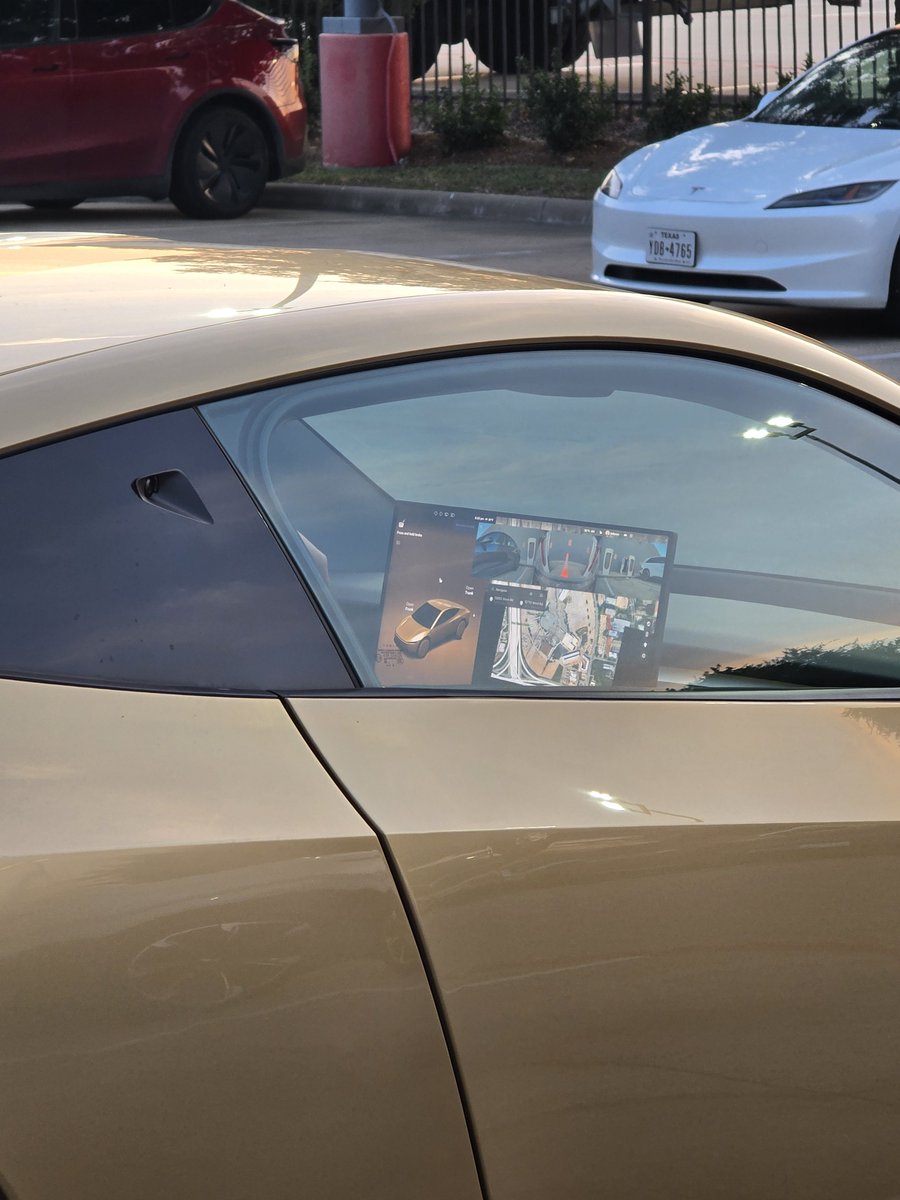
A new leak delivers the most detailed look at the Cybercab UI yet, revealing several features beyond what was previously documented. The 3D Cybercab visual now shows customizable decals and puddle lights, while newly spotted menu categories — Pedals & Steering, Rodeo, and Robotaxi — hint at distinct operational modes for the vehicle. Grok integration is confirmed directly within the UI, and seat adjustment controls are visible in the bottom navigation bar. A mysterious unidentified app icon has also surfaced, with no explanation yet from Tesla.

Source: @TeslaNewswire — Aug 10, 2026
Fresh screenshots of the Tesla Cybercab's interior software have given the clearest look yet at what passengers will actually see when they climb into Tesla's autonomous robotaxi. The interface is purpose-built for a vehicle with no steering wheel, no pedals, and no driver — and several of its design choices reveal exactly how Tesla is thinking about the driverless cabin experience.


1. A 21-Inch Display Is the Entire Control Surface
The Cybercab ships with a 21-inch central display — the largest Tesla has ever put in a production vehicle, according to factory software screenshots. There is no instrument cluster, no steering column, and no stalks. Every interaction a passenger might need — climate, navigation, entertainment, door controls — runs through this single screen. That's a significant departure even from the Model 3 and Model Y, which still retain a driver-facing context. Here, the screen is purely for occupants.
2. The 3D Vehicle Model Sits on a Gold Background
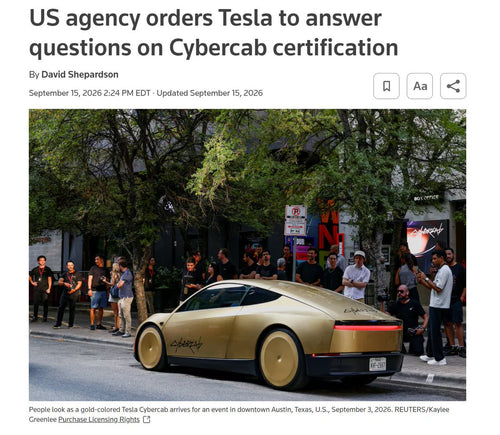
The centerpiece of the UI is an interactive 3D render of the Cybercab itself, displayed against a gold background — a visual treatment Tesla hasn't used on any current production vehicle. The gold backdrop appears to be a deliberate design signal, distinguishing the Cybercab's interface identity from the white or dark themes on Model 3, Y, and Cybertruck. Whether this becomes the permanent production look or evolves before wider rollout remains to be seen, but it's a striking first impression.
3. Camera Feeds Are Front and Center
Without a driver to physically check mirrors, the Cybercab's UI promotes camera awareness to the top of the screen. Large feeds from the rear and both sides are persistently visible, giving passengers situational awareness of the vehicle's surroundings. This isn't just a cosmetic choice — it's a trust-building mechanism. For riders unfamiliar with fully autonomous travel, seeing what the car sees in real time provides a layer of transparency that a blank screen never could. Tesla previewed a version of this rear-passenger map experience with the Spring 2026 Update (v2026.14), using existing fleet vehicles as a large-scale beta test of the robotaxi UI concept.
4. The Navigation Interface Looks Familiar — Intentionally
The navigation map integrated into the Cybercab UI is, according to available screenshots, essentially identical to the navigation system on current Tesla vehicles. That's almost certainly deliberate. Existing Tesla owners stepping into a Cybercab for the first time will immediately recognize the interface language — the route overlay, the ETA display, the map style. For new riders, the familiarity of a well-established mapping UI lowers the cognitive barrier to trusting an autonomous vehicle. Tesla has been refining this navigation layer across the fleet, with the Summer 2026 Update (2026.26) adding further navigation improvements just last week.
5. Some Controls Hint at Deeper Diagnostic Functions
A few UI elements stand out as unexpected: a "Pedals & Steering" menu and a "Fold Mirrors" button appear in the interface, despite the Cybercab being built without those physical components. The most likely explanation is that these serve diagnostic or remote-configuration purposes for fleet operators and service technicians — not passenger-facing features. Also present are dedicated door controls labeled "open door" for both left and right sides, climate controls, a menu button, and Spotify integration, confirming that in-cabin entertainment is a first-class feature. Factory software from March 2026 showed the vehicle running Unsupervised FSD 12.5 at the time of those captures.
The Cybercab has been testing on Austin roads without a steering wheel or pedals since at least July, and Tesla expanded its Robotaxi Service to two additional Florida cities last month. The UI revealed here isn't a concept mock-up — it's running software on vehicles already in service. How the interface evolves as the fleet scales will be worth watching closely.
🚕 Following the Robotaxi rollout? See every operating city, launch date and announced market in our Tesla Robotaxi Tracker.
Related Gear
Gear up your Tesla with tested, custom-fit BASENOR accessories — shop Tesla accessories →
Sources & reporting notes
The links below identify the material source records used for this report.
- @TeslaNewswire on X (2026-08-10T07:29:17.000Z) — Direct source
Source links are preserved as published or accessed. See our editorial standards and corrections policy.
The BASENOR Editorial Desk covers Tesla, SpaceX, and related technology, curating reporting from primary sources — official accounts, regulatory filings, and software release data. Every article passes source-record and fact-checking review before publication. About the newsroom.
This report was curated by the BASENOR Editorial Desk from the sources listed above. Read our editorial standards or email editorial@basenor.com to report an error.