30-Second Brief
The News: Tesla observer Joe Tegtmeyer shared his analysis of where Cybercab production will expand next, with his view aligning closely with a direct exchange between André Thie and Elon Musk about Gigafactory Berlin's works council vote and future plans.
Why It Matters: Gigafactory Berlin is emerging as the most likely site for Cybercab production outside the US — and the outcome of a recent union election there may have just cleared the runway for Tesla to move forward.
Source: @JoeTegtmeyer on X
The Pieces Are Falling Into Place for Giga Berlin
Tesla's Cybercab production story is unfolding in two acts. Act one is already underway in Austin: the first mass-produced Cybercab rolled off the Gigafactory Texas line in mid-February 2026, with full mass production scheduled for April. Act two — where the vehicle gets built at global scale — is what everyone is watching now.
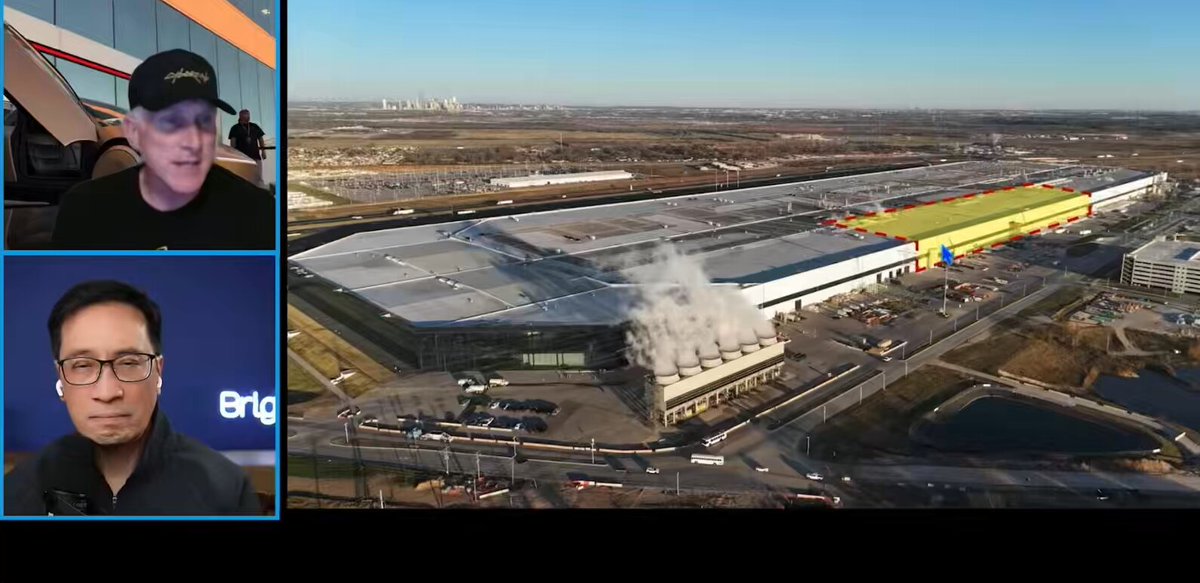
Joe Tegtmeyer, one of the most reliable on-the-ground Tesla observers, shared his take this week after being asked the question directly during a conversation with Herbert Ong. His answer pointed squarely at Gigafactory Berlin. What makes this particularly notable: his analysis independently converged with a separate discussion between Tesla's André Thie and Elon Musk — a conversation that explicitly touched on the works council vote and Tesla's expansion plans for the German facility.

📊 Key Figures
| Metric | Value | Context |
|---|---|---|
| Giga Texas mass production start | April 2026 | First units rolled Feb 2026 |
| Giga Texas target capacity | 2–4M units/year | Unboxed manufacturing process |
| Production cycle target | 1 unit / 5–10 sec | New unboxed process |
| Cybercab target price | Under $30,000 | ~$25K indicated previously |
| Giga Berlin Cybercab engineering role posted | March 4, 2026 | First Europe-based Cybercab role |
| Giga Texas Cybercabs spotted (early March) | 25 units | Drone footage by Tegtmeyer |
The Works Council Vote: Why It Changes Everything
To understand why this moment matters, you need the context of what just happened at Gigafactory Berlin. In early March 2026, works council elections were held at the facility. The German union IG Metall — which had sought majority representation — failed to secure it. That outcome is significant because Elon Musk had been explicit: the expansion of Giga Berlin, including the potential addition of Cybercab and Optimus robot production, was directly tied to the facility remaining free from what he described as outside organizational influence.
The election result, in Tesla's view, clears the path. André Thie's conversation with Musk — which Tegtmeyer notes closely mirrors his own independent analysis — appears to confirm that Tesla's internal planning is now moving in the direction of Berlin as the next Cybercab production hub.
Adding further weight to this: as of March 4, 2026, Tesla posted its first Cybercab-related hardware engineering role in Europe, specifically listed for Gigafactory Berlin. Job postings at Tesla have historically been reliable leading indicators of production intent — this one is hard to read as anything other than groundwork-laying.
Austin First, Berlin Next — The Global Rollout Logic
The sequencing makes strategic sense. Gigafactory Texas is Tesla's proving ground for the Cybercab's unboxed manufacturing process — a radically different production approach that aims to produce one vehicle every 5 to 10 seconds at full capacity, targeting between 2 and 4 million units annually. You don't replicate that process globally until you've validated it domestically.
Once the Austin line is running smoothly — mass production is targeted for April 2026, with 25 units already observed on-site in early March drone footage — the blueprint gets exported. Berlin is the logical first international site: it's an existing, operational Gigafactory with a skilled workforce, European regulatory familiarity, and proximity to the EU market where Cybercab demand would be substantial.
The Cybercab itself is a two-seat, two-door autonomous vehicle with no steering wheel or pedals, designed to run entirely on Tesla's Full Self-Driving system. Priced at under $30,000 (with ~$25,000 indicated in earlier communications), it's positioned as a mass-market product — which means production scale is everything. Berlin isn't a backup plan; it's a necessity.
🔭 The BASENOR Take
Timeline: Giga Texas mass production April 2026 → Berlin expansion timeline TBD, likely 2027 at earliest given hiring and ramp lead times
Impact Level: 🟡 Medium-term — this doesn't affect near-term availability, but shapes the global supply picture that will determine when and where Cybercab becomes accessible
Confidence: High — two independent analyses (Tegtmeyer + Thie/Musk conversation) pointing to the same conclusion, plus a corroborating job posting, is a strong signal
What to watch: Additional Cybercab engineering roles posted in Europe; any official Musk statement naming Berlin; Giga Berlin expansion permit filings in Germany
The convergence of Tegtmeyer's independent read and the Thie-Musk exchange is the most important signal here. These aren't two people speculating — one is a seasoned factory observer who has been tracking Giga Texas activity for years, and the other is a direct conversation with Tesla's CEO. When those two data points align, it's worth paying attention.
For Tesla owners and prospective Cybercab buyers in Europe, this is the clearest indication yet that the vehicle won't be a US-only product for long. The works council election outcome removed what appeared to be the primary organizational obstacle Tesla cited. The job posting confirms engineering resources are being allocated. The strategic logic is airtight. Berlin is next.
The remaining variable is timing. Replicating the unboxed manufacturing process at a new facility is not a six-month project. Regulatory considerations for an autonomous-only vehicle in the EU add another layer of complexity — US federal standards already require exemptions for a vehicle without human controls, and European type-approval processes will present their own challenges. But the direction is set. Watch the Berlin job board.
🚕 Following the Robotaxi rollout? See every operating city, launch date and announced market in our Tesla Robotaxi Tracker.
Related Gear
Gear up your Tesla with tested, custom-fit BASENOR accessories — shop Tesla accessories →
Sources & reporting notes
The links below identify the material source records used for this report.
- @JoeTegtmeyer on X (2026-03-06T17:03:20.000Z) — Direct source
Source links are preserved as published or accessed. See our editorial standards and corrections policy.
The BASENOR Editorial Desk covers Tesla, SpaceX, and related technology, curating reporting from primary sources — official accounts, regulatory filings, and software release data. Every article passes source-record and fact-checking review before publication. About the newsroom.
This report was curated by the BASENOR Editorial Desk from the sources listed above. Read our editorial standards or email editorial@basenor.com to report an error.