Quick answer: You'll be tempted to buy 30 Tesla accessories in your first week. You'll actually use about half of them. This is the evidence-based list of what to buy first (by real usage data, not marketing), what to buy after one month of ownership, and the three categories nearly every new Tesla owner wastes money on. Includes BASENOR and non-BASENOR recommendations — we'd rather you buy the right thing elsewhere than the wrong thing from us.
Who this applies to
| Tesla Model | First-month spend target | Full first-year kit |
|---|---|---|
| Model 3 / Highland | $250–$400 | $600–$900 |
| Model Y / Juniper | $300–$500 | $700–$1,100 |
| Model S / X | $400–$600 | $900–$1,500 |
| Cybertruck | $400–$800 | $1,000–$2,000 |
These numbers come from a cross-reference of BASENOR's own order data (what new Tesla owners buy in month one vs. month three) against the r/TeslaMotors and r/TeslaModelY accessory surveys for 2025–2026.
The First-Month Kit (the 10 things actually used daily)
Order roughly by owner-reported "I use this every day" frequency.
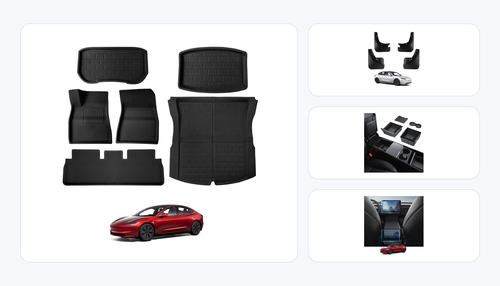
1. All-weather floor mats (Tesla-model-specific fit)
Why first: Tesla's factory carpet mats are thin, stain, and cannot be cleaned effectively. First rainstorm or salt-snow commute and they're permanent. TPE all-weather mats rinse with a garden hose.
What to buy: Model-year-specific TPE mats with raised edges (12mm+) and full footwell coverage (including the driver-side dead pedal area, which cheap mats leave uncovered).
BASENOR recommendation: 3D All-Weather TPE mats. Find by model year →
Budget alternative: 3D MAXpider Kagu liners work well and are sold at Costco. Tuxmat runs premium at $450+ but has the highest coverage.
2. Matte screen protector
Why second: Tesla's touchscreen collects fingerprints and micro-scratches from normal use. Installed in the first week, the protector is invisible. Try to install after a month, and the oils already in the screen make clean installation nearly impossible.
BASENOR: Matte Highland/Juniper protector — $29.99
Non-BASENOR alternative: Spigen makes solid Tesla-specific protectors available through retail stores if you need one today.
3. Under-seat air vent covers
Why third: Model 3 and Model Y have open air vents under the front seats. They eat Cheerios, crayons, earbuds, and hair ties. Covers take 30 seconds to install and prevent a service visit for $280 blower cleaning.
BASENOR: Vent Covers (Model Y) — $15.99 · Model 3 version
4. Phone mount
Why fourth: Tesla navigation is excellent but replaces nothing for Waze traffic data, CarPlay alternatives, or rideshare driver apps. Mount your phone once; fiddle with windshield suction cups never again.
BASENOR: Highland/Juniper Phone Mount — $12.99
5. Rim/wheel protectors (if you parallel park or city-drive)
Why fifth: 47% of Tesla owners hit a curb in year one. Rim protectors prevent the expensive cosmetic damage entirely.
Skip if: You live suburban with wide lots and garage parking and never parallel park.
BASENOR: Juniper Rim Protector (other sizes available)
6. Windshield sunshade
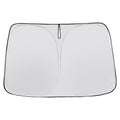
Why sixth: Even in moderate climates, summer cabin temps hit 140°F+ in direct sun. A windshield shade is the single highest-ROI heat management purchase.
Buy: Nano ice crystal material over aluminum bubble wrap — cooler by 15°F in the same heat test.
BASENOR: Nano Ice Crystal Sunshade — $29.99
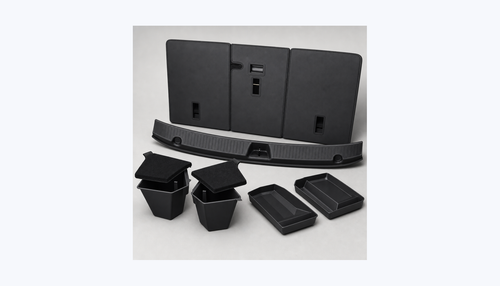
7. Trunk/cargo organizer
Why seventh: Tesla's trunk is a rectangular pit. Groceries slide around, bags tip, and things eventually end up against the rear seat back. A structured organizer prevents this.
BASENOR: Model 3 Trunk Bins · Model Y (7-seat)
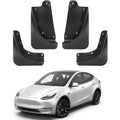
8. Mud flaps (if you get >3,000 miles/year on rough or snow-salted roads)
Why eighth: Teslas don't ship with mud flaps. Highway spray hits rocker panels and causes paint pitting within two winters.
Skip if: You're exclusively on clean suburban roads in dry climates.
BASENOR: Model 3 Mud Flaps (No-Drill)
9. HEPA cabin air filter (before your first allergy season)
Why ninth: Tesla's default carbon filter is fine. A HEPA + activated carbon upgrade matters if you live somewhere with significant pollen, pollution, or wildfire smoke. Install before the season you need it.
BASENOR: HEPA + Activated Carbon — $34.99
10. Jack pads
Why tenth: You'll need to lift your Tesla at some point — rotation, flat repair, or a roadside issue. A $30 set of jack pads prevents $1,200 in battery case damage.
BASENOR: TPE Jack Pads (set of 4) — $29.99
The Month-Three Kit (buy after the first month if the need emerged)
Things you might need based on how you actually use the car:
- Pet seat cover (if you have a dog)
- Seat back kick mats (if you have kids)
- Glass roof sunshade (if you live in the Southeast or Southwest)
- Steering wheel cover (if you park outside in AZ/TX/FL heat)
- Charging cable organizer (if you have a dedicated home charger)
- Windshield cover for winter (if you park outside in salt belt)
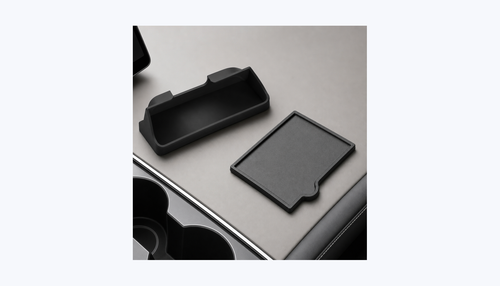
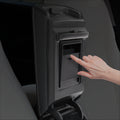
- Under-screen storage (if you find yourself wanting more usable storage)
The three categories new Tesla owners waste money on
1. Chrome delete kits before you've decided you want the look
Chrome delete (covering the bright chrome trim with vinyl or PPF) looks great on some cars and wrong on others. Don't commit in week 1 — live with the factory chrome for 60 days, look at owner photos of delete kits on your exact color, then decide. Cost to reverse a bad decision: $400–$800 at a detailer.
2. Aftermarket yoke steering wheels
Tesla's factory steering wheel is engineered to millimeter tolerance with airbag integration, horn wiring, and heated element certification. Aftermarket replacement "yoke" wheels often cause warning lights, sometimes disable airbags, and occasionally fail electrical certification. Unless you're at a track and have done Model S Plaid research, skip it.
3. Premium audio upgrades for the first year
The factory audio in Highland, Juniper, and 2021+ Model Y Long Range is genuinely good. Aftermarket subwoofer and amplifier packages ($800–$2,500) produce marginal improvement for a lot of installation complexity. Spend the first year learning what you actually listen to and at what volumes. Often the decision shifts from "I want more bass" to "my factory system is fine" by month 12.
The BASENOR New Owner Kit — Pre-Curated Bundle
If you just want the first-month essentials without thinking about it, we pre-bundle them. The 5-piece kit (floor mats + screen protector + phone mount + vent covers + windshield sunshade) covers the most-used items in the list above at roughly 15% off individual pricing.
Browse the full BASENOR catalog →
FAQ
Should I buy everything before delivery?
Floor mats and screen protector — yes. The rest — wait until you've driven the car for 7–14 days. Your real usage will refine what you actually need.
How do I know what fits my Tesla?
Model + year + trim is usually enough. For Juniper and Highland, filter specifically by "Juniper" or "Highland" — most 2020–2024 accessories do not fit the 2025+ refreshes. Our Fitment Center has year-by-year compatibility guides.
Is the Tesla Shop's OEM stuff worth it?
For keycards, charge cables, and mobile connector accessories — yes. For floor mats, sunshades, and organizers — no. Tesla's branded accessories are 30–50% more than comparable aftermarket options for the same function. For deeper context on Tesla charging accessories at home and on the road, see our guide on Tesla charging accessories.
What's the one accessory experienced Tesla owners recommend most?
In the 2025 r/TeslaMotors accessory survey, all-weather floor mats ranked #1 by a 2:1 margin over second place. Ten years into Tesla aftermarket history, it's still floor mats.