Tesla Guides · Updated April 2026 · By BASENOR Product Testing Lab
Tesla Resale at Year 5+: What Actually Holds Value
Five-year Tesla resale is not decided by one magic accessory or one battery-health screenshot. It is a stack of market depreciation, model generation, mileage, battery confidence, accident history, and the visible condition buyers can judge in thirty seconds.
Bottom Line Up Front
What holds value: desirable trim, sane mileage, clean history, strong battery confidence, and a well-kept interior/exterior.
What accessories can do: protect condition. They should never be presented as a guaranteed resale multiplier.
Best resale prep: preserve the surfaces buyers photograph and touch — carpets, screen, cargo lip, seat backs, lower paint, and cabin touchpoints.
The real resale drivers
Resale studies from iSeeCars and Kelley Blue Book are useful because they remind owners that value retention is mostly a market outcome. Brand demand, vehicle segment, incentives, replacement-model launches, used inventory, and financing rates can all move prices before an individual seller says a word. A clean Model 3 cannot fully escape a broad used-EV price reset.
That does not mean owner behavior is irrelevant. Two cars with similar mileage can feel completely different in person. One has scratched piano-black trim, stained cargo carpet, curb rash on every wheel, and a screen with visible cleaning marks. The other has clean liners, protected cargo edges, tidy charging gear, and no mystery smell. Buyers may not pay a fixed premium for each item, but they negotiate harder when condition looks careless.
Battery confidence is the other emotional driver. A buyer wants to know the car charges normally, displays predictable range, has no unresolved service warning, and still fits their commute. FuelEconomy.gov efficiency references help frame how Model 3 and Model Y are evaluated, but the owner must still show real-world care through records, photos, and honest disclosure.
What buyers inspect first at year five
Year-five buyers start with photos. They look at bumper corners, lower doors, seat bolsters, center screen, cargo floor, floor mats, and the steering area. Those surfaces communicate ownership behavior faster than a paragraph in the listing. A well-kept Tesla should look used, not abused.
| Inspection area | Buyer concern | Preventable with care? | Best owner habit |
|---|---|---|---|
| Wheels | Curb rash suggests rough parking | Partly | Use cameras, protect rims where needed |
| Carpet / cargo | Stains and odor | Yes | Use liners and dry spills fast |
| Screen | Scratches and cleaning haze | Yes | Install proper protector, use microfiber |
| Lower paint | Road debris and splash wear | Partly | Mud flaps, routine wash, touch-up early |
Generation matters too. A 2024+ Model 3 Highland and a 2025+ Model Y Juniper should be described correctly. Juniper retains a physical turn-signal stalk, while Highland removed stalks and uses steering-wheel buttons. Accurate generation language builds trust because it shows the seller understands the car.
Protection that makes resale sense
The resale-safe accessory rule is conservative: protect surfaces, do not over-customize. Universal decorations, loud trim pieces, or claims that look aftermarket can narrow the buyer pool. Exact-fit, removable, practical protection usually broadens confidence because it helps the car look clean without changing the vehicle identity.
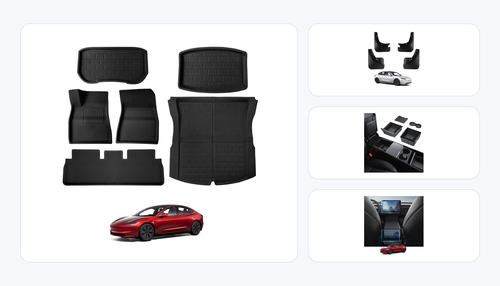
2024-2026 Model 3 Highland Floor Mats
Protects carpet and cargo-area surfaces from salt, coffee, and daily grit.
View productModel Y Juniper Mud Flaps
Reduces road-spray and rocker-panel debris on wet or gravel-heavy routes.
View productHighland / Juniper Matte Screen Protector
Protects high-touch display glass from keys, dust, and cleaning mistakes.
View productModel Y Juniper Rear Bumper Guard
Prevents cargo-loading scratches where strollers, luggage, and gear slide across the lip.
View productModel Y Juniper 20-inch Rim Protector
Helps hide and prevent visible curb-rash damage on common urban parking routes.
View productTesla Wall Connector Cable Organizer
Keeps charging cables off the garage floor and reduces trip / abrasion wear.
View productFor Model 3 and Model Y owners, we would prioritize floor/cargo protection first, then screen protection, then mud flaps or rim protection if local roads and parking create real risk. Seat-back protection is rational for family cars and pet owners. A cable organizer is not a resale headline, but a tidy garage charging setup supports the same story: this car was cared for in normal daily use.
How to prepare a Tesla for resale photos
Start with cleaning, not accessories. Remove personal items, rinse mats outside the car, wipe the screen with the right cloth, vacuum seat tracks, clean the cargo well, and photograph the wheel faces in good light. If there is curb rash, disclose it honestly rather than hiding the angle. Buyers trust clear flaws more than suspiciously perfect photos.
Then organize records: service visits, tire replacement, charging equipment, title status, accident history, and any transferable accessory information. Do not include internal SKU codes in a customer-facing listing. Use public product names and generation fitment instead: Model 3 Highland floor mats, Model Y Juniper mud flaps, matte screen protector, cargo bumper guard.
Finally, remove accessories that look too personal unless they are protective and clean. A buyer may not share your taste in trim color, but almost every buyer understands a clean cargo liner, protected screen, and undamaged wheel edge.
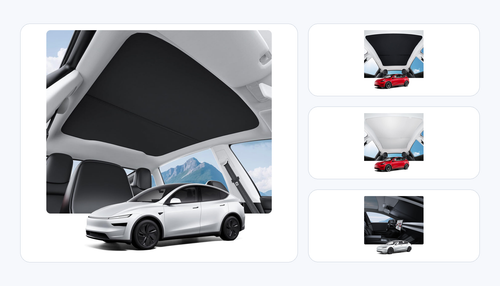
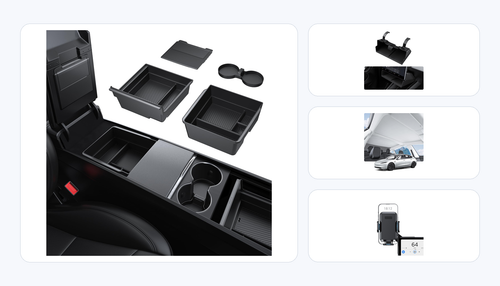
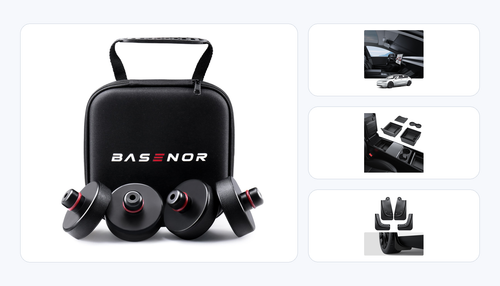
Real product protection examples


The condition system we recommend before year five
Step 1: protect what buyers touch. The center display, console area, driver floor, and cargo opening get inspected immediately. If those surfaces look scratched, sticky, or neglected, the buyer assumes the hidden areas were treated the same way. Screen protection and washable mats are not exciting, but they keep the first impression controlled.
Step 2: protect what buyers photograph. Exterior lower panels, cargo lips, and wheel-adjacent areas show up clearly in listing photos. Road spray, loading scratches, and parking damage do not automatically ruin resale, but they give the buyer reasons to negotiate. Practical protection makes sense when it preserves the surfaces a buyer can evaluate without tools.
Step 3: document what buyers cannot see. Battery confidence, service history, charging habits, tire replacement, and accident history matter more than accessories. Keep records organized. A clean car with no records is less convincing than a clean car with clear service and charging documentation.
Step 4: remove personalization. Resale buyers reward cleanliness and exact fitment more than personal taste. Keep removable protection that looks factory-appropriate. Remove anything that narrows the buyer pool, adds noise, or makes the car feel modified rather than maintained.
Step 5: be specific about generation. A 2024+ Model 3 Highland is not the same interior generation as a 2017-2023 Model 3. A 2025+ Model Y Juniper retains the physical turn-signal stalk, while Model 3 Highland does not. Accurate generation language improves trust because it proves the seller understands compatibility and ownership details.
The listing playbook: what to show, what to avoid
Show the driver footwell after removing the mat. Show the cargo area with the liner in place and then lifted. Show the center display under angled light so buyers can see it is not scratched. Show the charging cable, adapters, and wall-storage setup if included. Show tire tread and service records. These details build confidence without making exaggerated claims.
Avoid saying an accessory “adds resale value” unless you can prove it with a real transaction. Better wording is more honest: “protected the carpet during ownership,” “kept cargo scratches off the bumper lip,” or “screen protector installed since week one.” That phrasing tells the buyer what happened without promising a dollar outcome.
Also avoid hiding flaws. If there is curb rash, photograph it. If a mat is worn, clean it but do not pretend it is new. If a cargo liner has done its job and shows scuffs, that may be acceptable because it proves the liner absorbed the abuse instead of the vehicle. Honest disclosure protects the sale from distrust late in negotiation.
The strongest resale story is not that the car was never used. It is that the car was used normally and protected intelligently. A five-year Tesla should have real miles, but it should not look like every mile left a mark.
FAQ
Do Tesla accessories increase resale value?
They should be framed as condition protection, not guaranteed value creation. Clean surfaces can support buyer confidence, but market depreciation still dominates.
What matters more: battery or interior condition?
Both. Battery confidence gets the buyer interested; visible condition affects trust and negotiation.
Should I remove floor mats before selling?
Clean them and photograph both the mats and protected carpet. That shows the mats did their job.
Does Highland vs Legacy Model 3 affect resale?
Yes. Generation, model year, controls, interior updates, and fitment compatibility all influence buyer expectations.
What should I not add before resale?
Avoid overly personalized accessories, irreversible modifications, and claims that cannot be verified.
Market value vs owner-controlled value
Five-year resale has two layers. The first layer is market value: used inventory, tax credits, incentives, interest rates, brand demand, model refreshes, and competing EV launches. Owners cannot control that layer. The second layer is owner-controlled value: records, accident history, photos, cleanliness, tire condition, interior wear, charging equipment, and whether the car feels cared for. Owners can control that layer every month.
This distinction keeps expectations honest. A protective mat does not beat a market downturn. A screen protector does not overcome a damaged title. A clean cargo area does not erase high mileage. But when two similar Teslas compete in the same local market, condition becomes the language buyers use to choose which car deserves attention first.
Our recommendation is to document care before you need it. Save tire receipts, keep service invoices, note when cabin filters were replaced, photograph accessory installation while the car is clean, and keep charging gear organized. These records do not need to be dramatic. They simply reduce uncertainty, which is exactly what used-car buyers want at year five.
The resale photo set we would shoot
Start with an exterior front three-quarter photo in clean daylight. Then show both sides, rear, close-up lower panels, bumper corners, glass roof, cargo opening, driver seat, rear seat, footwells, center display, charging port, tire tread, and included accessories. The goal is not to overwhelm the listing; it is to remove doubt before a buyer asks.
For the interior, remove loose items and clean surfaces before shooting. Lift floor mats to show the protected carpet. Photograph the display with the screen off so scratches or cleaning marks are visible. Show seat backs if children or rear passengers used the car heavily. If cargo liners or bumper protection took the abuse, show both the protection piece and the underlying vehicle surface.
For the mechanical and ownership story, photograph records separately: tire purchase, service visits, charging equipment, title status, and any remaining warranty documentation. Avoid private personal information in photos. The buyer needs confidence, not your home address or full invoice details.
If there is damage, include it clearly. A small disclosed scratch creates less suspicion than a missing angle. Buyers expect a five-year car to show some use. What they dislike is discovering hidden problems after they have already invested time in the conversation.
Buyer questions to prepare for before listing
“What is the real-world range?” Answer with context. Mention commute pattern, climate, charging routine, and whether the displayed estimate has been stable. Do not overpromise range; buyers know conditions change.
“Has it been in an accident?” Be direct. Clean history should be supported by records. If there was paintwork or repair, explain it with documentation instead of hoping the buyer will not notice.
“Are the accessories included?” List public product names, not internal codes. Exact-fit floor mats, a screen protector, cargo protection, and charging organization can be included as part of the car-care story. Avoid claiming a fixed dollar premium.
“Why are you selling?” Keep the answer simple: changing vehicle needs, moving, upgrading, or reducing cars. A calm answer supports trust. Over-explaining can sound like there is a hidden issue.
“What generation is it?” Know the details. Model 3 Highland and Model Y Juniper are current-generation refreshes with different control and fitment implications. Juniper keeps the physical turn-signal stalk; Highland does not. Getting that right signals competence.
Protection priority by owner type
Family owner: prioritize floor mats, cargo protection, seat-back protection, screen protection, and easy-clean storage. The resale challenge is usually crumbs, scuffs, spills, and cargo wear rather than one dramatic failure.
Commuter: prioritize driver footwell protection, display protection, cable organization, and tire recordkeeping. A commuter car can present very well at year five if the daily-touch surfaces stay clean.
Outdoor or winter owner: prioritize all-weather mats, mud flaps where road spray is heavy, cargo protection, and seasonal deep cleaning. Salt, gravel, and wet gear create the condition issues buyers can see and smell.
City parker: prioritize careful exterior inspection, parking-camera habits, and protection where local risk justifies it. Tight curbs and crowded garages create visible edge damage, so prevention and honest disclosure both matter.
The best resale setup is not the most expensive one. It is the one that matches how the car was actually used and keeps the evidence of use from turning into evidence of neglect.
Final resale check before the first buyer arrives
Walk around the car as if you are the buyer, not the owner. Open every door, sit in the driver seat, touch the center display, lift the floor mats, look at the cargo opening, inspect lower paint, check seat backs, and review charging gear. If something looks dirty in person, it will look worse in photos. If something looks hidden in photos, the buyer will assume the worst.
Then simplify the car. Keep practical protection installed if it is clean and exact-fit. Remove loose accessories, cables, scents, stickers, and personal storage pieces that make the vehicle feel occupied by someone else. Buyers want to imagine their own use, not inherit your clutter.
Finally, prepare a short written handoff. List model year, trim, odometer, charging equipment, tire age, service notes, and included BASENOR protection by public product name. Mention that the accessories were used to protect surfaces, not to guarantee resale value. That honest framing makes the sale feel professional without sounding inflated.
A five-year Tesla that presents clearly, photographs honestly, and shows preserved high-touch surfaces will not escape the market. But it can stand out from similar listings where the owner waited until the last weekend to clean five years of daily use.
What not to do before selling
Do not install loud cosmetic pieces right before listing. Do not claim battery health numbers you cannot support. Do not hide damage with cropped photos. Do not list internal product codes. Do not copy accessory fitment language from a different Tesla generation. Do not describe Model Y Juniper like Model 3 Highland; their control layouts are different, and knowledgeable buyers will notice.
Also do not over-clean in a way that creates new damage. Harsh chemicals, rough towels, and rushed interior detailing can haze screens, mark soft trim, or leave residue in seams. Use removable protection as intended: take it out, clean it separately, dry it fully, then reinstall only if it still looks presentable.
The best seller behavior is calm and specific. Show the car, explain the care, disclose the flaws, and let the condition support the asking position. That approach builds more trust than exaggerated claims about accessories or resale premiums.
Editor note from our testing bench
We review resale advice with the same standard we use for product testing: no exaggerated claims, no fake certainty, and no pretending an accessory can control the used-car market. What it can do is help preserve evidence of care. Buyers respond to evidence: clean surfaces, correct fitment, service records, honest photos, and a seller who knows the vehicle generation.
That is why our resale recommendation stays conservative. Protect the cabin and cargo areas early, document normal maintenance, keep the car easy to inspect, and avoid modifications that make a buyer wonder what else was changed. A five-year Tesla should feel used, understood, and cared for — not staged at the last minute.
If the vehicle is a Model 3 Highland or Model Y Juniper, name that generation correctly and use parts built for it. If it is a Legacy Model 3 or Standard Model Y, label it just as clearly. Accurate fitment language protects trust, which is one of the few resale assets an owner can control directly.
One last discipline: keep every claim tied to evidence the buyer can inspect, because trust is built from clear records and visible care.
Sources
Protect the condition buyers actually inspect
Choose exact-fit BASENOR protection for the surfaces that show wear fastest over five years.
Shop BASENOR Tesla accessoriesAuthor: BASENOR Product Testing Lab — our team evaluates generation-aware Tesla accessory fitment and long-term condition protection. For deeper context on Tesla Model Y lease pricing and trade-offs, see our guide on Model Y lease offers.
Last updated: April 2026, with verified resale-value and efficiency references.