📌 UPDATE — October 8, 2026
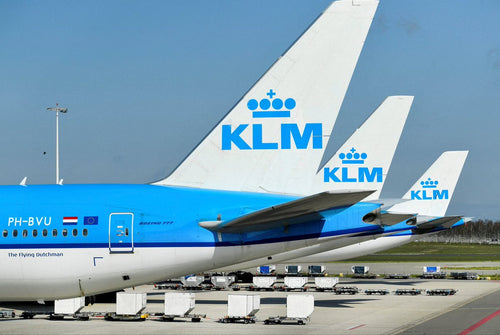
American Airlines' Starlink commitment is no longer an outlier — it's now part of a sweeping industry shift. As of today, the majority of major U.S. carriers have announced Starlink adoption, including Southwest, United, Frontier, Alaska, and Hawaiian Airlines, in addition to American. That leaves Delta and JetBlue as the two notable holdouts yet to announce a Starlink deal, making them increasingly the exception rather than the rule in the domestic aviation market.
The rapid consolidation around Starlink Aero signals that SpaceX's satellite internet is quickly becoming the de facto standard for U.S. commercial in-flight connectivity — a remarkable shift in an industry that has long struggled with slow, unreliable cabin Wi-Fi.
@SawyerMerritt · Oct 8, 2026
"Major U.S. airlines that have announced @Starlink adoption: American, Southwest, United, Frontier, Alaska/Hawaiian. Airlines that haven't: Delta, JetBlue."
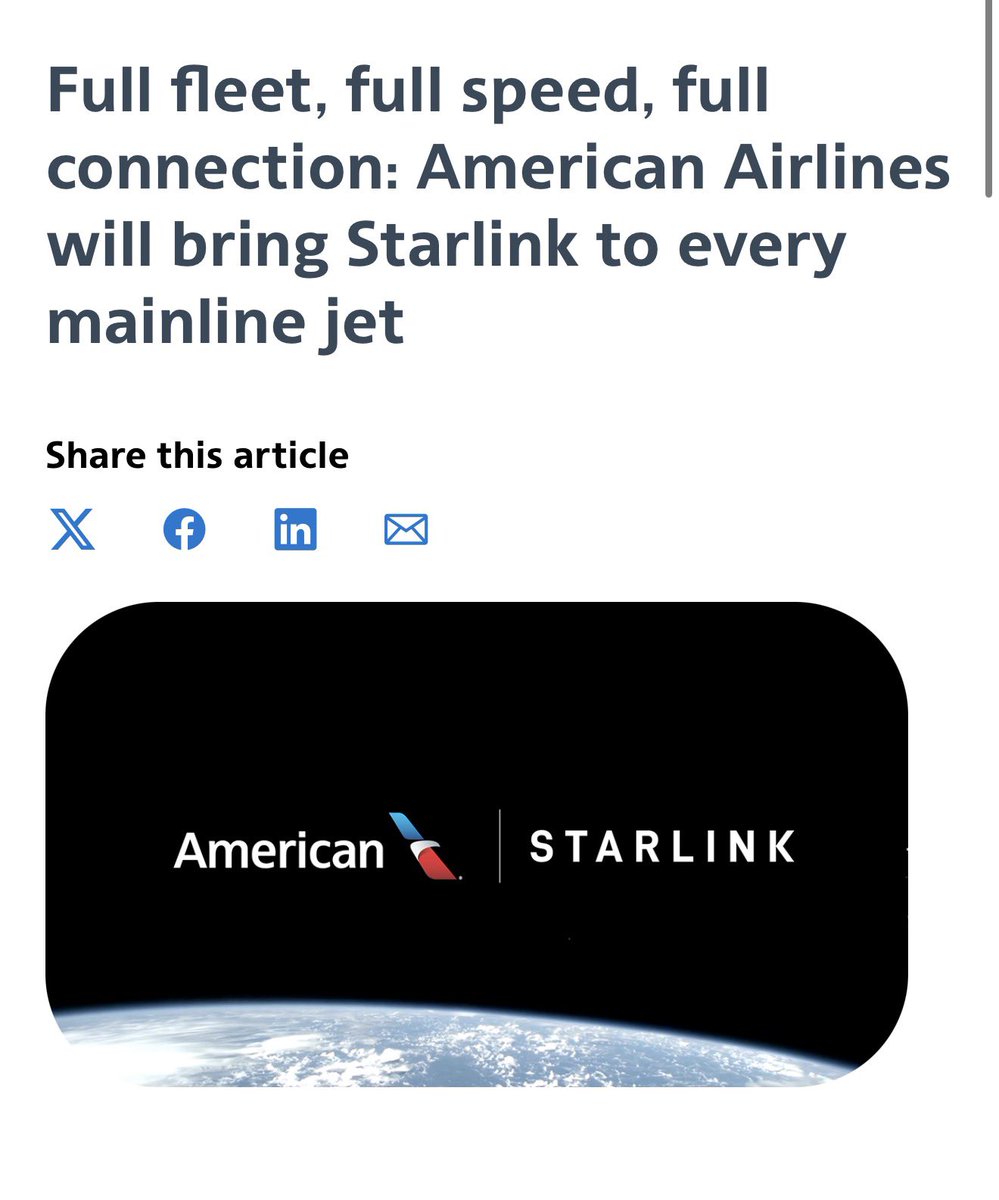
American Airlines has officially expanded its SpaceX Starlink partnership from a 500-aircraft pilot to a full mainline fleet rollout, committing to install the service across all 1,030+ of its mainline jets. The carrier confirmed the expansion on October 8, 2026, with installations scheduled to begin in early 2027 using Starlink's Performance Aero Terminal. The move represents one of the single largest airline connectivity deals announced to date and effectively doubles the previously disclosed scope from May 2026.

From 500 to 1,030+: What Just Changed
When American Airlines first announced its Starlink deal in May 2026, the scope was already notable — more than 500 narrowbody Airbus aircraft, including the A319, A320, A321, A321neo, and A321XLR, according to American Airlines and Engadget. That announcement positioned American as a serious challenger to United and Hawaiian, both of which had already struck Starlink deals of their own.
Today's update changes the math. By extending Starlink to the entire mainline fleet, American is adding its widebody international aircraft — Boeing 777s and 787s — on top of the narrowbody count. That brings the total to more than 1,030 aircraft, per the carrier's updated announcement. Installations are still slated to begin in Q1 2027, meaning the airline is scaling the contract without pushing out the timeline.
Key Figures
| Metric | May 2026 Announcement | October 2026 Update |
|---|---|---|
| Aircraft Count | 500+ narrowbody | 1,030+ full mainline |
| Fleet Scope | Airbus A319/A320/A321 family | Entire mainline (narrowbody + widebody) |
| Hardware | Starlink Aero Terminal | Performance Aero Terminal |
| Install Start | Q1 2027 | Early 2027 (confirmed) |
| Peak Throughput | Up to 1 Gbps per antenna | Up to 1 Gbps per antenna (multi-gigabit capable) |
Why the Performance Aero Terminal Matters
The hardware powering the rollout is Starlink's Performance Aero Terminal, which SpaceX has positioned as its highest-tier aviation antenna. According to Telecompetitor and Broadband Breakfast coverage from the initial May announcement, the terminal is designed to deliver multi-gigabit connectivity to the aircraft, with each antenna supporting up to 1 Gbps. In practical terms, that is enough bandwidth to let an entire cabin stream video, run video calls, and play online games simultaneously — a workload traditional geostationary in-flight Wi-Fi systems have never been able to handle.
The service will be free for AAdvantage loyalty program members, matching the model that United announced for its own Starlink rollout. American's Chief Customer Officer Heather Garboden, in the May announcement, said the partnership "solidifies American as a leading airline in keeping passengers connected in flight," citing Starlink's low latency as a differentiator from legacy satellite systems.
How We Got Here
Starlink Aviation has moved from a curiosity to a fleet-standard product in roughly three years. SpaceX first courted business jet operators, then landed JSX, Hawaiian Airlines, and Qatar Airways as early commercial customers. United Airlines signed on in 2024 with a plan to equip its entire mainline fleet, and American followed with its initial 500-aircraft commitment in May 2026, per Upgraded Points.
The jump from 500 to 1,030+ aircraft in roughly five months suggests two things: SpaceX's aviation production capacity has scaled to accommodate larger simultaneous rollouts, and American has moved past internal testing on whether the Performance Aero Terminal performs as advertised on narrowbody platforms. Expanding to widebody international service — where in-flight connectivity quality matters most to premium cabin travelers — would be the natural next step once the narrowbody program is validated.
What It Means for the Industry
With United already committed to a fleet-wide rollout and American now matching that scope, two of the three major US network carriers are standardizing on Starlink. Delta remains the holdout, continuing its partnership with T-Mobile and Viasat for in-flight connectivity. If the Starlink experience on American and United proves materially better than what Delta offers passengers through 2027, the competitive pressure on Delta's connectivity strategy becomes significant.
For SpaceX, the American deal is a revenue and credibility milestone. Starlink Aviation now has committed deployments across more than 2,000 commercial aircraft between United, American, Hawaiian, Qatar, and others — a scale that supports continued investment in Gen2 and Gen3 satellite capacity dedicated to mobility customers.
What to Watch Next
- Q1 2027 installation kickoff: Expect American to disclose which aircraft tail numbers get the first terminals and how long per-aircraft installation downtime runs.
- Widebody integration timeline: American has not yet published a separate schedule for its 777 and 787 fleet. That timing will determine when international long-haul passengers see the service.
- Delta's response: Delta's current Viasat/T-Mobile arrangement runs on a fundamentally different architecture. A pivot or counter-announcement in 2027 would reshape the US in-flight connectivity map.
- AAdvantage integration: Watch for details on how the free-for-members model is enforced and whether non-members get a paid tier or limited free access.
What was announced today is more than a contract extension — it is a signal that Starlink Aviation has graduated from pilot programs to default infrastructure at scale. The next six months, as installations begin and the first American aircraft fly with Performance Aero Terminals live, will determine whether the user experience matches the specifications SpaceX has been promising since the service launched.
Related Gear
Gear up your Tesla with tested, custom-fit BASENOR accessories — shop Tesla accessories →
Sources & reporting notes
The links below identify the material source records used for this report.
- @SawyerMerritt on X (2026-10-08T13:51:12.000Z) — Direct source
- @SawyerMerritt on X (2026-10-08T13:51:13.000Z) — Direct source
Source links are preserved as published or accessed. See our editorial standards and corrections policy.
The BASENOR Editorial Desk covers Tesla, SpaceX, and related technology, curating reporting from primary sources — official accounts, regulatory filings, and software release data. Every article passes source-record and fact-checking review before publication. About the newsroom.
This report was curated by the BASENOR Editorial Desk from the sources listed above. Read our editorial standards or email editorial@basenor.com to report an error.