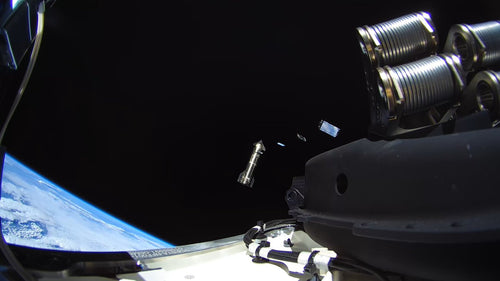
The News: NASA has commenced the second Wet Dress Rehearsal (WDR) for the Artemis II Space Launch System (SLS), with propellant loading currently underway and running slightly ahead of schedule.
Why It Matters: This is the final major exam for the moon rocket. A successful test clears the path for the crewed Artemis II mission, currently targeting a launch window as early as March 2026.
Source: @NASASpaceflight
The countdown clock is ticking again for Artemis II. Following a scrubbed attempt earlier this month, NASA is currently deep into the second Wet Dress Rehearsal (WDR) for the Space Launch System (SLS) rocket at Kennedy Space Center.
According to live updates from NASASpaceflight (NSF), the process is moving efficiently, with the crucial slow fill phase currently underway and tracking slightly ahead of the timeline. This test is the absolute critical path to getting humans back around the Moon.

Unprecedented Visibility: Inside the Chilldown
One of the most notable changes for this second rehearsal is the level of transparency NASA is providing. Unlike previous tests that were largely obscured from public view, NASA has activated engineering cameras to stream the internal status of the rocket.
NSF confirmed that we are seeing live views of the RS-25 engines during their 'chilldown' sequence. This process conditions the engines to handle the cryogenic propellants—liquid hydrogen and liquid oxygen—without suffering thermal shock.

Current Status: Ahead of Schedule
The latest update indicates that the team has successfully entered the 'slow fill' phase. This is a delicate part of the fueling operation where propellants are introduced gradually to detect leaks before ramping up to fast fill speeds.
Critically, NSF notes that operations are 'slightly ahead of schedule.' Given that the previous WDR attempt was halted due to hydrogen leaks and valve issues, a smooth, ahead-of-schedule timeline suggests that the ground repairs and filter replacements made in the interim are holding up.

📊 Key Figures: Artemis II WDR
This test involves massive quantities of fuel and tight timelines. Here are the numbers defining today's operation:
| Metric | Details |
|---|---|
| Propellant Volume | Over 700,000 gallons (LH2 & LOX) |
| Current Status | Slow Fill (Ahead of Schedule) |
| Simulated Launch | Targeting Feb 19, 8:30 PM EST |
| Launch Window | Targeting March 6-9, 2026 |
🔭 The BASENOR Take
Impact Level: CRITICAL (9/10)
The Timeline: If today's test concludes with a successful terminal count and drain, NASA will be on track for the March 2026 launch window.
Confidence: Moderate-High. The 'ahead of schedule' status during slow fill is the strongest positive signal we have had in weeks. The engineering cams suggest NASA is confident in the hardware's performance today.
Analysis: The first WDR failed due to leaks that exceeded limits. The fact that we are currently proceeding through slow fill suggests the component replacements (specifically the ground support equipment filter) were effective. This is the 'go/no-go' moment for the entire spring launch campaign.
📰 Deep Dive
The Wet Dress Rehearsal is a full-scale simulation of launch day, stopping just seconds before engine ignition. It is designed to stress-test the cryogenic fueling systems, which are notoriously difficult to manage due to the extreme cold of liquid hydrogen (-423°F) and its tendency to leak through the smallest microscopic gaps.
Today's success hinges on the Quick Disconnect (QD) umbilicals sealing properly under thermal stress. The 'chilldown' of the RS-25 engines, highlighted in the new footage, is a vital step. It ensures the main engines are cold enough to accept fuel without flash-vaporizing it, which could cause cavitations or pump failures.
With the simulated launch targeted for later this evening (EST), the coming hours will determine if Artemis II flies in March or slides further into April. For now, the telemetry is looking good.
Sources & reporting notes
The links below identify the material source records used for this report.
- @NASASpaceflight on X (2026-02-19T15:33:56.000Z) — Direct source
- @NASASpaceflight on X (2026-02-19T15:09:33.000Z) — Direct source
- @NASASpaceflight on X (2026-02-19T15:02:33.000Z) — Direct source
Source links are preserved as published or accessed. See our editorial standards and corrections policy.
The BASENOR Editorial Desk covers Tesla, SpaceX, and related technology, curating reporting from primary sources — official accounts, regulatory filings, and software release data. Every article passes source-record and fact-checking review before publication. About the newsroom.
This report was curated by the BASENOR Editorial Desk from the sources listed above. Read our editorial standards or email editorial@basenor.com to report an error.