📌 UPDATE — September 5, 2026
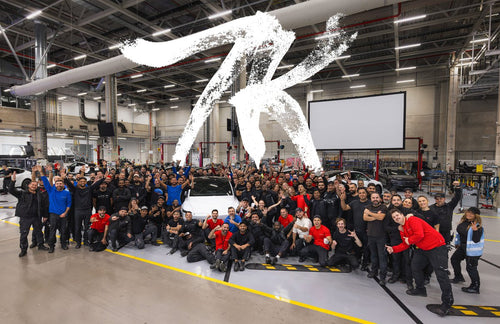
The Cybercab fleet buildup is accelerating beyond Austin streets: 22 Cybercabs were spotted simultaneously on the Giga Texas test track today, signaling a significant expansion in pre-deployment validation. Running large batches through the factory test loop suggests Tesla is stress-testing fleet-scale operations — logistics, charging sequencing, and vehicle-to-vehicle coordination — before pushing more units into live robotaxi service. For context, early Austin deployments started with far smaller cohorts, making a 22-unit test run a notable step up in throughput ambition.
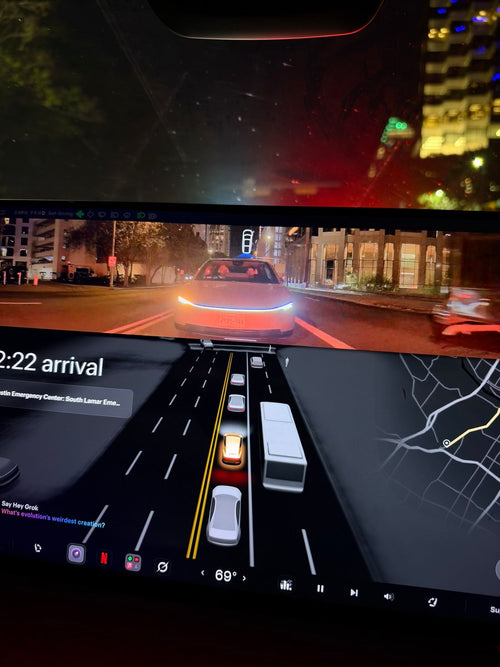
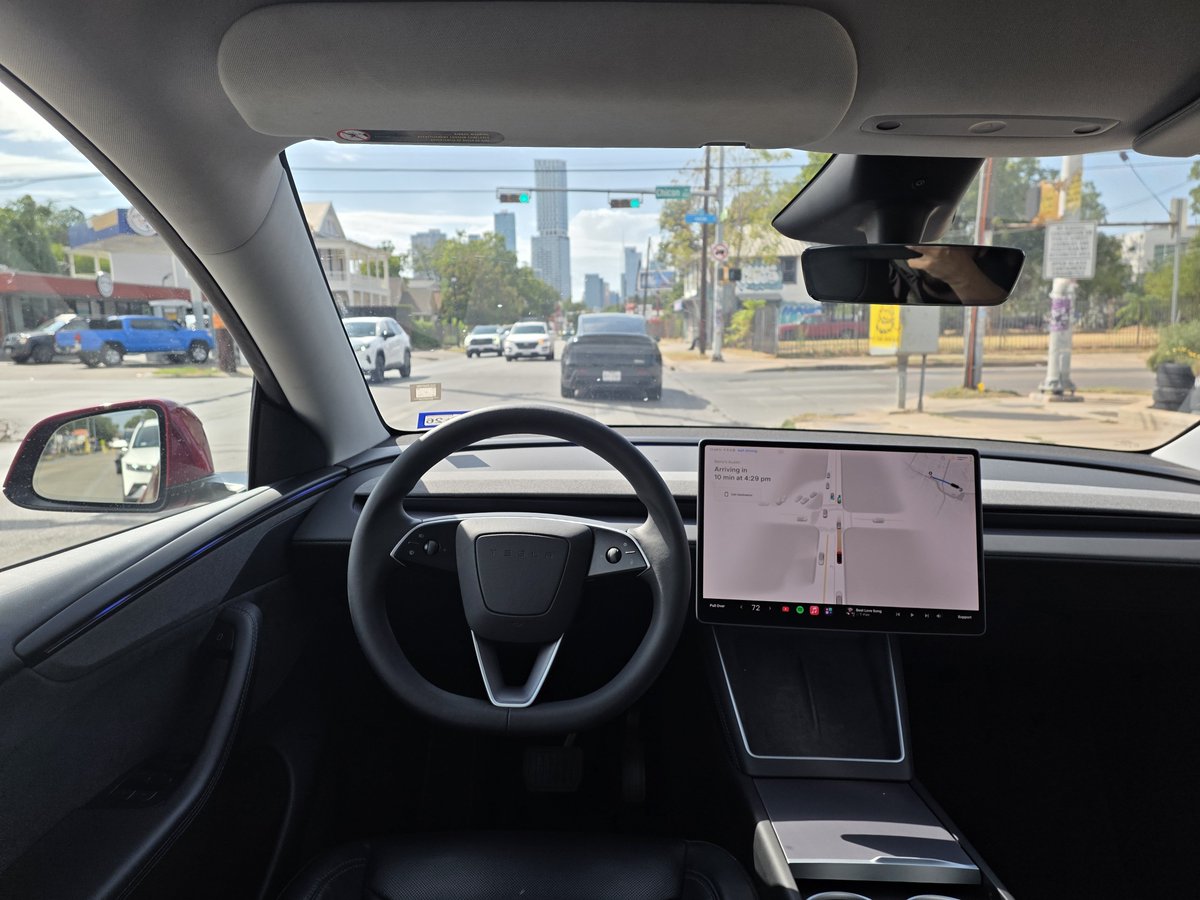
An Austin observer summed it up in nine words: "I've seen FAR more driverless Teslas in Austin than Teslas with a human in the driver seat." That's not a prediction — it's a street-level report from September 4, 2026, the day after Tesla officially opened its Cybercab to the public. The numbers behind that observation tell a story of a deployment that has moved faster than almost anyone anticipated.

1. The Cybercab went public the day before this observation
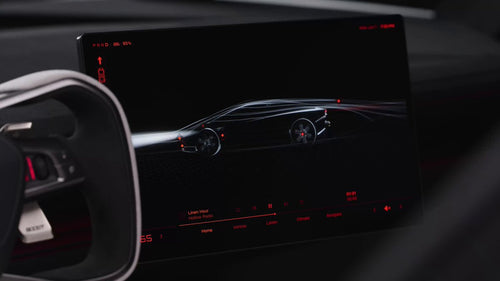
Tesla officially launched public Cybercab rides in Austin on September 3, 2026. Access opened to the public the following day — September 4 — at 5 p.m. CT. The timing is not coincidental: the surge in driverless vehicles @DirtyTesLa noticed happened within hours of the commercial fleet hitting the streets in force. The Cybercab is a purpose-built, two-seat autonomous vehicle with no steering wheel and no pedals — the first of its kind in Tesla's commercial fleet.
2. Texas already had 420 registered autonomous Teslas before the Cybercab launch
According to state registration data, Tesla had 420 autonomous vehicles registered in Texas as of September 3, 2026. Of those, 45 were Cybercabs authorized for fully driverless operations. The remaining vehicles are Model Y crossovers, most of which carry safety monitors — though a growing subset operate without them. That's a substantial fleet before a single Cybercab fare was collected.
3. Unsupervised Model Y Robotaxis have been running since January
The Cybercab is the headline, but the Model Y has been doing the quiet work. Unsupervised public robotaxi rides using Model Ys began in Austin on January 22, 2026. By early June, approximately 30 fully driverless Model Ys were operating without safety monitors. The service area expanded to cover the entire Austin metro by June 3. Operating hours were extended to daily 6 AM–10 PM as of late August. The Cybercab launch layered on top of an already-running operation.
4. The fleet crossed 1 million unsupervised autonomous miles on the same day
September 4, 2026 — the same day @DirtyTesLa posted — Tesla's Robotaxi fleet crossed 1 million unsupervised autonomous miles. For context, the fleet had logged 380,000 miles as of July 22. That's a jump of 620,000 miles in roughly six weeks, reflecting both the expanded operating hours and the growing number of vehicles running without safety monitors. The milestone is a data point regulators and engineers will be watching closely.
5. The software running these vehicles is not the FSD you have in your car
Cybercabs and Model Y Robotaxis are running early builds of FSD v15, a version specifically engineered for unsupervised operation. This is distinct from the consumer-facing FSD v14.3.x currently available to Tesla owners. FSD v15 is not yet cleared for customer-owned vehicles — the robotaxi fleet is, in effect, the real-world test bed for software that may eventually reach your car. For more context on the FSD roadmap, see our FSD coverage.
6. Federal regulators are watching — and the expansion isn't stopping
NHTSA confirmed on September 3 that it is evaluating Tesla's Cybercab operations, specifically examining how Tesla certified the vehicle as compliant with Federal Motor Vehicle Safety Standards given its lack of manual controls. That scrutiny hasn't slowed the geographic rollout: unsupervised rides are now available in Austin, Dallas, and Houston in Texas, and Miami, Orlando, and Tampa in Florida. Tesla also received an Autonomous Vehicle Network Company permit in Nevada on August 21, covering up to 5,000 robotaxis across Clark County — though Nevada operations are not yet live.
What's happening in Austin right now is less a pilot program and more a commercial operation at scale. The street-level observation that driverless Teslas outnumber human-driven ones isn't a curiosity — it's a signal of where the deployment curve is heading. The open question is how quickly the rest of the country catches up to what Austin residents are already seeing every day.
🚕 Following the Robotaxi rollout? See every operating city, launch date and announced market in our Tesla Robotaxi Tracker.
Related Gear
Gear up your Tesla with tested, custom-fit BASENOR accessories — shop Tesla accessories →
Sources & reporting notes
The links below identify the material source records used for this report.
- @DirtyTesLa on X (2026-09-04T22:31:06.000Z) — Direct source
Source links are preserved as published or accessed. See our editorial standards and corrections policy.
The BASENOR Editorial Desk covers Tesla, SpaceX, and related technology, curating reporting from primary sources — official accounts, regulatory filings, and software release data. Every article passes source-record and fact-checking review before publication. About the newsroom.
This report was curated by the BASENOR Editorial Desk from the sources listed above. Read our editorial standards or email editorial@basenor.com to report an error.