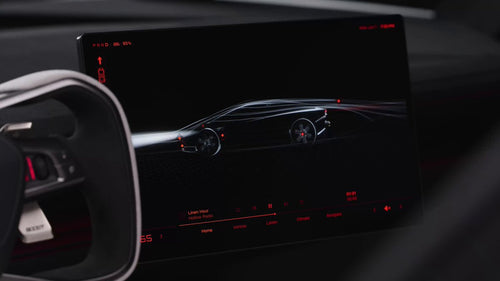
Tesla is developing an on-demand rear and repeater camera view feature for the Cybercab, confirmed by a Tesla UI software engineer in early October and now surfacing more broadly. It's a small software addition with a surprisingly clear purpose — and it tells us something about how Tesla is iterating on the robotaxi experience in real time.

1. The Cybercab has no mirrors — and that's exactly why this feature exists
The Cybercab was designed without side mirrors, a rear-view mirror, or a rear window. That's intentional — the vehicle relies entirely on eight exterior cameras for its autonomous driving system. But for a passenger sitting in the back seat, that design creates a disorienting experience: there's no way to glance out and gauge your surroundings. The on-demand camera view directly addresses that gap, giving riders a live feed of what's behind and beside the car whenever they want it.
2. Right now, camera views only appear at the end of a ride
Currently, the Cybercab does display left repeater, rear, and right repeater camera feeds — but only when the vehicle arrives at its destination. The intent is to help passengers check for traffic or cyclists before opening the door. The new feature would make those same feeds accessible at any point during the ride, on demand via the in-cabin touchscreen. That's a meaningful shift from a safety-at-exit tool to a general situational awareness feature.
3. It's a software update — no new hardware required
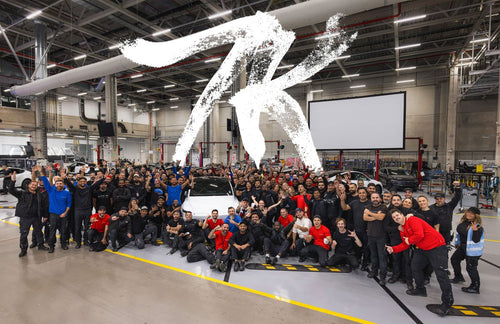
According to Tesla UI software engineer Evan (@CarCoder), who confirmed the feature was "in development" on October 9, 2026, this is a purely software-based change. The cameras are already there. The update simply unlocks passenger access to those feeds mid-ride. That means the entire Austin fleet of over 300 Cybercabs can receive it the moment it ships, with no retrofitting needed.
4. It's a direct response to rider feedback
Tesla launched public Cybercab rides in Austin in September 2026, and the feedback loop has clearly been fast. Adding on-demand camera access within weeks of launch signals that Tesla is treating the Austin deployment as a live product iteration cycle, not a static rollout. Riders flagged the lack of visual context during trips; Tesla is responding with a software fix. That cadence matters as Dallas is identified as the next deployment city and customer deliveries are targeted for later this year.
5. It lands in the middle of active NHTSA scrutiny
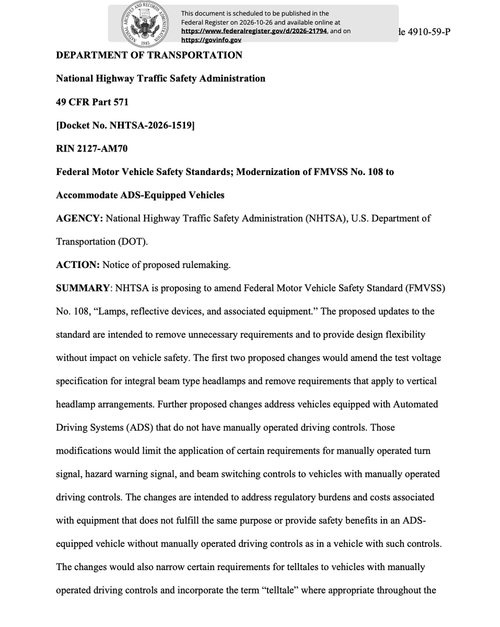
The timing is notable. NHTSA opened an investigation in September 2026 into Tesla's self-certification of the Cybercab's compliance with federal safety standards — specifically including its camera systems and the absence of traditional mirrors. Tesla has a response deadline of October 30, 2026. Separately, on October 23 — one day before this feature surfaced — NHTSA proposed new rulemaking to remove regulatory barriers for autonomous vehicles without conventional controls, explicitly naming the Cybercab. Adding passenger-accessible camera views doesn't resolve the regulatory questions, but it does demonstrate active development of the vehicle's safety-adjacent feature set at a moment when regulators are watching closely.
The feature is still listed as "in development," so there's no confirmed ship date yet. But given Tesla's pace of iteration in Austin, it likely won't be long before riders can pull up a rear view mid-trip — the same way you'd check a mirror in any other car.
🚕 Following the Robotaxi rollout? See every operating city, launch date and announced market in our Tesla Robotaxi Tracker.
Related Gear
Gear up your Tesla with tested, custom-fit BASENOR accessories — shop Tesla accessories →
Sources & reporting notes
The links below identify the material source records used for this report.
- @wholemars on X (2026-10-24T05:27:33.000Z) — Direct source
Source links are preserved as published or accessed. See our editorial standards and corrections policy.
The BASENOR Editorial Desk covers Tesla, SpaceX, and related technology, curating reporting from primary sources — official accounts, regulatory filings, and software release data. Every article passes source-record and fact-checking review before publication. About the newsroom.
This report was curated by the BASENOR Editorial Desk from the sources listed above. Read our editorial standards or email editorial@basenor.com to report an error.