📌 UPDATE — May 14, 2026
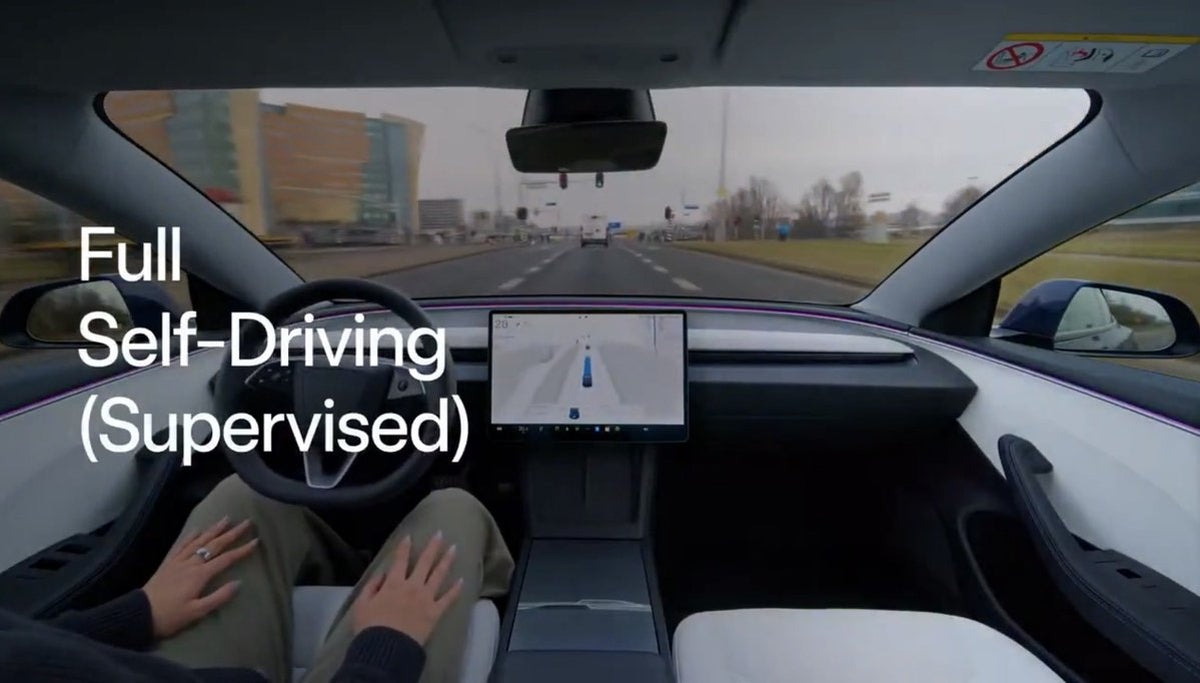
Tesla has now received official clearance to begin FSD (Supervised) testing in Flanders, Belgium — moving past the review stage covered in our original article. Flemish Minister Annick De Ridder and federal Minister Jean-Luc Crucke jointly announced the fast-tracked approval, with approximately 5,000 km of testing planned on Belgian roads. The confirmation marks a concrete next step after Flanders had previously requested limited-scale testing before granting broader approval.

📌 UPDATE — May 12, 2026
Belgium's FSD approval timeline has accelerated significantly. Flemish mobility minister Annick De Ridder and federal minister Jean-Luc Crucke have announced a fast-tracked approval process, with De Ridder stating that Tesla FSD (Supervised) testing on Flemish public roads could begin "within days" — with some reports suggesting as early as tomorrow. The planned testing scope is approximately 5,000 km of Flemish roads, moving from the limited-scale review phase into active on-road validation.


Belgium's path to Tesla FSD (Supervised) approval took a significant step forward on May 8 — but didn't cross the finish line. Flemish Minister of Mobility Annick De Ridder confirmed that her administration has completed an accelerated review of Tesla's FSD file, and has now requested additional limited-scale testing before granting homologation. For Tesla owners in Belgium and the broader EU, this is progress — just not the green light yet.

Where Things Stand in Flanders
Minister De Ridder had publicly committed on May 5 to delivering clarity on a possible fast-track homologation by end of week — and she delivered on that promise, even if the answer is "not quite yet." The accelerated screening is done. The recommendation coming out of it: run additional limited-scale testing first, specifically to account for differences between the Dutch and Flemish road networks.
That distinction matters. The Netherlands provisionally approved FSD (Supervised) in April 2026 — the first EU country to do so — after more than 1.5 years of testing and 1.6 million kilometers of European road data. Dutch regulators classified the system as a Level 2 driver-assistance tool, requiring the driver to remain attentive at all times, with eye-tracking cameras enforcing that requirement. Belgium's Flemish authorities want comparable confidence in their own road conditions before signing off.
To move the process forward, De Ridder has contacted federal Mobility Minister Jean-Luc Crucke — who holds federal authority over authorizing vehicle tests — asking him to expedite the next step. It's a multi-layer approval chain, and De Ridder is clearly trying to keep it moving.
The Bigger Picture: Belgium Isn't One Decision
One wrinkle worth understanding: FSD approval in Belgium isn't a single national decision. Flanders, Wallonia, and the Brussels-Capital Region each hold separate competencies over aspects of vehicle homologation. Flanders is the furthest along. Tesla has also submitted a request in Wallonia, but that process appears to be at an earlier stage.
This fragmented structure means even a Flemish approval wouldn't immediately unlock FSD across all of Belgium. It would, however, be a meaningful first step — and would have a practical impact on Dutch Tesla owners today. Currently, FSD-equipped vehicles in the Netherlands are geo-fenced to Dutch borders, automatically disabling the system when approaching Belgium or Germany. A Flemish homologation could remove that barrier for cross-border driving, at least on the Flemish side.
The EU-Wide Vote Looming in June
The stakes extend well beyond Belgium. On May 5, European vehicle regulators met in Brussels, where the Dutch road authority (RDW) presented its case for EU-wide FSD approval. A formal vote by the Technical Committee on Motor Vehicles (TCMV) is scheduled for June 30, 2026. If passed by a majority, FSD (Supervised) would become available across all EU member states — bypassing the need for individual country-by-country approvals.
Belgium's Flemish process is running in parallel with that EU-level track, not instead of it. A positive outcome in either direction would be a win for Tesla owners across the continent. The June 30 vote is now the more consequential near-term milestone to watch.
For now, the Flemish process is in the hands of federal coordination and whatever timeline the additional testing requires. De Ridder's willingness to push the process actively — contacting the federal minister directly to expedite — suggests this isn't being left to bureaucratic drift. The question is how quickly limited-scale testing can be organized and completed before the EU-wide vote renders the question moot anyway.
Related Gear
Gear up your Tesla with tested, custom-fit BASENOR accessories — shop Tesla accessories →
Sources & reporting notes
The links below identify the material source records used for this report.
- @TeslaNewswire on X (2026-05-08T16:46:29.000Z) — Direct source
- @SawyerMerritt on X (2026-05-12T18:46:36.000Z) — Direct source
- @TeslaNewswire on X (2026-05-12T18:30:17.000Z) — Direct source
- @TeslaNewswire on X (2026-05-14T15:18:20.000Z) — Direct source
Source links are preserved as published or accessed. See our editorial standards and corrections policy.
The BASENOR Editorial Desk covers Tesla, SpaceX, and related technology, curating reporting from primary sources — official accounts, regulatory filings, and software release data. Every article passes source-record and fact-checking review before publication. About the newsroom.
This report was curated by the BASENOR Editorial Desk from the sources listed above. Read our editorial standards or email editorial@basenor.com to report an error.