📌 UPDATE — September 3, 2026 🔍
Code discovered in Tesla Robotaxi App v26.8.0 reveals several previously undocumented Cybercab features. Ultra-Wideband (UWB) technology will power automatic doors that detect a rider approaching the vehicle, while a companion vision system acts as a safety check — preventing doors from opening if an obstruction is in the way. Additionally, "Hey Grok" hands-free voice control is confirmed in the app code, bringing xAI's assistant directly into the Cybercab cabin experience. These details were surfaced by @TeslaNewswire and have not yet been officially announced by Tesla.

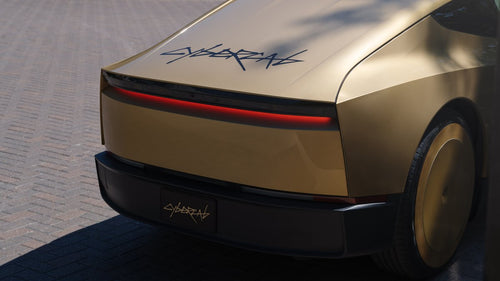
New details about Tesla's Cybercab surfaced today following the vehicle's official unveiling in Austin, giving the clearest picture yet of how the purpose-built robotaxi behaves in an emergency, how its cabin is designed, and what maintenance it will need. The details span safety automation, a game-engine-powered UI, and quirks like a camera washer and an internal Photo Booth app.
If you're planning to ride in a Cybercab — or budget for one as a fleet operator — here's what actually matters and what to do about it.
Automated Crash Response: What Cybercab Does Without You
Because Cybercab has no steering wheel and no pedals, Tesla built a fully automated crash response sequence. According to details shared by @wholemars, when the vehicle detects a collision it will:
- Unlock all doors
- Turn on hazard lights
- Turn on cabin lights
- Disable the high-voltage battery
- Vent the windows
- Apply the brakes and bring the vehicle to a stop
- Automatically connect the cabin to Tesla Robotaxi Support

Every step in that list is designed for a passenger who may be disoriented, injured, or unfamiliar with the vehicle. Unlocking doors and cutting high-voltage power addresses the two biggest first-responder concerns with EVs. Venting the windows creates airflow and a secondary egress path if the doors are blocked. And routing the cabin audio directly to Tesla Robotaxi Support means a live human is on the line before you have to figure out how to call one.
What to Do as a Rider
Because Cybercab handles the emergency sequence on its own, the rider's job is different from a traditional car crash. Here's the practical checklist:
- Stay seated until the vehicle stops. Cybercab will apply the brakes automatically — don't try to reach for controls that don't exist.
- Talk to Tesla Robotaxi Support first. The cabin audio connects automatically. Confirm your location, describe injuries, and follow their instructions before exiting.
- Exit through the unlocked doors. If a door is blocked, the vented windows provide airflow and a secondary path.
- Do not touch exposed battery components. The high-voltage system is disabled, but first responders still need to inspect the vehicle before it's moved.
- Keep hazards and cabin lights on. They are triggered automatically and help emergency crews locate the vehicle — don't try to disable them.
Staggered Tires: A Rotation Rule You Can't Ignore
One detail that will bite early owners and fleet operators: Cybercab uses a staggered tire setup, meaning front and rear tires are different sizes. Per @wholemars, that means tires can only be rotated left-to-right, never front-to-back. Tesla recommends rotation every 12,000 miles.
For a high-utilization robotaxi that could rack up 12,000 miles in a matter of weeks, this is a real operational consideration. Fleet operators should plan for:
- More frequent tire service intervals than a Model 3 or Model Y, in wall-clock time
- Separate inventory for front and rear tire sizes — you can't stock one universal spare
- Service scheduling that pulls the vehicle from revenue duty on a predictable cadence
The Cabin: Unreal Engine, Photo Booth, and a Camera Washer
The rider experience leans further into entertainment than any prior Tesla. According to @wholemars, the Cybercab UI is built on Unreal Engine, with Tesla specifically crediting Epic Games. That's a notable shift — most in-car UIs run on custom Linux-based stacks, not a game engine typically used for AAA titles and virtual production.
Inside the cabin, there's also an internal Photo Booth application passengers can play with during a ride. It's a small feature, but it signals how Tesla is thinking about Cybercab as a shared, occasional experience rather than a personal daily driver — the ride itself is meant to be memorable.
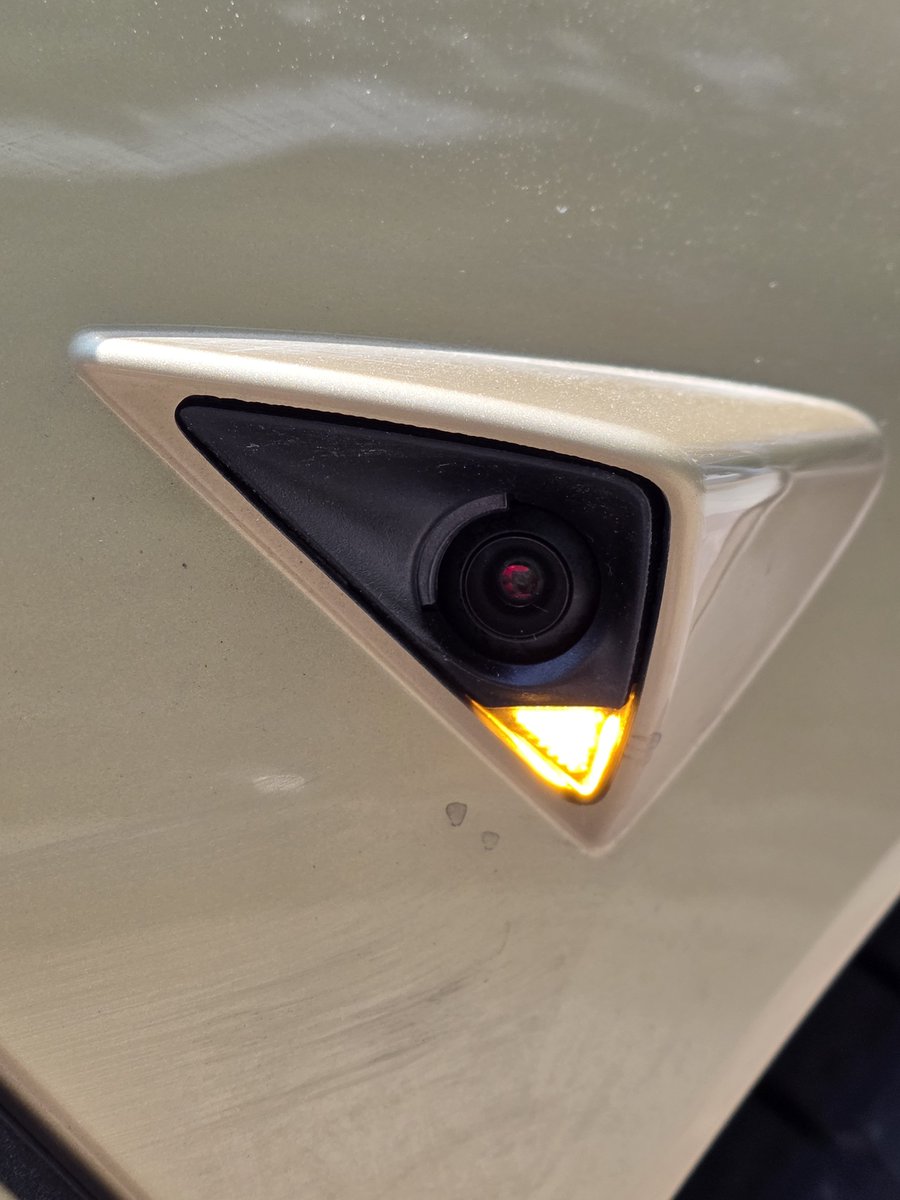
On the exterior, @DirtyTesLa spotted another practical touch: the side repeater cameras include an integrated camera washer. For a vehicle whose entire operation depends on clean camera glass, that's not a novelty — it's core infrastructure. Expect this to become standard on future Tesla vehicles that rely purely on vision for autonomy.
What to Watch Next
Cybercab was officially unveiled today in Austin, and the Tesla Robotaxi app was updated to version 26.8.0 alongside the reveal. Open questions worth tracking:
- Whether the automated crash response can be triggered manually by Robotaxi Support if the vehicle's own sensors don't detect a collision
- How Tesla will price replacement tires given the staggered setup and expected fleet mileage
- Whether the Unreal Engine UI framework will migrate to consumer Teslas in future software updates
- How camera washer maintenance is handled — user-serviceable or service-center only
For now, the Cybercab picture is finally filling in beyond the marketing renders. The automated crash sequence in particular is worth studying — it's the clearest statement yet of how Tesla intends to make a vehicle with no driver still feel safe to sit in.
🚕 Following the Robotaxi rollout? See every operating city, launch date and announced market in our Tesla Robotaxi Tracker.
Related Gear
Gear up your Tesla with tested, custom-fit BASENOR accessories — shop Tesla accessories →
Sources & reporting notes
The links below identify the material source records used for this report.
- @DirtyTesLa on X (2026-09-03T19:14:19.000Z) — Direct source
- @wholemars on X (2026-09-03T19:57:13.000Z) — Direct source
- @wholemars on X (2026-09-03T19:58:39.000Z) — Direct source
- @wholemars on X (2026-09-03T19:59:37.000Z) — Direct source
- @wholemars on X (2026-09-03T19:59:53.000Z) — Direct source
Source links are preserved as published or accessed. See our editorial standards and corrections policy.
The BASENOR Editorial Desk covers Tesla, SpaceX, and related technology, curating reporting from primary sources — official accounts, regulatory filings, and software release data. Every article passes source-record and fact-checking review before publication. About the newsroom.
This report was curated by the BASENOR Editorial Desk from the sources listed above. Read our editorial standards or email editorial@basenor.com to report an error.