30-Second Brief
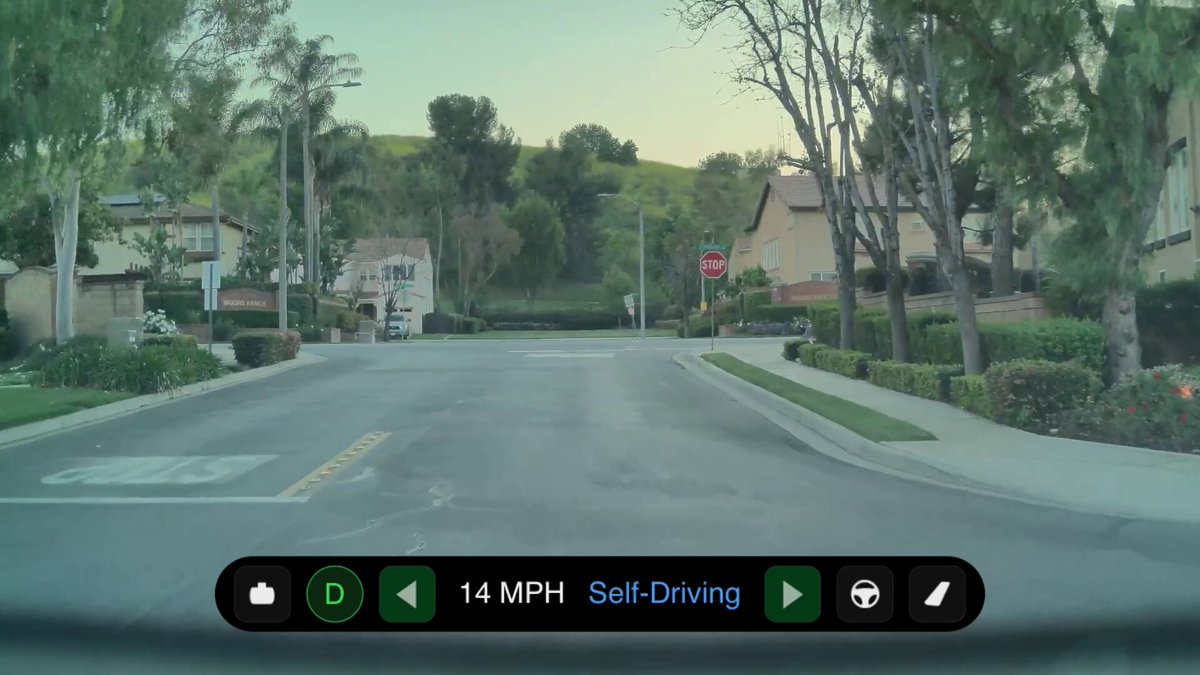
The News: A Cybertruck owner captured on video how FSD (Supervised) detected a reckless wide right turn by another driver and proactively slowed the truck before any human input was needed.
Why It Matters: Real-world dashcam footage of FSD predicting and responding to unpredictable human driver behavior is exactly the kind of evidence that builds — or tests — owner trust in the system.
Source: @ray4tesla on X
Cybertruck FSD Catches a Reckless Driver's Wide Turn Before the Owner Even Reacts
A short clip posted by longtime Tesla community member Ray (@ray4tesla) is making the rounds today — and it's a clean, unambiguous example of Tesla's Full Self-Driving system doing exactly what it's supposed to do. His Cybertruck, operating on FSD (Supervised), identified an oncoming vehicle swinging wide into its path on a right turn and immediately began slowing down, creating a safety buffer without any driver input. No drama. No near-miss. Just the system working.

📊 Key Figures: FSD Safety in Context
| Metric | Value | Context |
|---|---|---|
| Miles driven on FSD (Supervised) | 8.2 billion+ | As of Feb 2026 |
| Major collision rate — FSD active | 1 per 5.3M miles | Tesla safety report, Feb 2026 |
| Major collision rate — manual Tesla | 1 per 2.2M miles | With active safety features |
| Major collision rate — U.S. average | 1 per 660K miles | National average, all drivers |
| Current FSD version (HW4 / Cybertruck) | v14.2.2.5 | Rolling out as of Mar 14, 2026 |
What the Video Actually Shows
The clip is brief but telling. A vehicle in the adjacent lane swings wide on a right turn — the kind of sloppy, unpredictable maneuver that catches human drivers off guard because it happens fast and from an unexpected angle. Ray's Cybertruck, running FSD v14 (Supervised), registers the encroaching vehicle and decelerates smoothly, holding its lane and giving the turning car the space it needs. There's no panic brake, no jerk — just a calm, pre-emptive speed reduction.
This is the scenario FSD is specifically trained for: not just following the road ahead, but modeling the behavior of surrounding vehicles and anticipating where they're going before they get there. A wide right turn is a classic edge case because the turning vehicle initially appears to be staying in its own lane — it's only mid-turn that the path invasion becomes obvious. FSD catching it early is the meaningful part.
🔭 The BASENOR Take
| Timeline | FSD v14 (Oct 2025 rollout) · v14.2.2.5 current · v14.3 in internal testing |
| Impact Level | Positive — Real-World Validation |
| Confidence | High — Video Evidence, Single Incident |
Single clips don't prove a system is perfect — and nobody should read this as a green light to stop paying attention behind the wheel. FSD (Supervised) requires an alert driver ready to intervene. But this kind of footage matters for a specific reason: it shows the system handling unpredictable third-party behavior, not just lane-keeping on an empty highway.
The timing is also worth noting. NHTSA expanded its FSD probe just five days ago (March 18), covering over 3.2 million vehicles including 2023–2026 Cybertrucks. The investigation centers on whether FSD can adequately detect degraded visibility conditions — glare, fog, dust — and alert drivers in time. That's a different failure mode than what Ray's video shows, but both live in the same public conversation about whether FSD is ready for the real world.
With FSD v14.3 currently in internal testing and expected to bring enhanced reasoning and decision-making, clips like this one feed into the broader narrative Tesla needs: that the system is getting better at the hard stuff. Anticipating a wide turn from a reckless driver is exactly the kind of scenario that separates a capable driver-assistance system from a basic lane-centering tool. For Cybertruck owners using FSD daily, this is a reassuring data point — one real-world mile at a time.
📰 Deep Dive
What makes FSD's response in this clip technically interesting is the prediction window. A wide right turn unfolds over roughly 1–2 seconds. For FSD to begin decelerating before the encroachment is fully apparent, the system had to model the turning vehicle's trajectory from an early cue — likely the vehicle's speed, steering angle relative to the lane, and its position in the intersection. That's not simple rule-following; it's behavioral prediction.
Tesla's FSD v14 generation shifted further toward a neural-network-driven end-to-end architecture, which is designed to generalize across novel situations rather than rely on hand-coded rules for specific scenarios. A wide right turn by a reckless driver is exactly the kind of unscripted, messy real-world event that tests whether that generalization actually works. Based on this footage, on this occasion, it did.
For Cybertruck owners specifically, this is a reminder that FSD's value proposition isn't just convenience — it's the system's ability to maintain a wider situational awareness envelope than most human drivers. We tend to focus on the car directly ahead. FSD is simultaneously tracking lane markers, traffic signals, pedestrian positions, and the trajectory of every nearby vehicle. That parallel processing is where it has a structural advantage over human attention, particularly in complex urban intersections where wide turns are most common.
The caveat that always applies: one clean save doesn't define a system, and the NHTSA investigation is a legitimate process that owners should follow. Check our FSD coverage for ongoing updates as v14.3 moves toward public release and the regulatory picture develops.
📋 Tracking Tesla software? See every firmware, FSD and app version in one place in our Tesla Software Update Tracker.
Related Gear
Gear up your Cybertruck with tested, custom-fit BASENOR accessories — shop Cybertruck accessories →
Sources & reporting notes
The links below identify the material source records used for this report.
- @ray4tesla on X (2026-03-23T16:29:25.000Z) — Direct source
Source links are preserved as published or accessed. See our editorial standards and corrections policy.
The BASENOR Editorial Desk covers Tesla, SpaceX, and related technology, curating reporting from primary sources — official accounts, regulatory filings, and software release data. Every article passes source-record and fact-checking review before publication. About the newsroom.
This report was curated by the BASENOR Editorial Desk from the sources listed above. Read our editorial standards or email editorial@basenor.com to report an error.